
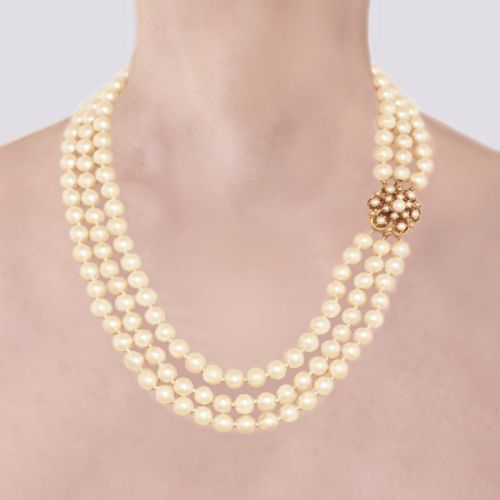


1960s Pearl Strand
A 1960s pearl strand offers mid-century elegance through lustrous saltwater or cultured pearls secured by gold gem-set clasps.
1960s Pearl Strand
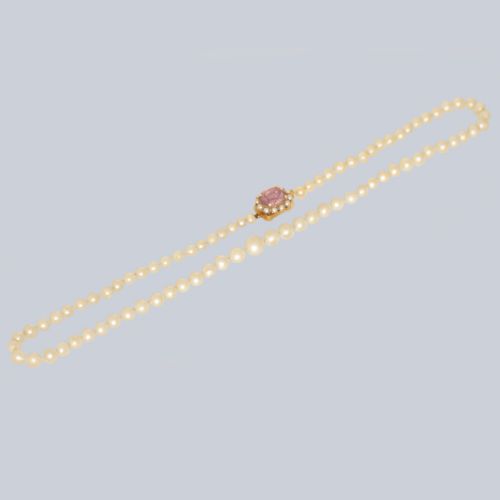
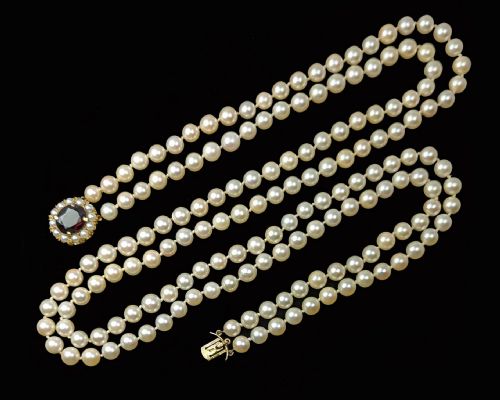
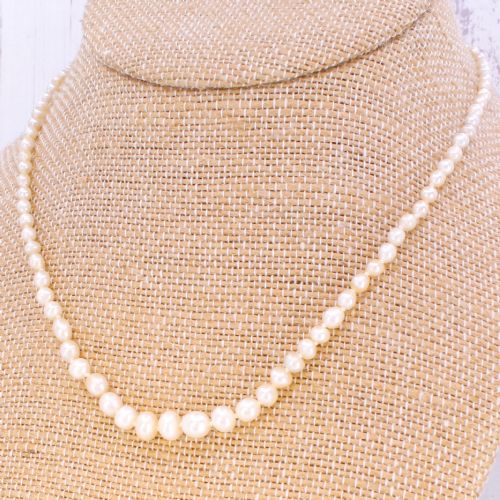
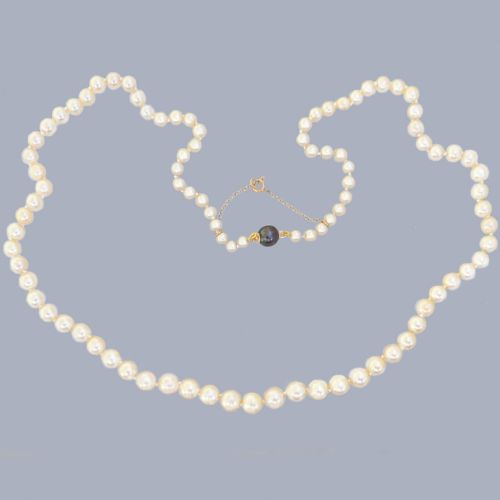
A 1960s pearl strand spans single lengths, multi-strand chokers, long rope necklaces and matching bracelets originating from the mid-century period. Buyers most frequently encounter double and triple strand configurations alongside graduated or uniform lengths.
These pieces encompass both single pearl strands and multi-row variations designed to sit closely at the neck or drape downwards in long sautoir lengths. The stylistic vocabulary leans heavily into mid-century modern and retro aesthetics typical of the decade.
Materials and Construction
The construction relies on cultured pearls, natural saltwater pearls, South Sea pearls or Tahitian pearls threaded onto silk and paired with clasps forged from nine carat or eighteen carat gold. Master jewellers secured the formations using traditional hand-knotting techniques between individual pearls.
Clasps incorporate precious gemstones including diamonds, sapphires, garnets, rubies, turquoises, amethysts and citrines set into yellow or white gold mountings. These clasps frequently double as decorative focal points designed to be worn at the front or side of the neck.
Listings feature cultured pearls, natural saltwater pearls, South Sea pearls and Tahitian pearls combined with nine carat and eighteen carat gold.
Distinguishing Quality
Quality rests upon the uniformity, lustre and orient of the pearls, alongside the complexity and weight of the precious metal clasp. Larger pearl diameters and natural saltwater origins elevate a strand above standard cultured equivalents.
The standard of craftsmanship shows in the neatness of the silk knotting between pearls and the provenance of signed maker clasps. Gemstone selection within the gold fastenings introduces further differentiation across the range.
Cropp and Farr·Unoaerre·Kutchinsky
The 1960s Pearl Strand Glossary
- Cultured pearl
- A pearl formed with human intervention by inserting a nucleus into an oyster or mollusc. These form the majority of mid-century strands.
- Graduated
- A strand layout where pearls increase progressively in size from the ends toward the centre clasp. This technique requires careful matching of lustre and tone.
- Sautoir
- A long necklace style popular during the period, often measuring fifty inches or more. It allows for multiple wraps around the neck or wrist.
- Clasp
- The mechanical fastening device that secures the strand, frequently designed as an ornate gemstone cluster in nine or eighteen carat gold. In mid-century pieces, the clasp is often intended to be displayed visibly.
- Hand-knotted
- The method of tying individual knots in the silk thread between every pearl. This prevents the pearls from rubbing together or scattering if the strand breaks.
1960s Pearl Strand: Frequently Asked Questions
How do I wear a multi-strand pearl necklace?
Multi-strand necklaces sit flat against the collarbone as chokers or shorter necklaces, framing the neck cleanly. They pair well with evening wear or tailored mid-century clothing.
The clasp can be rotated to the front as a decorative brooch element or hidden at the back depending on personal preference and the design of the gemstone mounting.
What is the difference between cultured and natural pearls?
Cultured pearls are grown with human assistance by placing a bead nucleus inside the mollusc. Natural saltwater pearls develop entirely without human intervention.
Both types appear in mid-century jewellery, with natural saltwater and South Sea varieties commanding higher regard due to their formation process and scarcity.
How are 1960s pearl strands fastened?
Fastenings typically consist of a box clasp or tongue clasp integrated into a decorative gold mount. These are often shaped as floral clusters or abstract forms set with gems.
Many period strands feature safety chains attached to the clasp to provide extra security during wear.
How should I care for vintage silk-strung pearls?
Pearls should be kept away from cosmetics, perfumes and hairsprays, which can dull their lustre over time. Storing them flat in a lined box prevents the silk thread from stretching.
Periodic restringing on silk thread ensures the security of the pearls, particularly if the original knots show signs of wear or slackness.