
Gold Ceramic Urn
A gold ceramic urn brings a rich, gilded elegance to a room, uniting metallic lustre with the fine craft of historic potteries.
Gold Ceramic Urn
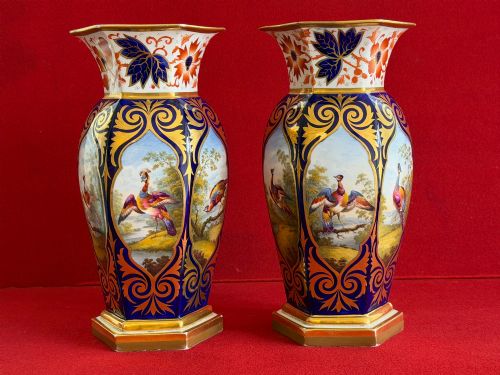
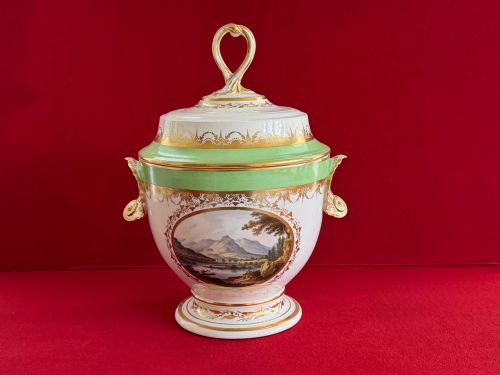
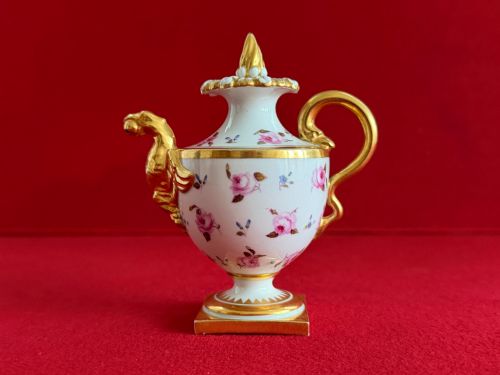
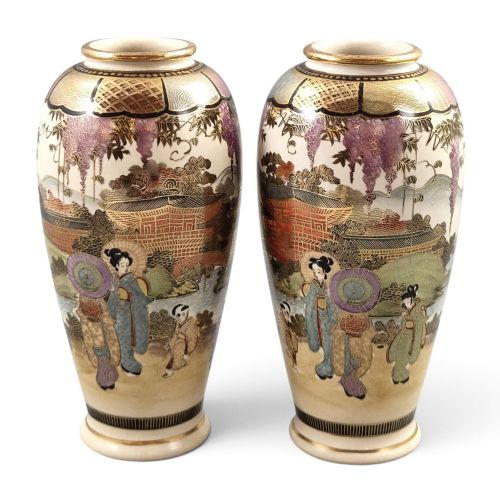
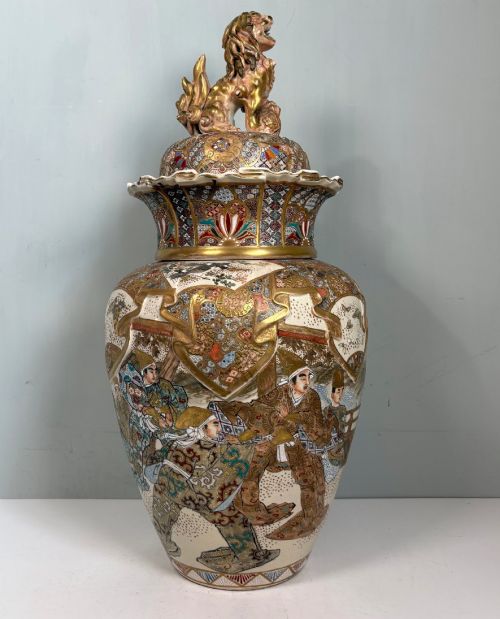
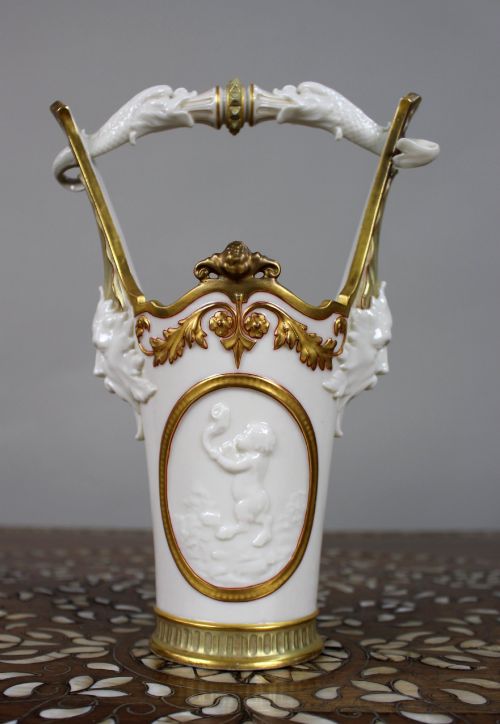
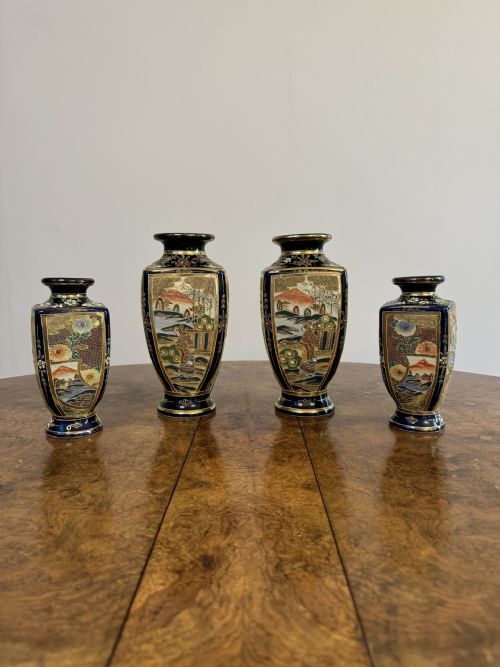
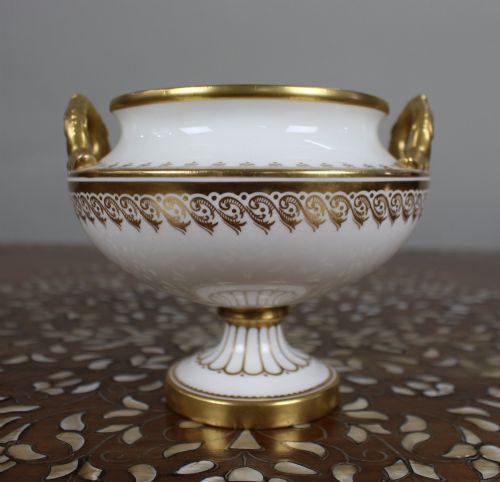
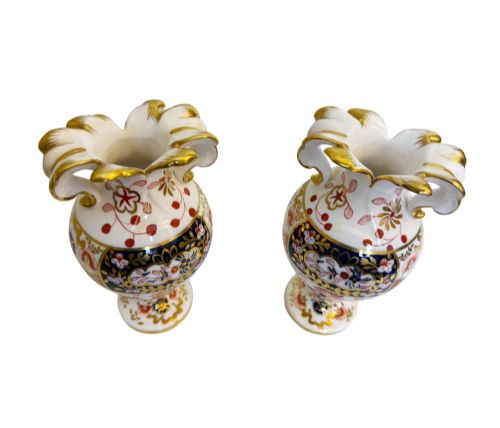
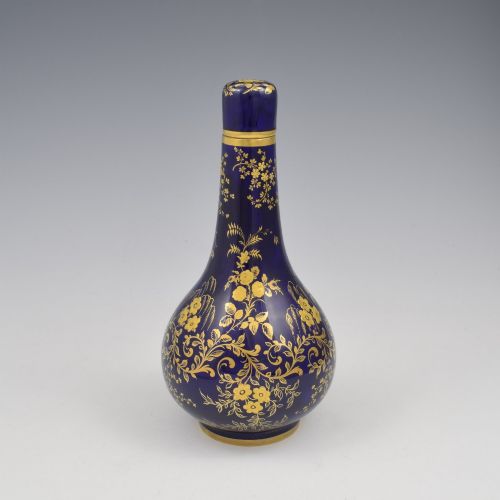
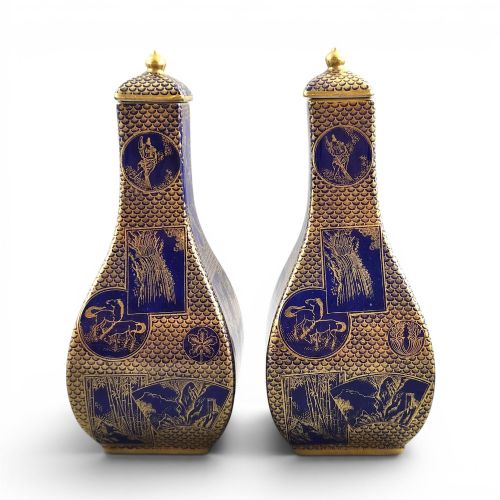
When searching for a gold ceramic urn, collectors encounter a diverse range of historic vessels spanning Georgian, Victorian, and Edwardian periods alongside Japanese Satsuma and Meiji wares. These items primarily manifest as decorative vases, lidded jars, jardinières, and ice pails adorned with metallic highlights.
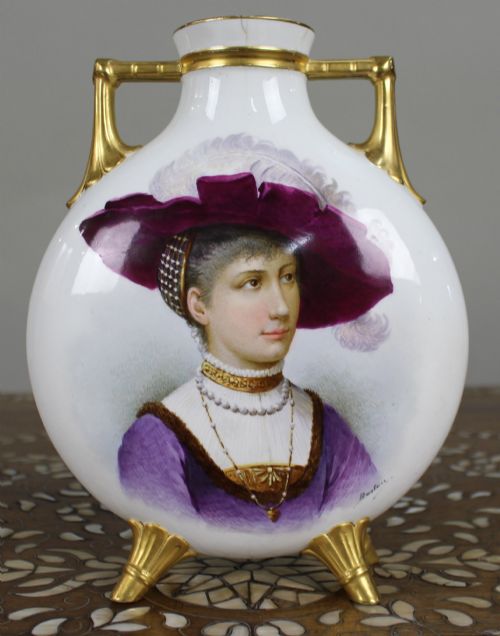
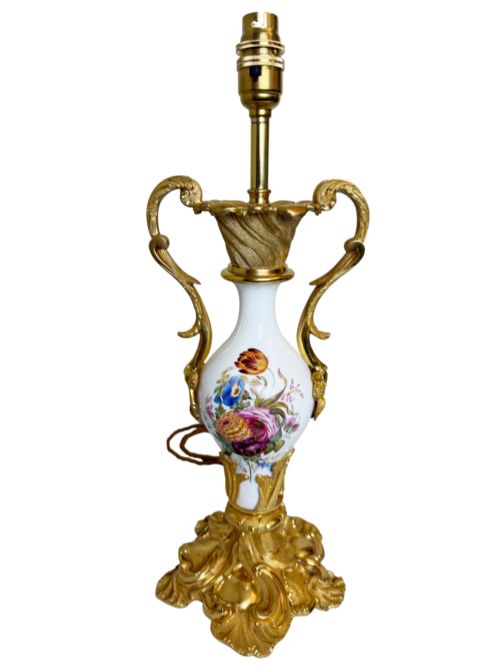
The English examples on this page showcase notable domestic factories like Worcester, Derby, and Royal Worcester, typically featuring hand-painted botanical or figurative scenes framed by elaborate gilding. Alongside these sit continental porcelain pieces and Japanese earthenware creations.
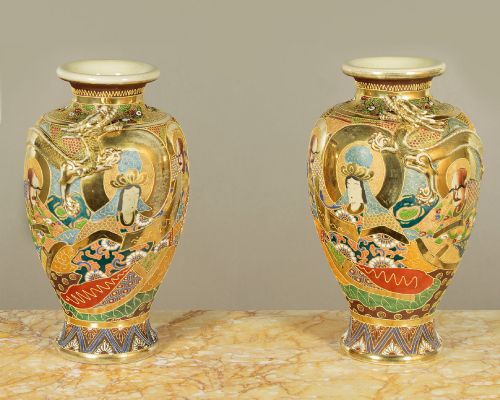
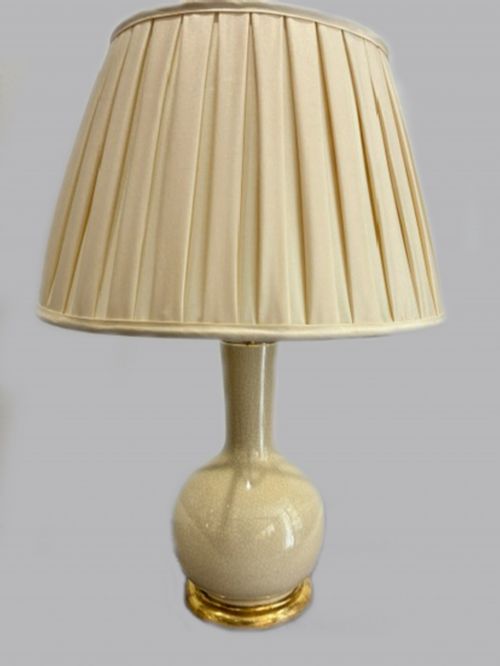
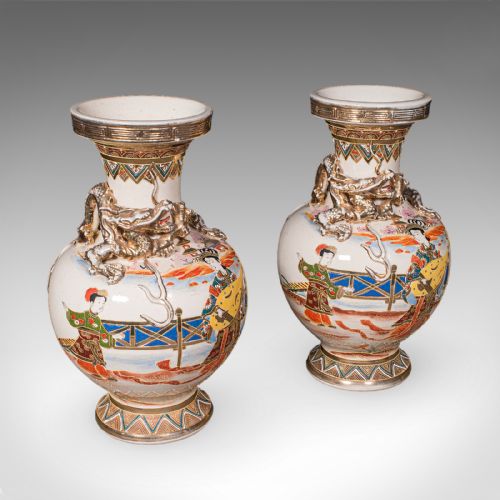
Japanese Satsuma production forms a significant portion of these listings, offering intricate hand-painted designs enriched with gold leaf and enamel across baluster and hexagonal forms. Buyers frequently meet these traditional Japanese vessels alongside British campagna urns and table lamps.
How they were made
Makers utilised high-fired porcelain and earthenware bodies, shaping them into classical campagna urns, bottle vases, and baluster vessels before applying complex decorative programmes. Artisans combined liquid glazes with hand-painted enamel pigments to build up layered pictorial scenes.
Gilding was executed using gold leaf or gold gilt, meticulously brushed onto the ceramic surface and fired to achieve a permanent metallic sheen. Many pieces integrated raised paste gilding to create tactile, reflective borders around painted panels.
Some Victorian and Meiji pieces include tiny painted insects hidden among elaborate floral bouquets.
What varies in quality
The distinction between standard production and top-tier pieces rests on the precision of the hand-painting and the complexity of the gilding. Master artists working at notable potteries executed finely detailed figurative or floral vignettes that elevate the artistic value of the ceramic body.
The richness and preservation of the gold leaf or gilding across handles, rims, and borders dictate the visual impact of the vessel. Heavier, more intricate application of raised gold work distinguishes superior examples from simpler factory output.
Flight Barr And Barr·Royal Worcester·Coalport·Minton
The Gold Ceramic Urn Glossary
- Satsuma
- A type of Japanese earthenware originating from the Satsuma Province, traditionally characterised by a finely cracked ivory glaze and elaborate enamel and gold decoration. These vessels frequently depict historical figures, landscapes, and floral motifs.
- Campagna Urn
- A classical vase form shaped like an inverted bell with a flaring rim and a footed base, popular in Georgian and Victorian British ceramics. The shape derives from ancient Roman marble excavations.
- Gilding
- The application of gold leaf, powder, or gold gilt onto the ceramic surface to provide metallic enrichment. This technique highlights handles, rims, and framing borders.
- Jardiniere
- A decorative ceramic pot or urn designed to hold plants or flowers, often featuring twin handles and substantial painted decoration. These vessels sit on tables or pedestals within period interiors.
- Enamel
- Opaque glass-like pigments applied over the glaze and fired to permanent hardness, providing vibrant colour to floral and figural scenes.
Gold Ceramic Urn: Frequently Asked Questions
How do I care for my gold ceramic urn?
Clean the ceramic surface gently with a dry or very slightly damp soft cloth to protect the delicate gilding and enamel work from abrasion. Avoid using chemical cleaners or immersing gilded items in water.
Keep the vessel away from direct sunlight to prevent fading of the hand-painted pigments over time.
What periods do these gold ceramic urns come from?
The pieces span multiple eras, including Georgian, Victorian, and Edwardian British production, alongside late nineteenth and early twentieth-century Japanese Meiji wares. Each era employed distinct forms and painting styles.
English factories leaned towards classical shapes and botanical scenes, while Japanese studios focused on densely patterned figures and landscapes.
Were these urns used for flowers originally?
Many forms, such as jardinières, ice pails, and specific vase types, were designed for practical domestic utility including holding flowers, water, or cooling wine at the table. Others functioned purely as decorative garnitures to display on mantelpieces.
Over time, many of these vessels transitioned into purely ornamental cabinet pieces.