


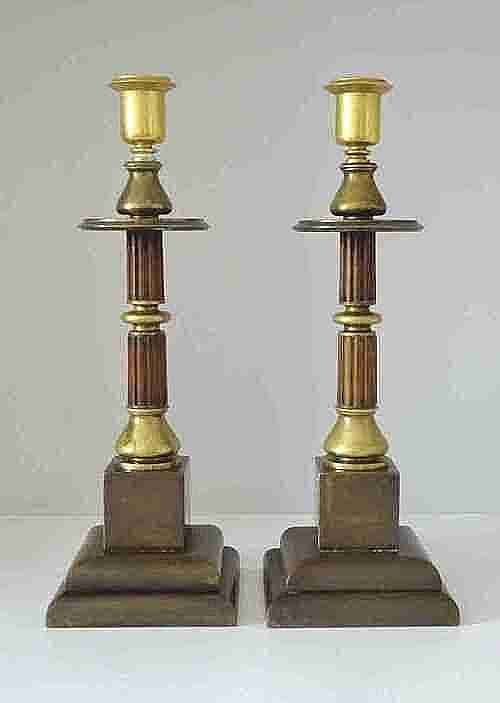

Gold Bronze Candle Stands
Gold bronze candle stands bring warmth and heavy classical form to a room, spanning periods from the eighteenth century to Art Deco.
Gold Bronze Candle Stands
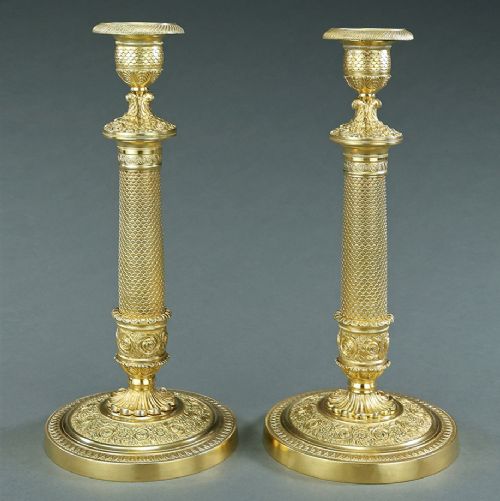
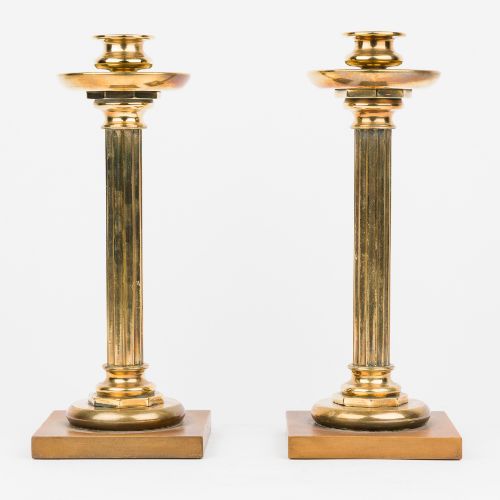
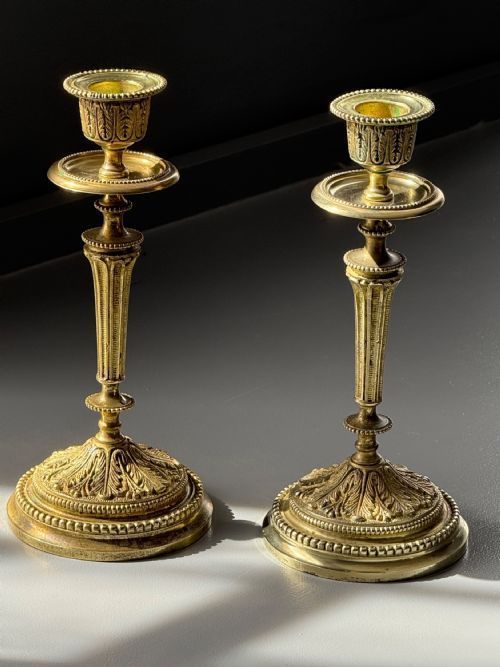
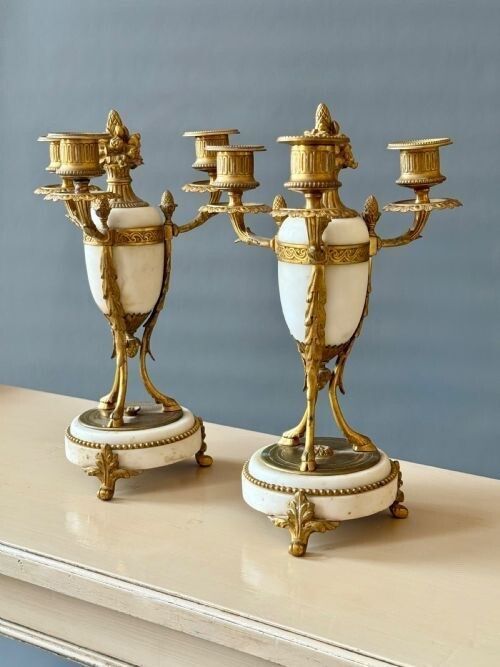
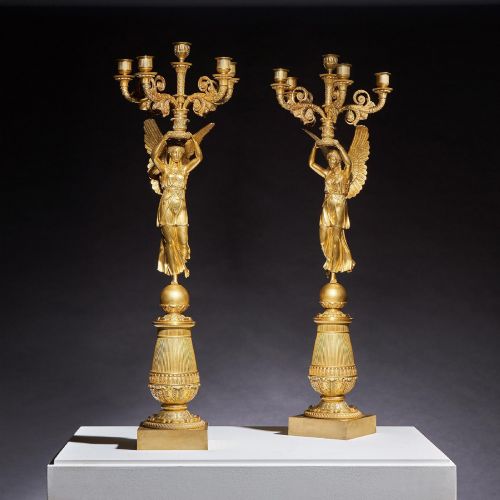
Gold bronze candle stands encompass candlesticks, candelabra, and inkstands shaped from cast metal and gilt surfaces. These pieces emerge predominantly in French Empire, Louis XVI, and Regency designs across the eighteenth and nineteenth centuries.
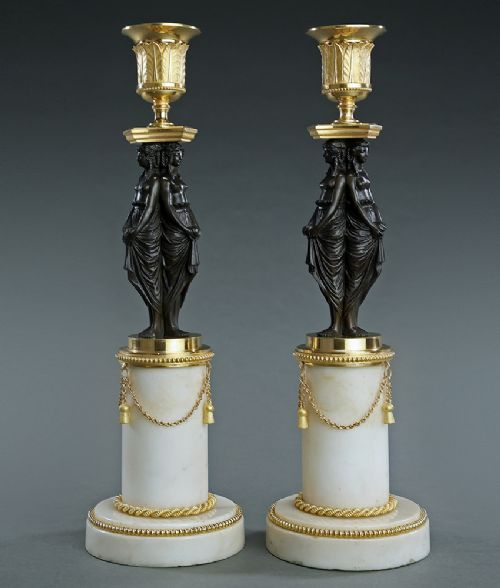
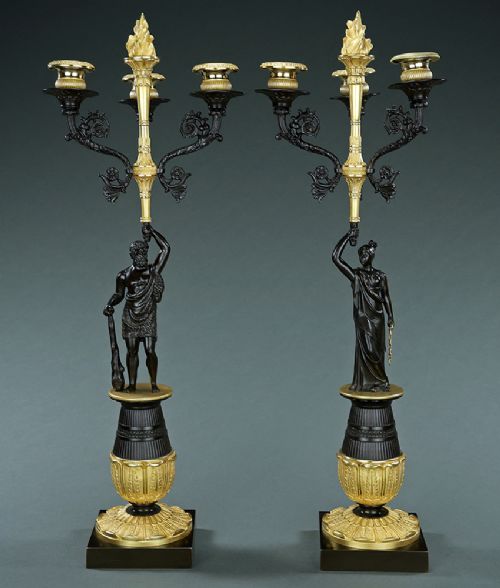
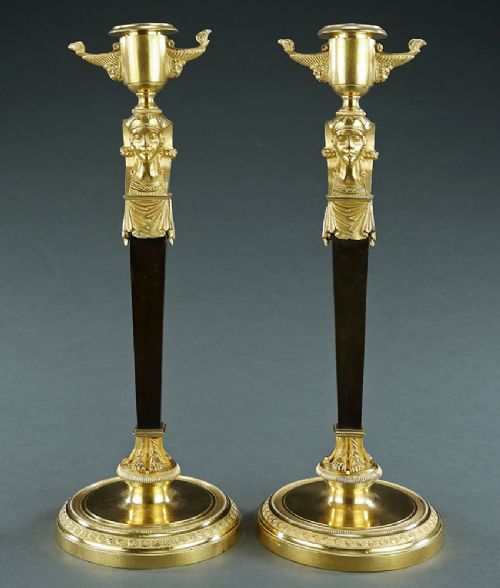
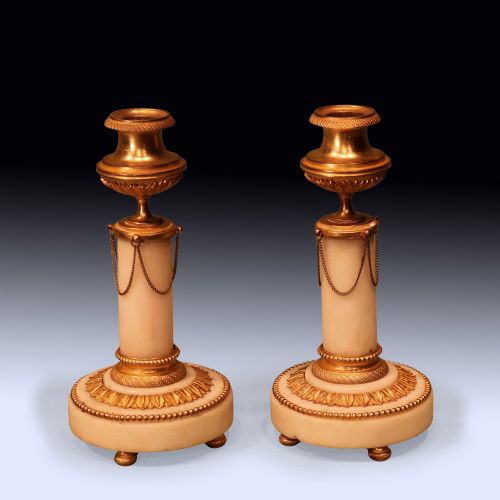
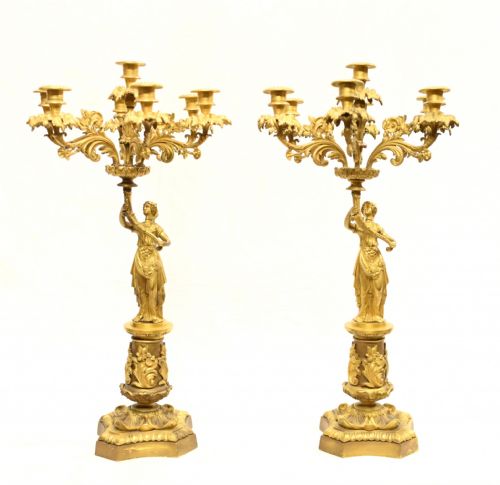
Buyers meet pairs most frequently, often combining dark patinated bronze with bright ormolu mountings. Forms range from simple classical columns to sculptural figures like caryatids, dolphins, and cherubs.
Originating largely from French workshops, these items served to illuminate formal rooms whilst demonstrating wealth through elaborate metalwork. Surviving examples retain their original sconces and bases from periods including the Victorian era and the early twentieth century.
Judging Quality
Quality rests upon the crispness of the chasing, where secondary hand-chiselling refines the cast surface after it leaves the mould. Softer, blunt details indicate worn moulds or rushed production.
The weight of the cast and the depth of the mercury gilding determine durability and visual resonance. Superior examples maintain tight joints between separate components without visible gaps or misalignment.
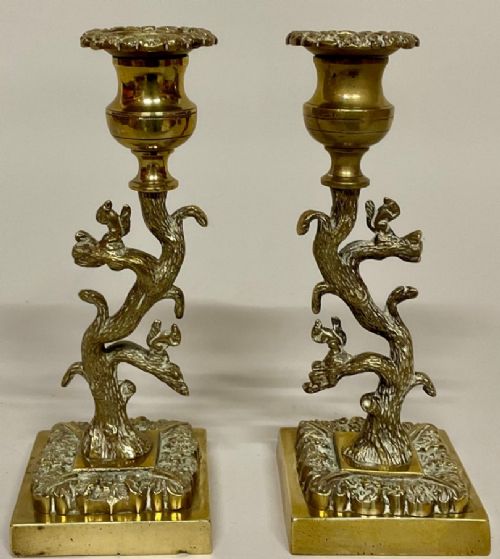
Squirrels forage among cast bronze tree branches on early nineteenth-century Regency candlesticks.
Pierre Philippe Thomire·Rabiat·Abel Landry·Auguste Cain
The Gold Bronze Candle Stands Glossary
- Ormolu
- Finely ground high-carat gold amalgamated with mercury and applied to bronze through heat, creating a rich matte golden finish. This technique was widely practiced in French workshops during the eighteenth and nineteenth centuries.
- Patinated bronze
- Metal treated with chemical solutions to produce a controlled dark surface colour, contrasting with gilt elements. This darker tone highlights the highlights of the underlying cast relief.
- Campana sconce
- A candle cup shaped inverted bell-style, common in Neoclassical and Regency designs. It supports the candle directly above the shaft or arms.
- Candelabra
- A branched candlestick holding multiple lights from a single central stem. These multi-arm fixtures often feature removable branches for conversion into single candlesticks.
- Torchere
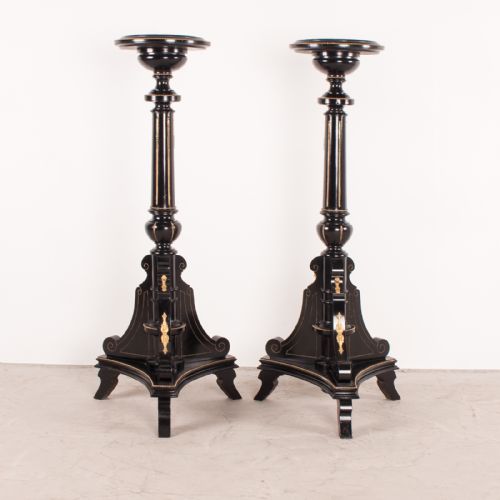
- A tall stand or candlestick designed to elevate a light source above furniture level. Such pieces frequently incorporate column or figural supports on raised bases.
Gold Bronze Candle Stands: Frequently Asked Questions
How do I clean ormolu candle stands?
Dust gently with a soft dry brush to prevent accumulation in the recesses of the cast ornament. Avoid water, abrasive cloths, and chemical polishes that strip historical mercury gilding.
Examine the surface under natural light before attempting any maintenance. Professional conservation is advisable if the gilt layer shows flaking or active corrosion.
Were these stands made for candles or oil?
Most pieces listed are designed specifically for wax tapers, utilising standard campana or urn-shaped sockets. Some desk variations accommodate inkwells alongside the candle holder for writing.
Check the interior of the sconce for original drip pans or prickets. These interior components confirm the intended fuel type and period assembly.
How can I date an antique bronze stand?
Examine the casting method, base construction, and stylistic motifs against known design periods like French Empire or Regency. Hand- filed seams and heavy bronze casts typically point towards earlier manufacturing dates.
Compare the patination and wear patterns around the base and socket. Consistent, age-related handling marks support the assigned century of production.
Are pairs always matched from the factory?
Many surviving pairs began as unified workshop productions, cast from the same moulds and finished together. Some pairings assembled later match in height, weight, and mercury gilding colour.
Inspect the underside of the bases for matching assembly marks or numbers. Minor variations in chasing often reveal whether the pair was cast by the same hand.