
Gold Brass Accent Table
A gold brass accent table brings warm metallic lustre and useful small-scale surface space to a room.
Gold Brass Accent Table
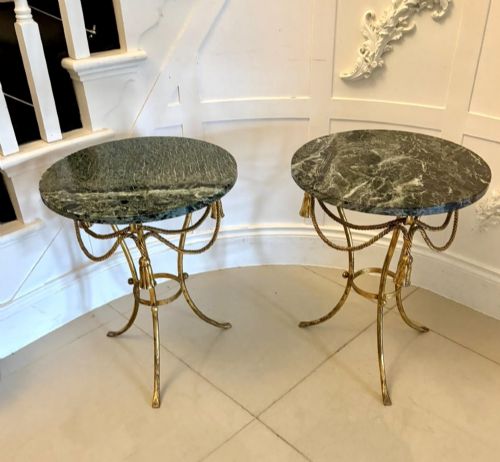
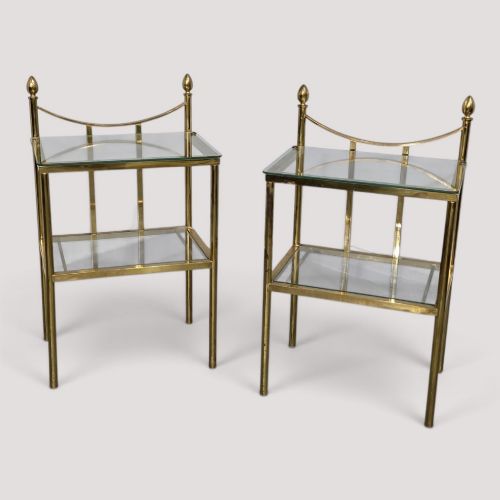
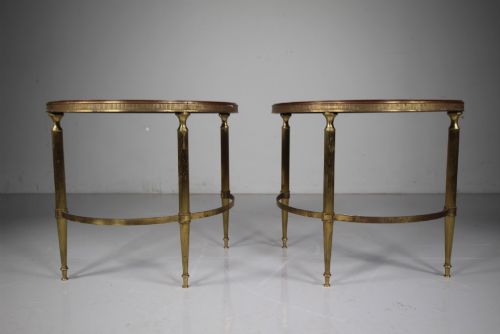
When you search for a gold brass accent table, you find a varied selection of small decorative and functional surfaces spanning the nineteenth and early twentieth centuries. Side tables, lamp tables, and occasional tables appear alongside related forms in styles such as Rococo Revival, Neoclassical, and Art Deco. Many pieces combine metal frames with marble, glass, or onyx tops.
The versions you meet most frequently on this page date from the Victorian era through the 1930s, including French designs and Hollywood Regency influences. Side tables and low demilune tables sit alongside occasional tables with inlaid or galleried surfaces. These items function equally as display pedestals and practical furnishings for a sitting room.
Materials and construction
Makers utilised cast brass, gilt bronze, and ormolu to form structured frames and decorative mounts. These metal elements combine with green marble, white marble, onyx, and glass inserts to create contrasting textures. Surface treatments include gilding and lacquer work.
Joinery and assembly rely on traditional metal casting, threading, and structural framing techniques. Artisans integrated inset stone slabs and glass panels into metal galleries, whilst other pieces feature openwork brass and copper inlay.
Listings feature items spanning the 1850s to the 1930s, incorporating brass, marble, gilt bronze, and glass across side and occasional table forms.
Assessing quality and craftsmanship
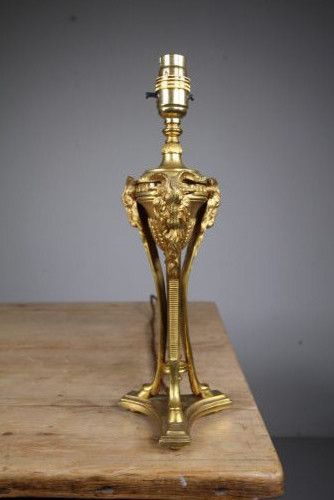
Quality shows in the crispness of cast metal ornament, such as rams heads, floral motifs, and classical masks. Finer examples display sharp definition in the chasing and finishing of ormolu and gilt bronze mounts, whereas simpler items exhibit softer details. The weight and substance of the brass or bronze frame indicate superior structural integrity.
Material selection marks another distinction between standard pieces and high-end work. The choice of genuine verd antique or white marble, heavy crystal components, and intricate boullework or papier-mâché separates ordinary production from exceptional decorative pieces.
Maison Millet
The Gold Brass Accent Table Glossary
- Ormolu
- Gilt bronze mounted or applied as furniture hardware and decorative trim. This technique involves coating cast bronze with a finely ground mercury and gold amalgam before heating.
- Guéridon
- A small decorative side table supported by one or more columns or figural pedestals. Originating in seventeenth-century France, these tables frequently feature marble or wooden tops.
- Demilune
- Half-moon shape, typically describing a small side table designed to sit flush against a wall. Such tables offer a compact surface area for display.
- Galleried
- Having a raised miniature railing or border around the edge of a tabletop. This feature prevents small items or glassware from sliding off the surface.
- Boullework
- Marquetry of tortoiseshell and brass popularized by French cabinetmaker André-Charles Boulle. It creates elaborate patterns across furniture surfaces.
Gold Brass Accent Table: Frequently Asked Questions
What is a gold brass accent table used for?
These pieces serve as compact surfaces for lamps, decorative objects, and everyday items. Their modest scale allows them to fit easily beside seating or against walls.
Historically, such tables functioned as display stands for porcelain, clocks, and bronzes in formal reception rooms. Today, they bring both utility and metallic warmth to domestic interiors.
How do I identify French styles?
French-influenced pieces often display classical motifs such as acanthus leaves, urns, rams heads, and floral swags. Look for gilt bronze or ormolu mounts applied to marble or wood.
Styles range from the curved lines of Louis XV and Rococo Revival to the symmetrical balance of Neoclassical and Louis XVI designs. Quality of casting usually confirms French manufacture.
Are these tables sturdy enough for daily use?
Most occasional and side tables are built with metal frames and stone tops designed to support lamps and small objects. Their stability depends on the weight of the base and the integrity of the joints.
While robust, heavy items like marble slabs require careful handling when moving the furniture. Placing them on level flooring prevents any undue stress on the frame.
How do I care for gilt metal surfaces?
Gilt bronze and ormolu require gentle dusting with a soft, dry cloth to prevent the accumulation of dirt. Avoid abrasive cleaners and polishes that can strip away the historic gilding.
Keeping these tables away from direct sunlight and damp environments helps preserve the original lacquer and metal finish over time.