


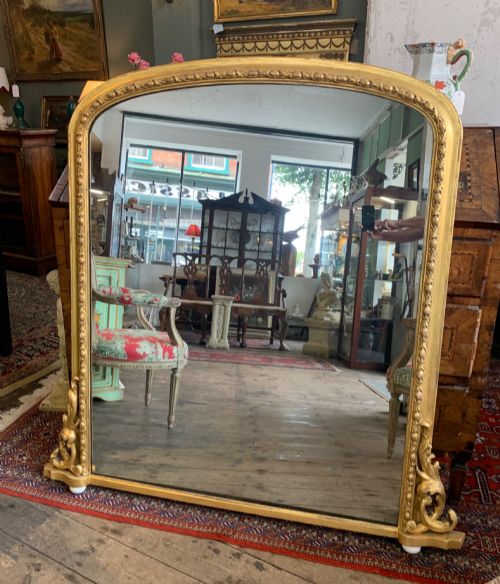
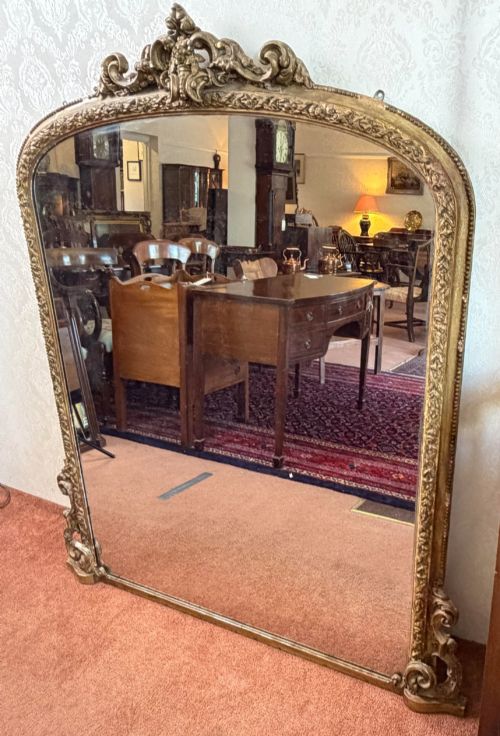
Gold Arched Overmantel Mirror
A gold arched overmantel mirror brings historical character and scale above a fireplace, anchoring a room with reflective light and decorative presence.
Gold Arched Overmantel Mirror
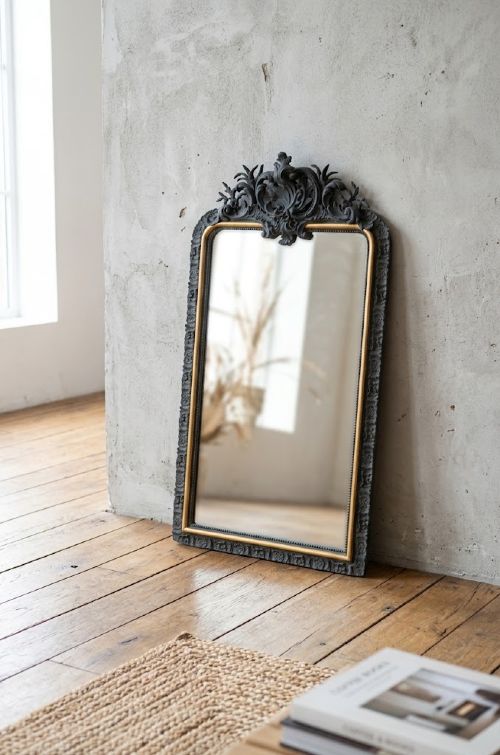
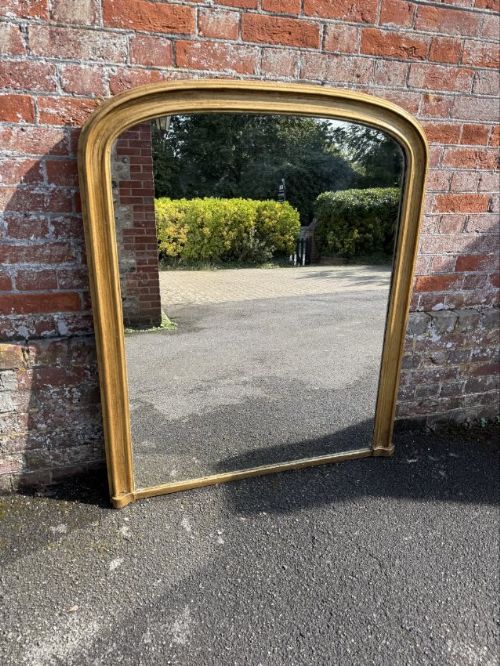
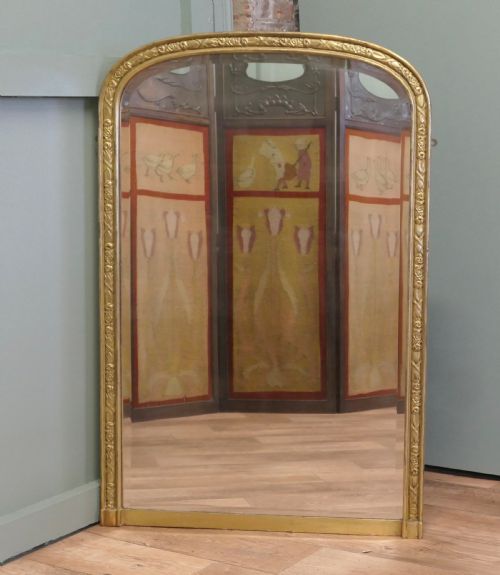
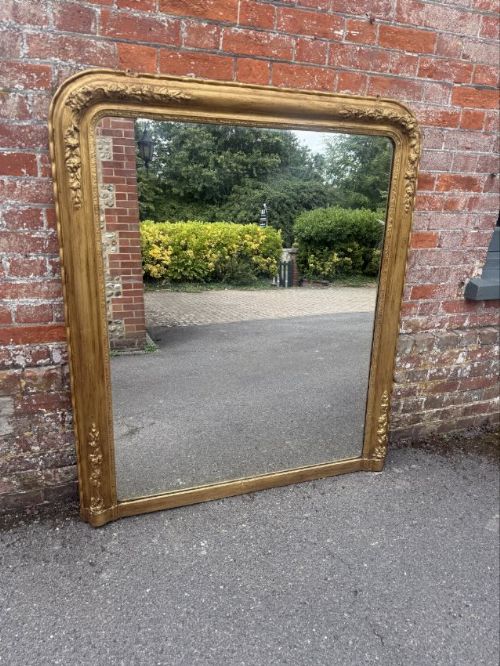
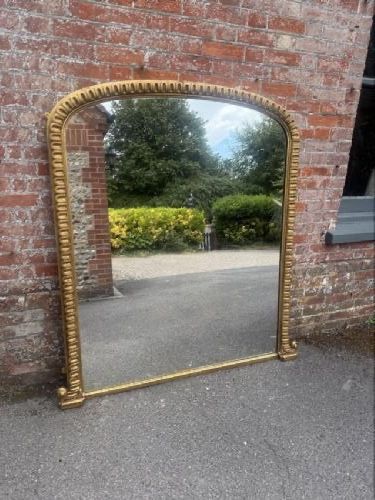
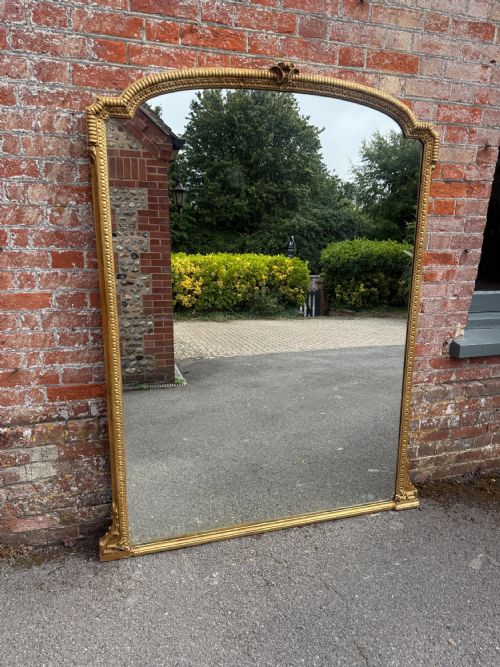
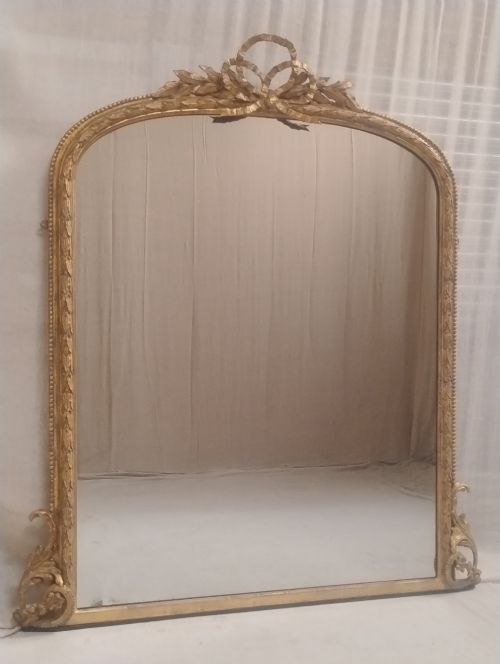
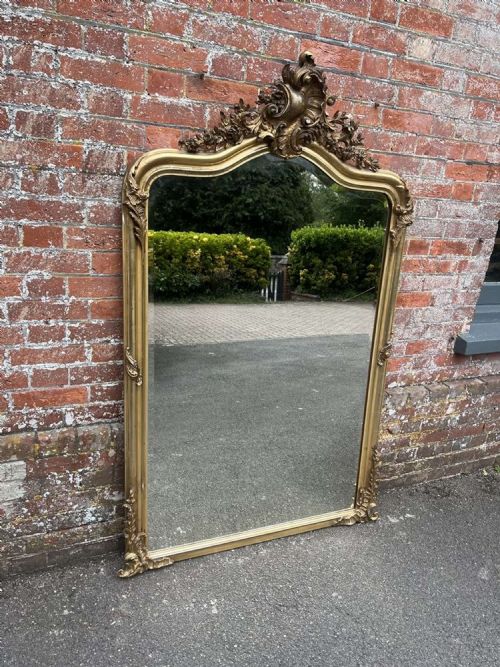
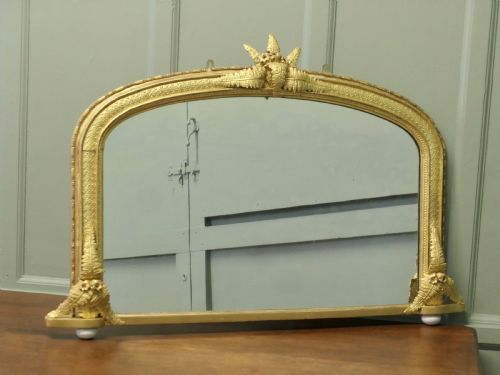
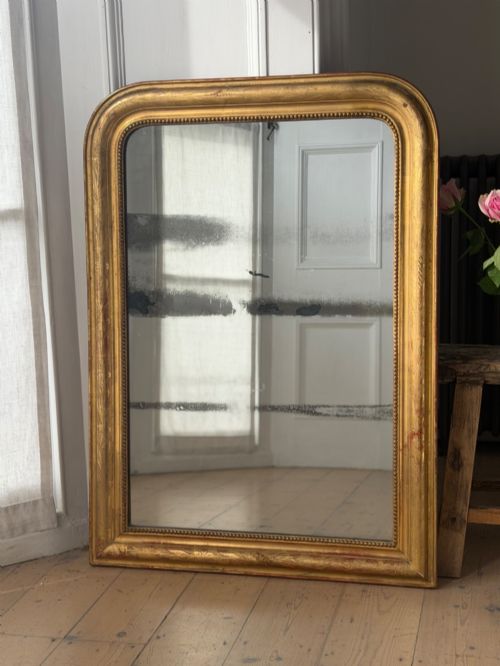
A gold arched overmantel mirror sits above a mantelpiece, drawing the eye upwards with its curved apex and substantial proportions. These pieces primarily date from the nineteenth century, including Victorian and Louis Philippe examples designed to command attention in a principal reception room.
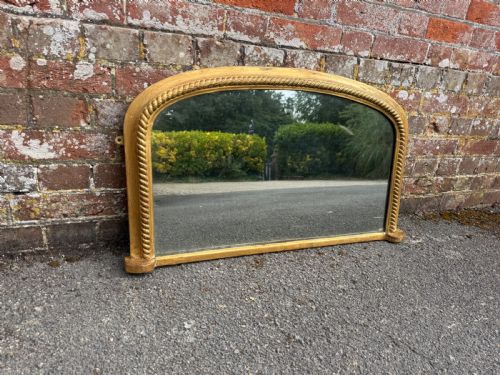
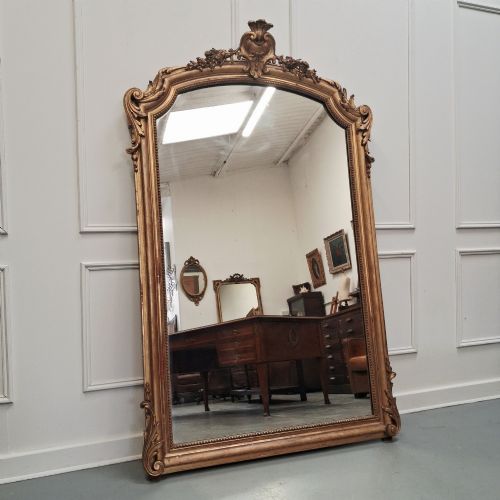
The form exists in English and French stylistic traditions, spanning plain arched plates to heavily carved frames featuring ribbed, rope twist, or tulip motifs. Most survivors measure large in scale, intended originally to reflect light from windows and chandeliers deep into period interiors.
How they were made
Craftsmen built the structural frames using wood, applying layers of gesso to create a smooth, pliable surface for intricate moulding and carving. Artisans then gilded these frames with gold leaf or gold paint, imparting a brilliant metallic finish that catches ambient light.
Glass plates of the period, sometimes showing foxing or mercury backing, sit within the rebated frame behind protective wooden backs. Frames incorporate robust joints to support the considerable weight of the tall glass and dense timber construction.
Certain nineteenth-century makers incorporated nautical rope twist carvings into gold frames, bringing maritime texture indoors for landlocked Victorians.
What varies in quality
The crispness of the gesso modelling and the depth of the hand-carving distinguish superior examples from standard production pieces. Finer mirrors retain original gilding with subtle tonal variations, whereas lesser or later items show flat, uniform metallic surfaces.
Proportions also dictate standard; superior pieces maintain balanced margins around the glass plate, while integration of original mirror glass with natural ageing adds integrity to the object.
The Gold Arched Overmantel Mirror Glossary
- Overmantel mirror
- A large wall glass specifically proportioned to hang on the chimney breast directly above a fireplace mantel.
- Gesso
- A mixture of gypsum, chalk, and size applied to a wooden frame to prepare a smooth surface for gilding and relief ornamentation.
- Giltwood
- Timber that has been coated with thin sheets of gold leaf or gold paint.
- Foxing
- Small dark spots and discoloration within the silvering of antique mirror glass caused by age and atmospheric exposure.
- Pier mirror
- A tall vertical glass designed to hang on the narrow wall space between windows.
Gold Arched Overmantel Mirror: Frequently Asked Questions
Where should an overmantel mirror hang?
These mirrors traditionally hang centrally on the chimney breast directly above a fireplace mantelpiece. This placement reflects light around the room and anchors the architectural focus of the hearth.
Ensure the wall fixings engage securely with structural brickwork or studs because these large timber and glass assemblies carry significant weight.
How do I clean nineteenth century mirror glass?
Use a soft, dry microfibre cloth to gently remove dust from the glass surface and the delicate gilded frame. Avoid commercial liquid cleaners, which can seep behind the glass edge and damage the silvering or historical backing.
Take particular care around areas of foxing or original mercury glass to preserve the aged character of the plate.
What is the difference between Victorian and Louis Philippe mirrors?
Victorian mirrors often feature heavier carved decoration, including elaborate rope twists, ribs, or crestings with deep moulding profiles. They lean towards robust architectural statements designed for formal British interiors.
Louis Philippe mirrors from France typically present a cleaner arched top with minimal framing, subtle beaded inner borders, and a restrained elegance suited to simpler decorative schemes.
Can these mirrors stand on the mantel instead of hanging?
Many period overmantel mirrors were constructed with enough base weight and width to rest securely on the wooden mantel shelf while leaning back against the wall. When employing this method, secure the top of the frame to the wall using discreet fixings to prevent accidental tipping.
Check that the mantel shelf is deep and level enough to support the footprint of the heavy wooden frame.