
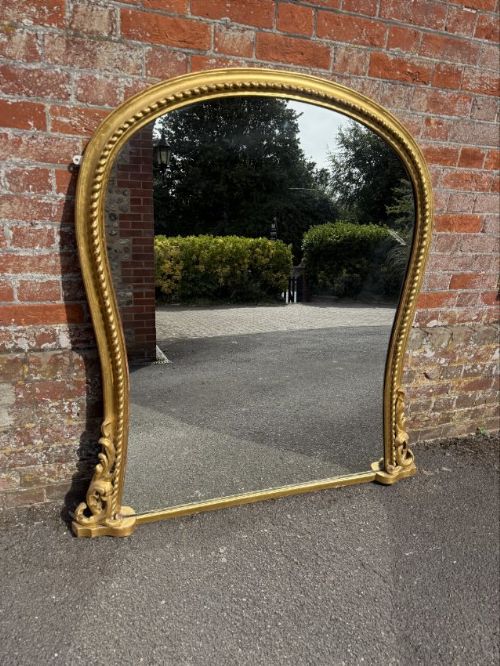

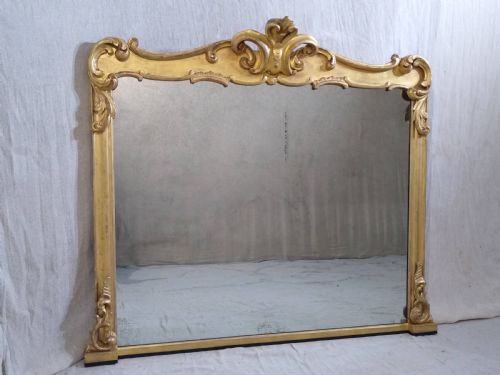


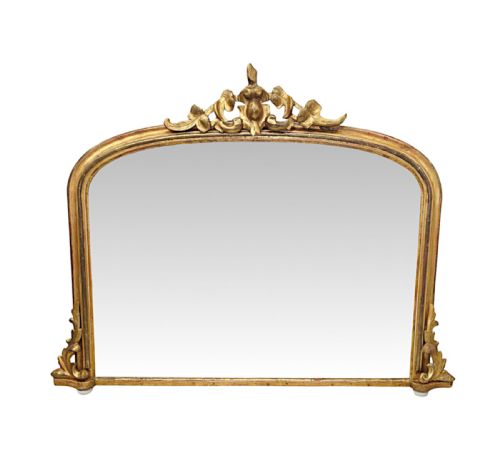


Nineteenth Century Fireplace Mirror
A nineteenth century fireplace mirror sits low on the chimney breast, reflecting light and widening the room.
Nineteenth Century Fireplace Mirror
A nineteenth century fireplace mirror is designed specifically to hang above a hearth, filling the large wall space beneath the mantelpiece. These pieces take the form of overmantel mirrors, architectural wall glasses built to balance the proportions of a chimney breast.
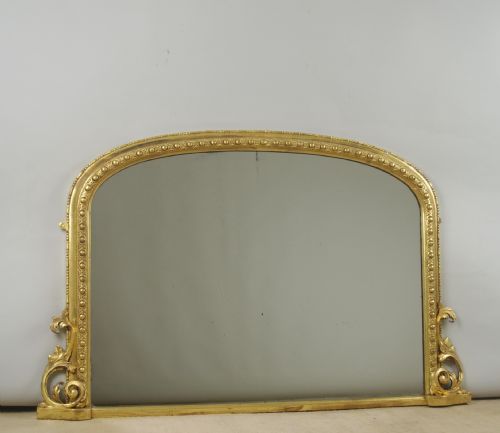
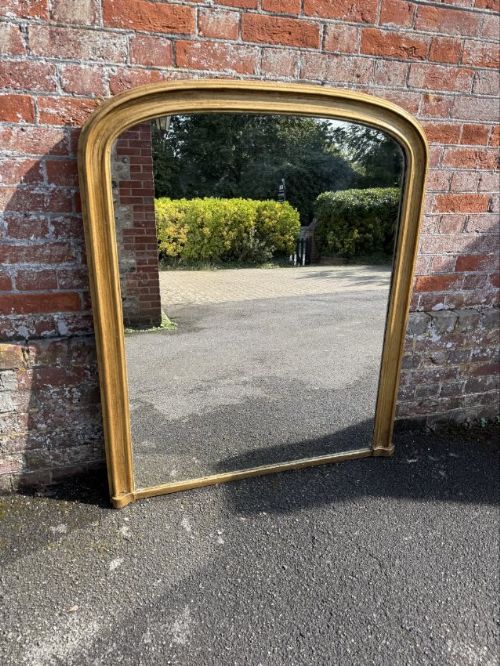
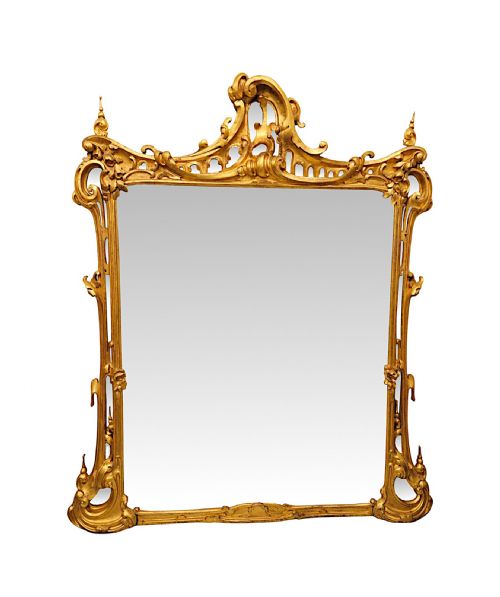
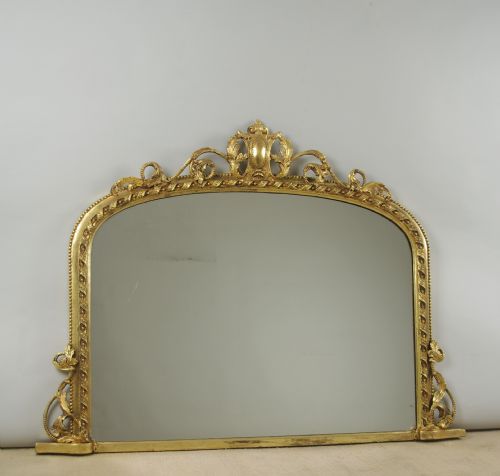
The version most commonly met on this page is the large arched top or rectangular gilt overmantel mirror dating from the mid-nineteenth century. These items frequently display classical architectural influences or ornate revival styles such as French and Victorian Rococo.
Makers shaped these frames to catch the natural light from windows and bounce it back into the principal rooms of the house. They serve both a practical decorative function and a structural role in period interior design.
Materials and construction
Carved wood provides the structural core for many frames, frequently overlaid with gesso to build up intricate relief ornaments, scrollwork, and floral motifs. Artisans then applied gold leaf or composition metal finishes directly onto the prepared gesso surfaces.
Alternative frames utilise solid timbers such as walnut, mahogany, rosewood, and ebonised wood, sometimes accented with parcel gilt details or burr yew-wood veneers. Mirror glass is set within these heavy surrounds, occasionally featuring arched tops, domed profiles, or etched designs.
Current listings feature nineteenth century fireplace mirrors spanning the Regency era through to the Victorian Aesthetic Movement, utilising giltwood, mahogany, and ebonised wood.
Factors of quality
The depth and crispness of the hand-carved wood and moulded gesso ornamentation dictate the tier of craftsmanship. Finer examples exhibit sharply defined motifs and smooth gilding applications without heavy modern restoration.
The selection of timbers and the preservation of original silvered mirror plates distinguish superior pieces. Structural integrity in the heavy framework determines how well the mirror supports its own substantial weight over time.
The Nineteenth Century Fireplace Mirror Glossary
- Overmantel mirror
- A large mirror designed to hang specifically on the wall directly above a fireplace mantelpiece. These items were often proportioned to match the width of the fireplace surround.
- Gesso
- A plaster-like mixture applied to wooden frames as a base for gilding and relief moulding. Artisans carved intricate decorative details directly into this hardened material.
- Giltwood
- Timber that has been coated with gold leaf or metallic powder applied over a prepared surface. This technique creates the bright reflective finish characteristic of period frames.
- Composition
- A moulded material made from whiting, linseed oil, resin, and glue, pressed into relief ornaments. It offered a faster alternative to hand-carving complex decorative details.
- Parcel gilt
- A finish where selected portions of a wooden or ebonised frame are highlighted with gold leaf. This creates a striking contrast between the dark timber and the bright gilded areas.
- Tryptic
- A mirror divided into three distinct vertical panels within a single frame. This configuration was popular during the Regency period.
Nineteenth Century Fireplace Mirror: Frequently Asked Questions
How do I hang a heavy nineteenth century fireplace mirror?
These frames carry significant weight due to their dense timber and thick glass construction. They require robust professional wall fixings secured directly into masonry or proper wall studs.
Weight must be distributed evenly across heavy-duty brackets rather than relying on standard picture wire. Secure anchoring ensures the frame remains stable against the chimney breast.
What is the difference between a Regency and a Victorian overmantel mirror?
Regency mirrors tend to feature cleaner architectural lines, rectangular proportions, and restrained classical decoration. They frequently incorporate giltwood frames with reeded or column details.
Victorian examples lean toward heavier proportions, arched tops, and elaborate revival ornamentation like Rococo scrollwork. They often utilise carved gesso, ebonised finishes, or burr walnut veneers.
Did these mirrors originally sit on the mantelpiece or hang on the wall?
Many nineteenth century overmantel mirrors were designed with lower blocks to rest directly upon the shelf of the fireplace surround. Fixing brackets were also utilised to secure the tall frames safely to the wall above.
Whether resting on the timber shelf or hung independently, their primary purpose remained anchoring the visual weight of the hearth.
Why do some mirror plates show dark spots?
Ageing silvering behind the glass naturally deteriorates over decades as moisture and air seep behind the plate. This produces characteristic dark oxidation spots and softening of the reflection.
Many collectors view this gentle foxing as a desirable sign of genuine antique age rather than a defect.