
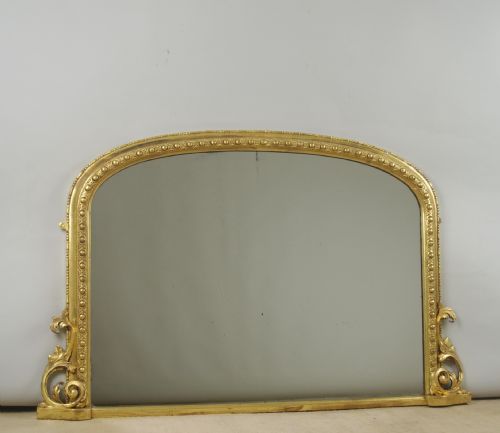
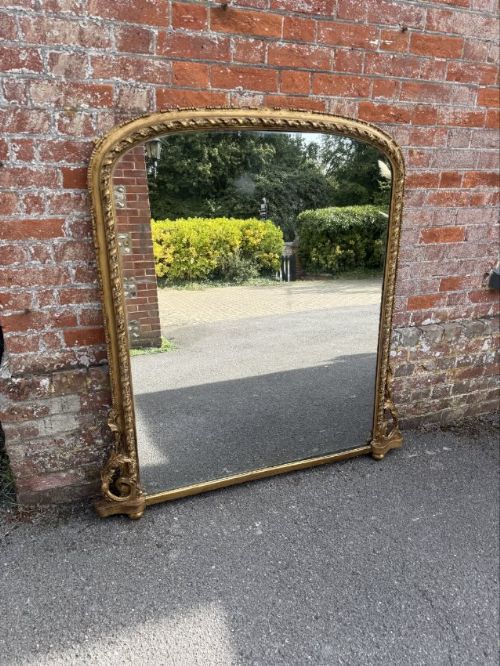
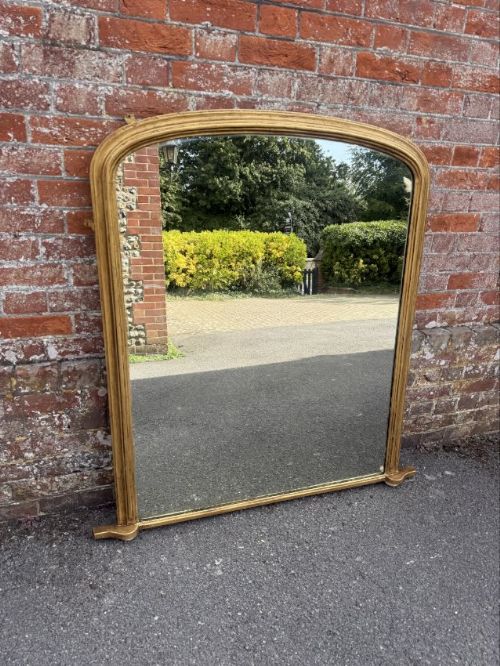
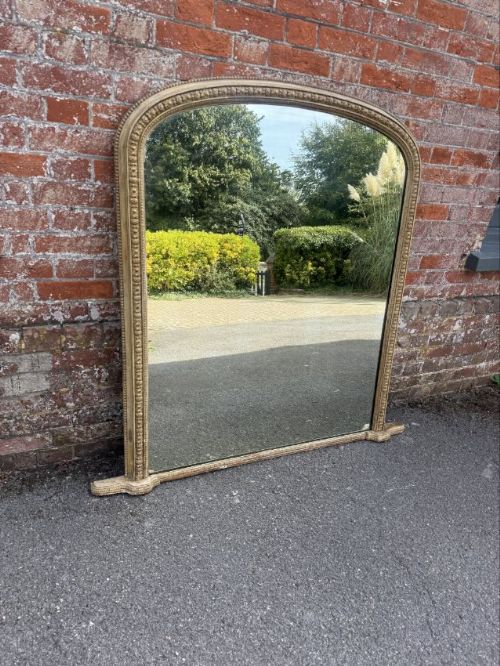

Arched Gilt Mantle Mirror
An arched gilt mantle mirror brings nineteenth-century architectural grandeur and reflected light into a room, sitting naturally above a fireplace.
Arched Gilt Mantle Mirror
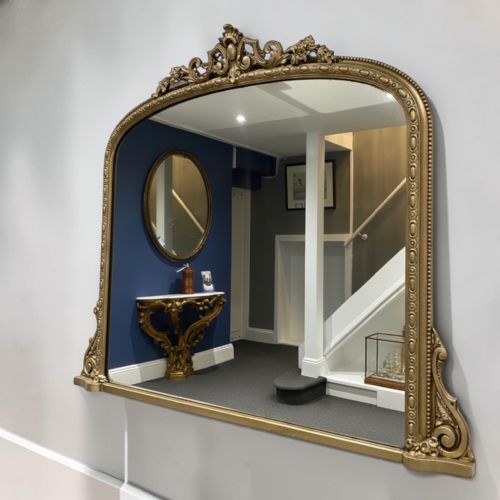
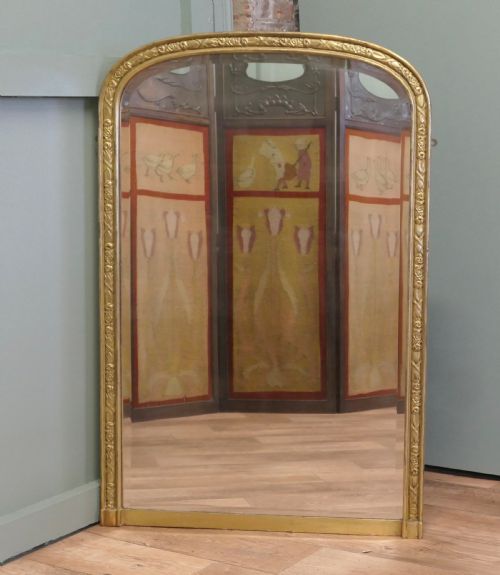
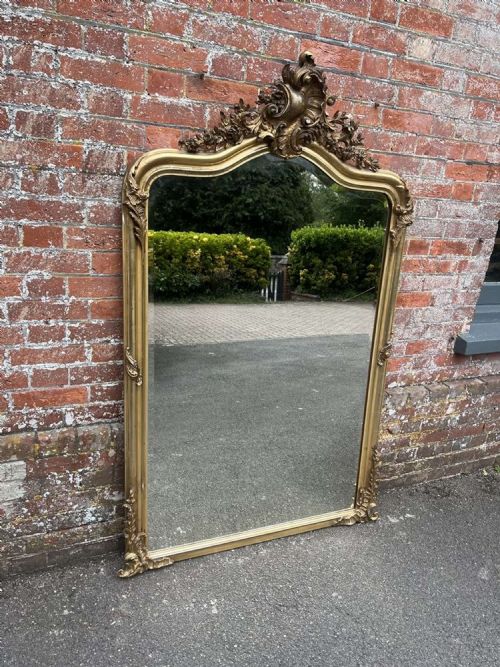
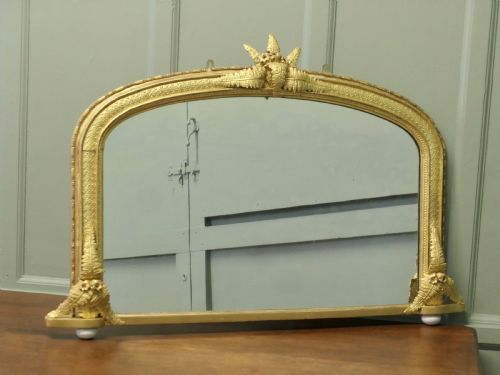
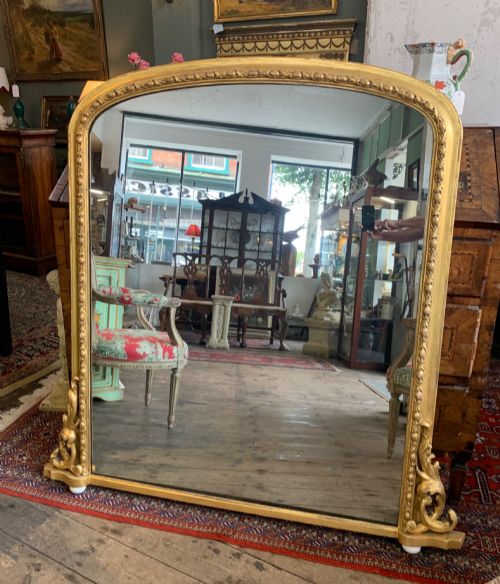
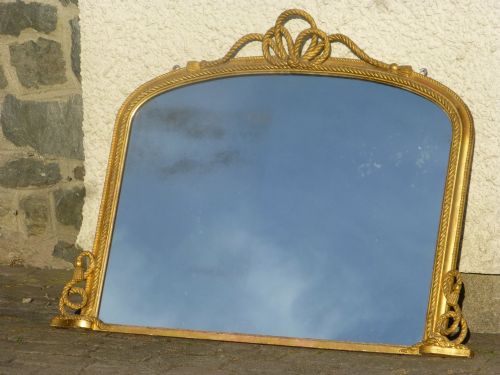
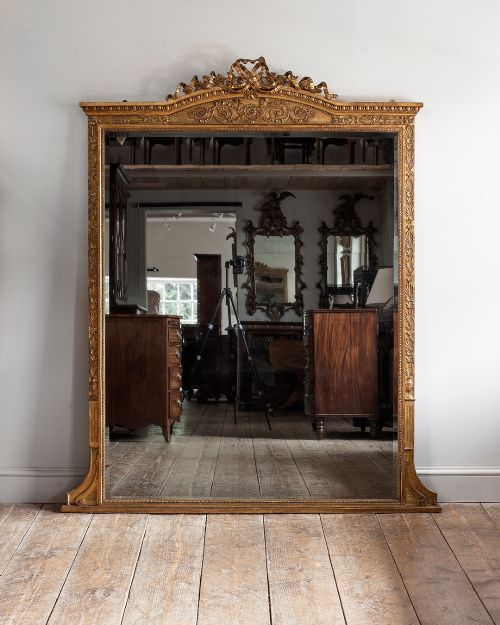
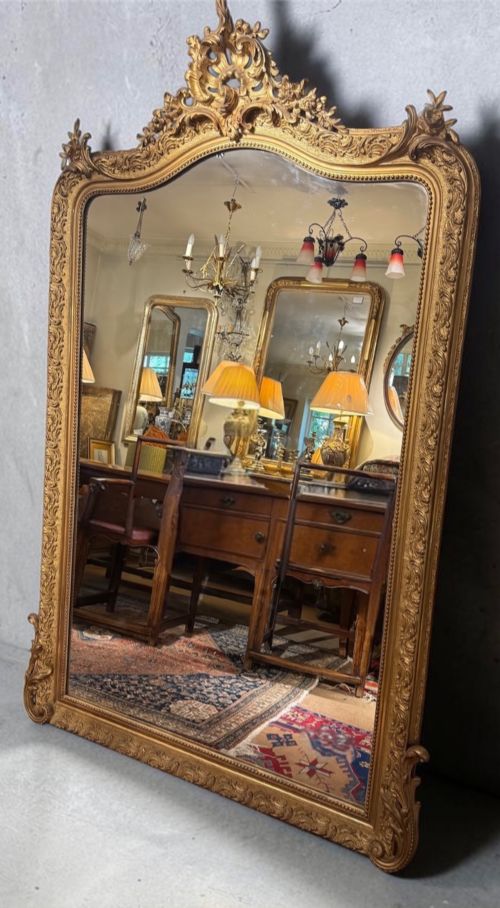
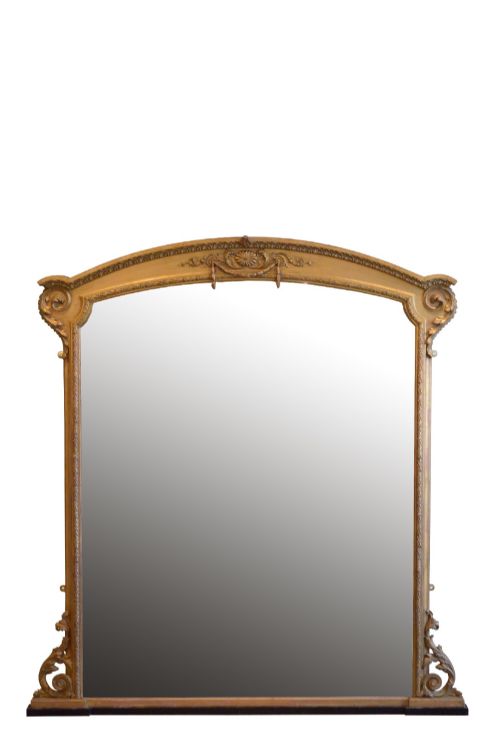
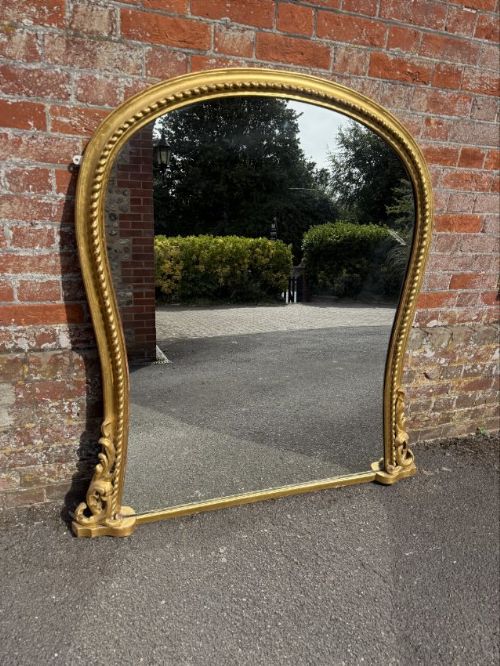
The search for an arched gilt mantle mirror leads directly to grand Victorian and nineteenth-century French overmantel mirrors designed to sit on a chimney breast. These pieces span English and French workshops from the mid to late nineteenth century, taking forms such as the Louis Philippe, French Rococo Revival, and early Victorian arched top styles.
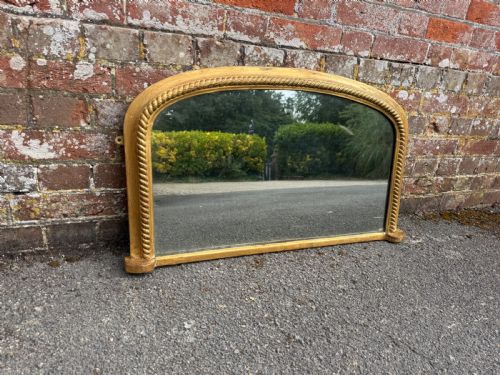
Most examples found here are large wall mirrors with carved wooden frames coated in gesso and finished in gold leaf or composition gilding. They frequently display architectural details such as ribbed frames, rope twists, or central cartouches above the curved glass plate.
Originating as statement pieces for period drawing rooms and parlours, these mirrors serve the same purpose today by anchoring a high wall and bouncing daylight across a living space. English carved wood and gesso frames sit alongside cleaner French Louis Philippe designs featuring rounded upper corners.
How They Were Made
Frames are constructed from carved timber or wood moulded with composition ornament applied over a carved substrate. Gesso, a mixture of plaster of Paris and chalk, is built up in layers over the wood to create a smooth, crisp surface for receiving gold leaf or gilt finish.
Mirrors from the nineteenth century utilise traditional silvering methods, with many older French examples displaying natural foxing on the mercury glass plates. The heavy wooden and gesso structures require robust joinery to support the weight of large glass sheets hung above a mantle.
What Varies in Quality
Quality rests in the depth and sharpness of the hand-carved woodwork and the crispness of the gesso mouldings beneath the gilt surface. Superior pieces retain their original gilding and display well-proportioned architectural frames without heavy distortion in the antique glass.
The complexity of the frame construction, from plain ribbed borders to elaborate rococo scrolls and central cartouches, distinguishes standard decorative mirrors from exceptional statement pieces. Original backboards, untouched gilding surfaces, and mercury glass plates further elevate a piece.
The Arched Gilt Mantle Mirror Glossary
- Gesso
- A plaster-based mixture applied to wooden frame foundations to provide a smooth base for gilding. This material allows artisans to carve intricate decorative details before applying gold leaf.
- Overmantel mirror
- A large wall mirror specifically proportioned to hang directly above a fireplace mantle. These pieces typically feature horizontal or vertical grandeur designed to anchor the chimney breast.
- Louis Philippe
- A mid-nineteenth-century French style characterised by clean architectural lines and a softly arched top with rounded corners. This design offers a restrained alternative to heavily carved rococo frames.
- Foxed mercury glass
- Mirror glass showing organic spots, clouding, or dark speckles caused by age and the degradation of the reflective backing. Collectors prize this characteristic for the authentic historic atmosphere it creates.
- Cartouche
- An ornamental carved frame or tablet, often resembling a scroll or shield, positioned at the apex of an arched mirror. It serves as a central focal point for elaborate nineteenth-century frames.
Arched Gilt Mantle Mirror: Frequently Asked Questions
How do I hang a heavy overmantel mirror?
These large mirrors require professional installation directly into solid wall studs or masonry using heavy-duty brackets to bear the substantial weight of wood, gesso, and glass safely.
Resting the frame partly on the mantle shelf while securing the upper section to the wall provides additional stability for everyday safety.
Did these mirrors always live above fireplaces?
Nineteenth-century craftsmen designed these overmantels specifically to sit on wooden or stone mantelpieces where they could reflect the light of the room and fill the vertical wall space.
While their primary historic home was the chimney breast, today they function equally well mounted directly on large blank walls in hallways and reception rooms.
How do I clean antique gilt frames?
Giltwood and gesso surfaces require delicate dusting with a soft dry brush to prevent damage to fragile nineteenth-century gold leaf and composition ornament.
Water and modern chemical cleaning agents must be avoided entirely, as moisture quickly strips historical gilding from the underlying gesso layers.
What is the difference between English and French styles?
English nineteenth-century overmantel mirrors frequently feature robust carved wood and gesso frames with architectural ribbed borders, rope twists, or arched tops.
French Louis Philippe and Rococo examples tend to showcase softer, more restrained curves or elaborate scrollwork with distinctive mercury glass plates and foxing.