

Glazed Earthenware Charger
A glazed earthenware charger is a wide, shallow display vessel that brings centuries of painted tin-glazed and polychrome artistry straight to your wall or table.

Glazed Earthenware Charger
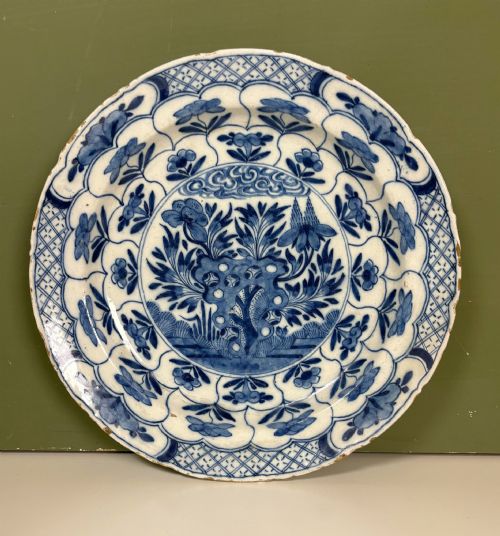
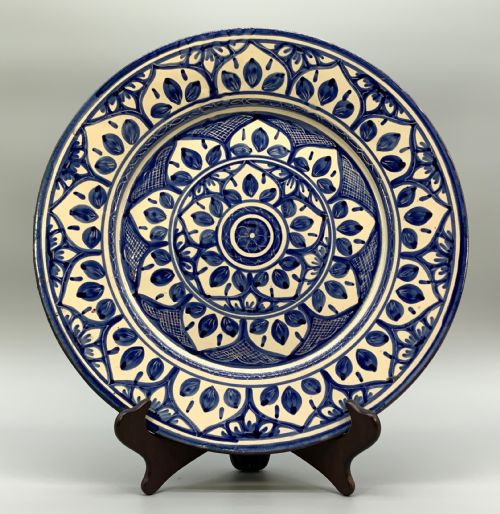
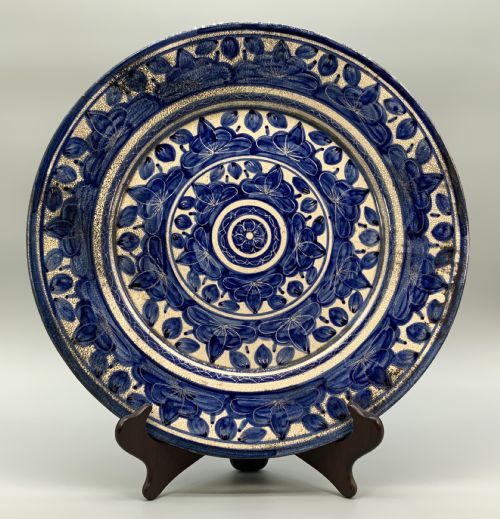
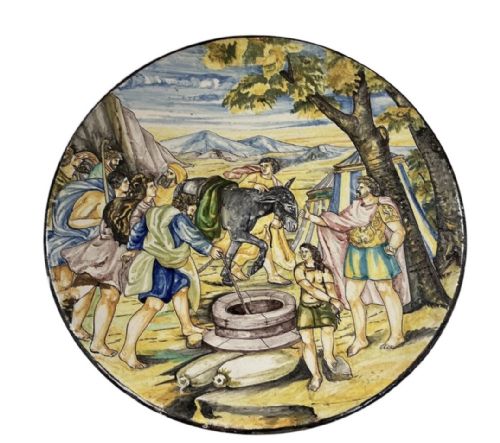
A glazed earthenware charger is a substantial ceramic plate designed primarily for display rather than daily dining. These pieces span from the seventeenth century through the twentieth century, encompassing English, Dutch, French, Spanish, Italian, and Austrian origins.
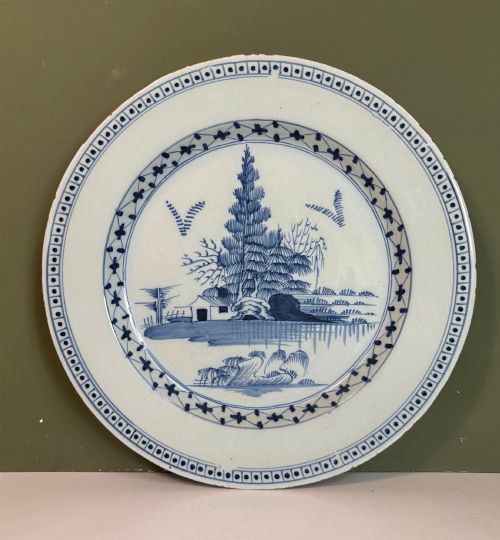
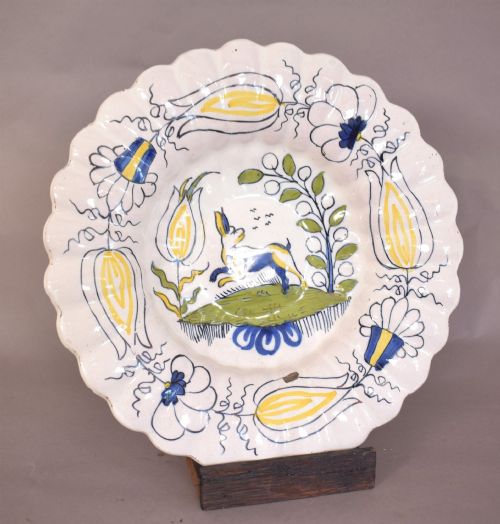
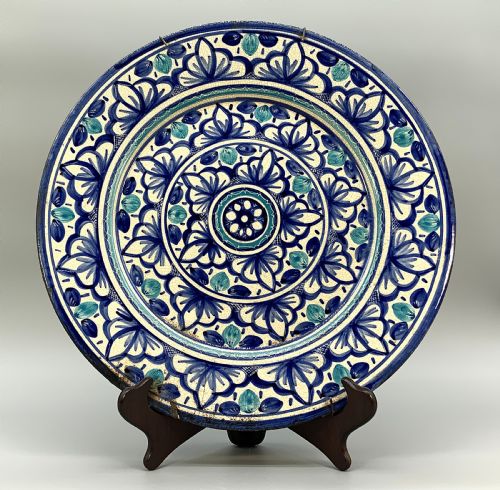
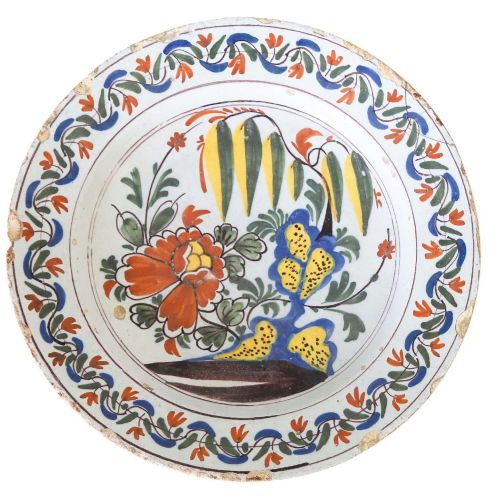
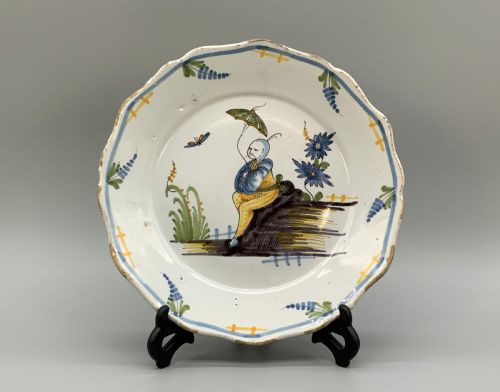
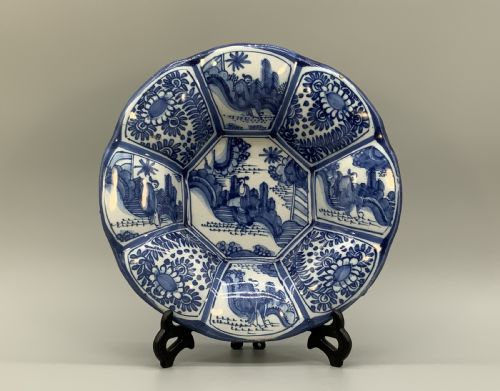
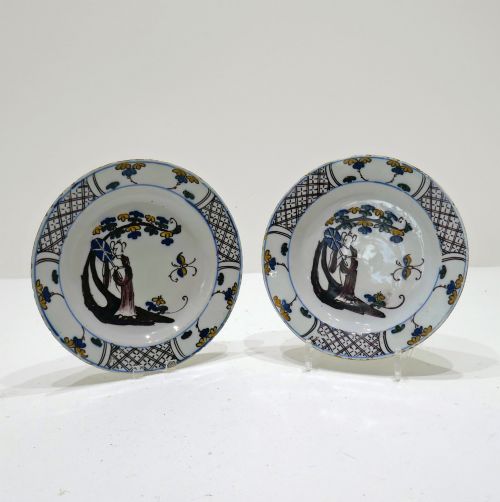
The version most commonly encountered in this selection is the eighteenth-century delft charger, featuring blue and white or polychrome hand-painted decoration. Alongside these, collectors will find seventeenth-century examples, nineteenth-century revival styles, and twentieth-century interpretations.
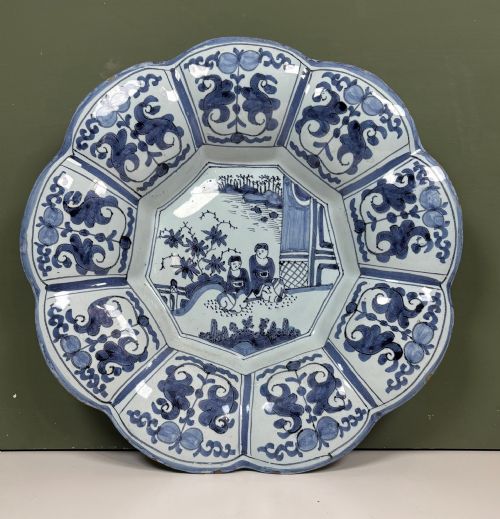
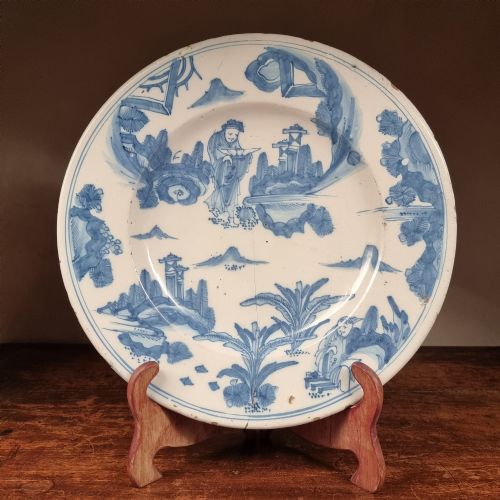
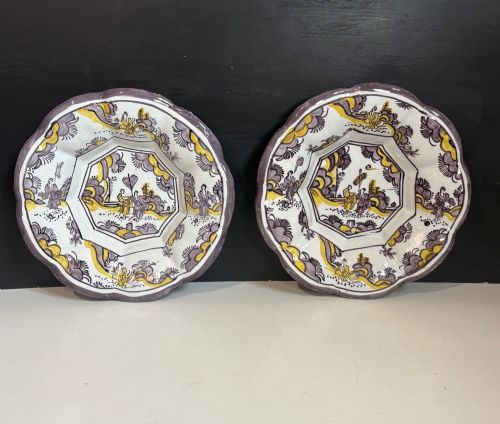
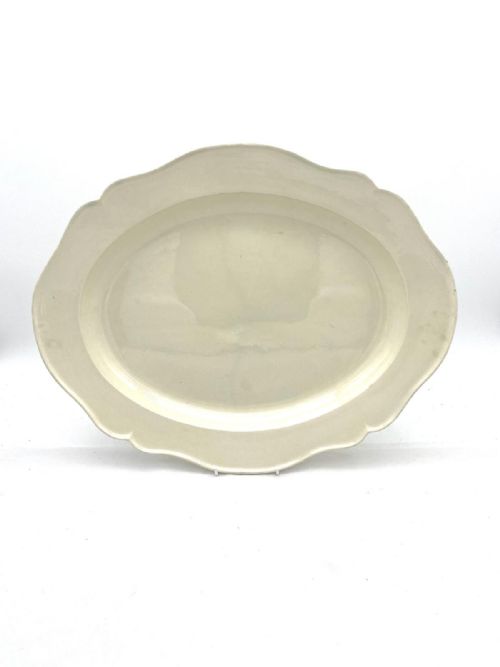
Forms extend beyond standard circular plates to include lobed dishes, platters, shallow bowls, and barber's bowls. The visual vocabulary ranges from traditional floral motifs and Chinoiserie scenes to Moorish patterns and classical histories.
Materials and construction
Makers formed these chargers from basic earthenware clay, shaping the body on a wheel or pressing it into a mould. The unfired clay received a tin-glaze mixture that provided an opaque, white surface suitable for painting.
Decorators applied pigments directly onto the porous raw glaze using cobalt oxide for deep blues, alongside manganese, yellow, and other polychrome colours. Subsequent firing fused the metallic oxides into the glaze layer, fixing the design permanently.
Listings feature chargers spanning the seventeenth, eighteenth, nineteenth, and twentieth centuries, utilising earthenware, tin glaze, and cobalt pigment.
Judging quality and execution
Quality in a glazed earthenware charger rests upon the confidence and fluidity of the hand-painted brushwork. Superior examples display sharp, expressive details in the central motifs and border patterns, whether depicting Chinoiserie figures or naturalistic flora.
The handling of the tin glaze itself dictates visual success, where an even, luminous surface without excessive pooling or crawling elevates the piece. The crispness of the earthenware body and the preservation of the painted colours across centuries also distinguish finer examples.
The Glazed Earthenware Charger Glossary
- Charger
- A large, decorative plate or shallow dish originally used for ceremonial dining or side service on grand tables. These wide vessels measure significantly larger than standard dining plates.
- Tin glaze
- An opaque white glaze made by adding tin oxide to a lead glaze base, providing a smooth canvas for painted decoration. This technique is central to traditional delftware and faience production.
- Polychrome
- Decoration employing multiple distinct colours rather than a single pigment like blue and white. On these chargers, this typically includes manganese purple, yellow, and green alongside cobalt.
- Chinoiserie
- European artistic interpretations of Chinese and East Asian design motifs, frequently seen on seventeenth and eighteenth-century delftware chargers. These patterns include imagined landscapes, pavilions, and figures.
- Kraak style
- A decorative layout characterised by panelled borders surrounding a central focal point, originating on late Ming export porcelain and copied by European delft potters.
Glazed Earthenware Charger: Frequently Asked Questions
What is a glazed earthenware charger?
A glazed earthenware charger is a large decorative dish formed from clay, covered in an opaque tin glaze, and painted with hand-applied pigments. They were produced across Europe from the seventeenth century onward for visual display rather than heavy utility.
These wide vessels provide a broad surface for intricate painted scenes, botanical studies, and geometric patterns. Their scale and presence made them centrepieces in historic interiors.
How were chargers used historically?
Historically, large chargers functioned as ceremonial serving platters or were displayed upright on dressers, sideboards, and walls to demonstrate household wealth and taste. Their prominent scale commanded attention in formal dining spaces.
Over time, as porcelain gained favour for dining, these earthenware vessels transitioned into purely decorative objects. Their survival in domestic collections speaks to their enduring aesthetic appeal.
How do I distinguish English delft from Dutch delft?
Distinguishing English delft from Dutch delft involves examining the characteristics of the clay body, the tone of the tin glaze, and the palette of the painted decoration. English bodies tend to be slightly softer and heavier, with distinct variations in foot rim construction.
Pigments and brushwork styles also offer clues, as regional workshops developed specific approaches to floral sprays and figures. Comparing the technical signatures helps attribute pieces to factories in Bristol, London, or the Netherlands.
How should I display a charger safely?
Displaying a historic charger safely requires specialised wall hangers designed to distribute weight evenly across the rim without putting pressure on the body. Alternatively, secure table stands with rubber or felt padding provide stable support on flat surfaces.
Keep these ceramic pieces away from direct sunlight and areas subject to sudden temperature fluctuations. Proper placement ensures the tin glaze and hand-painted pigments remain protected.