
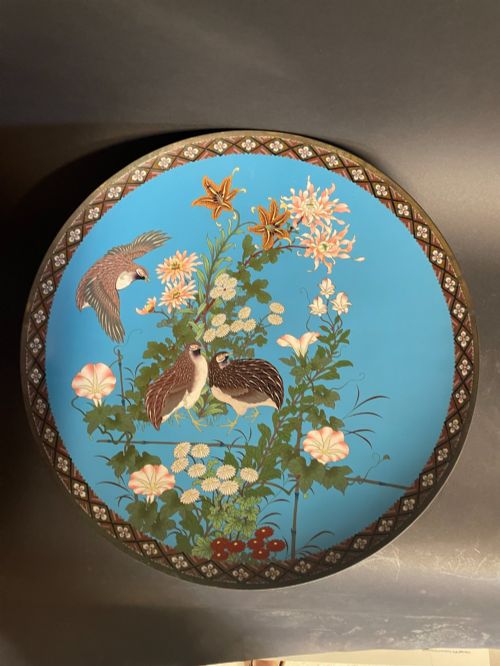


Bird Motif Ceramic Plate
These bird motif ceramic plate examples bring avian subjects to life across centuries of global pottery traditions, offering collectors fine painted detail and rich colour.

Bird Motif Ceramic Plate
A bird motif ceramic plate brings together centuries of decorative artistry from English pottery houses and Asian kilns. When searching for a bird motif ceramic plate, buyers encounter everything from early 19th century English earthenware to intricate Japanese Imari chargers.
The objects span decorative plates, cabinet plates, and large chargers featuring hand-painted avian subjects. Pieces originate from diverse traditions including Chinese export, Japanese Kutani, and English pearlware.
English iterations often showcase transfer-printed or hand-painted patterns like blue feather edges and named bird studies. Meanwhile, Asian examples present finely detailed depictions of sparrows, peafowl, and exotic plumage across porcelain and earthenware surfaces.
Materials and construction
Potters utilised materials such as bone china, ironstone, earthenware, and porcelain to form the body of each vessel. These ceramic bases were then shaped into plates, shallow bowls, and large chargers.
Decoration relied heavily on underglaze blue, polychrome enamels, and gilt highlights applied directly to the fired surface. Japanese pieces frequently employed rich ironstone or Imari palettes, while English factories utilised pearlware and bone china bodies.
Several plates capture house sparrows and lapwings frozen mid-flutter, preserving Victorian avian observation directly onto the ceramic glaze.
Assessing quality
Quality rests primarily in the precision and hand-painted detail of the avian subject matter. Crisp brushwork on feathers and flora distinguishes superior artistic output from standard commercial production.
The integrity of the glaze and the vibrancy of surviving enamel or gilt highlights dictate the visual strength of a piece. Finer bodies, such as translucent bone china or well-potted porcelain, display greater refinement in weight and form.
Wedgwood·Mason's·Shozo·Davenport
The Bird Motif Ceramic Plate Glossary
- Imari
- A traditional Japanese style of porcelain characterised by a palette of underglaze blue, iron red, and gilt. It originated in Arita and became widely exported to Europe.
- Ironstone
- A heavy, durable type of ceramic patented in England during the 19th century. It bridges the gap between earthenware and true porcelain.
- Charger
- A large decorative plate or platter. These items were typically displayed on walls or sideboards rather than used for dining.
- Bone china
- A type of porcelain composed of clay mixed with bone ash. It produces a strong, white, and translucent body favoured by English makers.
Bird Motif Ceramic Plate: Frequently Asked Questions
How should I display my bird motif ceramic plate?
Larger chargers and shallow bowls look best mounted securely on walls or supported on sturdy plate stands. Smaller cabinet plates sit well within enclosed display cabinets where their painted surfaces remain protected from dust and handling.
Ensure mounting hardware distributes the weight evenly across the rim and base. Avoid hanging pieces in areas subject to direct sunlight or fluctuating humidity.
What is the difference between earthenware and porcelain?
Earthenware is a porous ceramic fired at lower temperatures, requiring a glaze to achieve impermeability. English pearlware and majolica fall into this category.
Porcelain is fired at much higher temperatures, resulting in a vitrified, non-porous body that is often translucent. Bone china represents a specific British refinement of this porcelain tradition.
Are these plates meant for daily dining?
Most antique decorative plates and chargers served primarily as ornamental items rather than functional tableware. The presence of delicate enamels and historic glazes means modern dining use is generally discouraged.
Displaying them preserves the painted bird motifs and prevents scratching or staining of the antique ceramic body.