



Glass Salt Cellar Set
A glass salt cellar set brings colour and bright reflection to a dining table.
Glass Salt Cellar Set
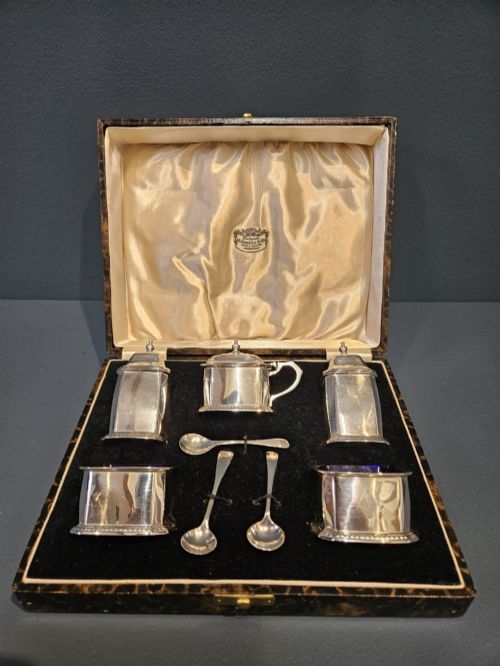
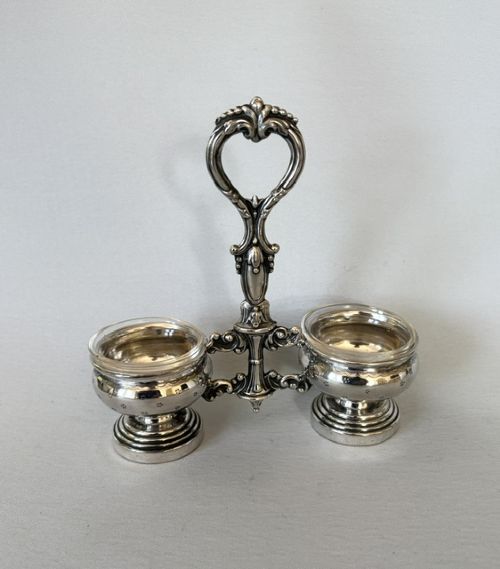
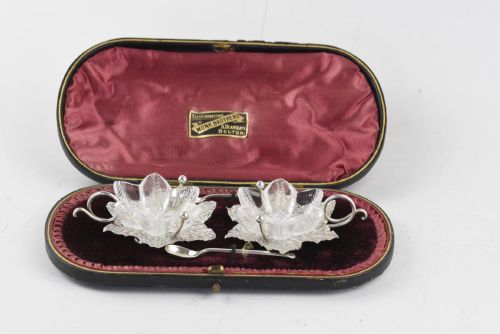
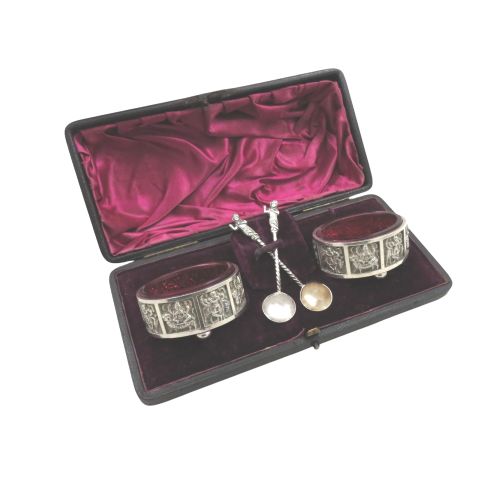
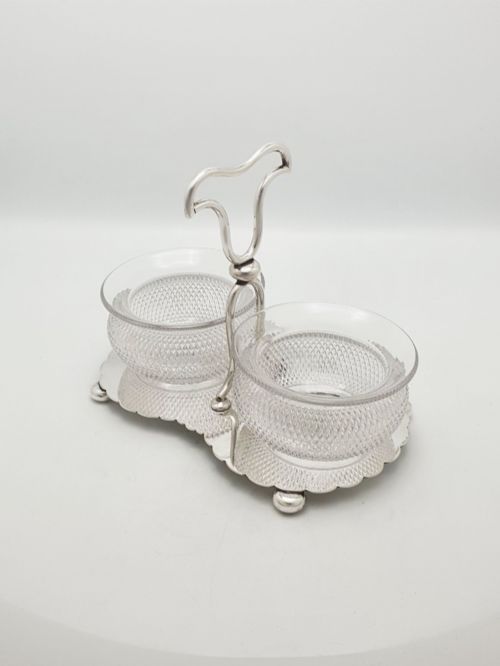
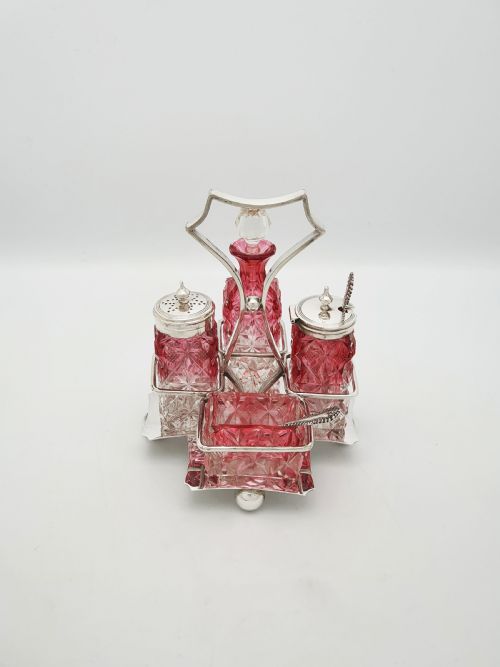
A glass salt cellar set comprises small open dishes or vessels paired with silver, silver plate, or stands for serving salt at the table. These collections appear in various configurations, from cased pairs and sets of four to larger condiment stands holding multiple bottles and pots.
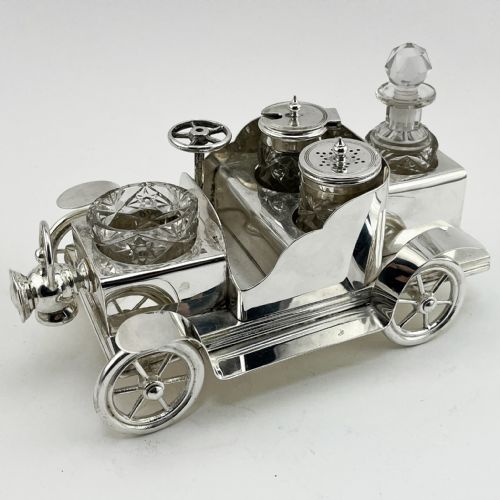
The pieces on this page span the nineteenth and twentieth centuries, taking forms that range from simple Victorian open salts with blue glass liners to elaborate Edwardian and Art Deco cruet sets. Buyers meet everything from matched sterling silver frames to novelty stands shaped as cars, animals, or musical instruments.
Originating primarily from British, French, and Scandinavian makers, these sets reflect shifting dining customs across the decades. Whether formed as boat-shaped table salts or cranberry flashed cut glass cruets, each set offers a glimpse into historical tablescape design.
How they were made
Metal stands and frames involved casting, stamping, and silver-plating techniques, often finished with detailed chasing or applied gilt edges. Sets frequently included matched spoons and fitted presentation cases lined with velvet to protect the delicate glass components.
Black Forest bears and vintage cars make unexpected appearances as condiment stands, holding salt and pepper pots with surprising charm.
What varies in quality
Quality rests in the weight and clarity of the glass, alongside the crispness of detail in the metalwork frames. Hand-cut facets, deep cobalt or cranberry saturation, and intact original glass liners separate finer examples from standard production pieces.
The presence of matching spoons, original velvet-lined cases, and identifiable maker marks elevate a set's standing. Novelty designs and complex figural stands demonstrate superior craftsmanship compared to plain utilitarian condiment holders.
Goldsmith & Silversmith's·William Neale·William Hutton & Sons
The Glass Salt Cellar Set Glossary
- Cruet set
- A collection of small glass bottles or containers for condiments, held together in a stand with a handle. They typically served oil, vinegar, salt, and pepper at the dining table.
- Open salt
- A small dish used before the invention of free-flowing table salt, designed for diners to take a pinch using a tiny spoon or fingers. They frequently feature removable coloured glass liners.
- Silver plate
- A base metal, usually copper or Britannia metal, coated with a thin layer of silver through electroplating. This technique allowed makers to produce elaborate condiment stands at a lower cost than solid silver.
- Cranberry glass
- A rich red glass created by adding gold chloride to the molten mixture during production. It appears frequently in Victorian cruet sets, often combined with cut glass techniques.
- Opaline glass
- An opaque or translucent glass developed in France during the nineteenth century, known for its soft pastel colours. It was often moulded into decorative forms like scallop shells with gilt edges.
Glass Salt Cellar Set: Frequently Asked Questions
What is a glass salt cellar set used for?
These sets held salt and other table condiments for guests during formal and everyday meals.
Dinners relied on open salts where diners used small spoons to serve themselves before shaker bottles became common.
How do I clean antique glass and silver?
Wash the glass liners gently in warm soapy water, avoiding harsh abrasives that might scratch the surface.
Polish silver frames with a soft cloth and dedicated silver cleaner, keeping polish away from the glass.
Are replacement glass liners easy to find?
Finding exact historical replacements can prove difficult due to variations in nineteenth and twentieth-century sizing.
Buyers should ensure sets retain their original coloured glass liners whenever possible.
How do I identify Victorian salt cellars?
Victorian pieces often feature heavy sterling silver or silver-plated frames with cobalt or cranberry glass inserts.
Look for hallmarks on the metal components that indicate the assay office and date of manufacture.