


Antique Condiment Stand
An antique condiment stand brings the ordered elegance of past dining tables into modern homes through fitted glass and gleaming metal.

Antique Condiment Stand
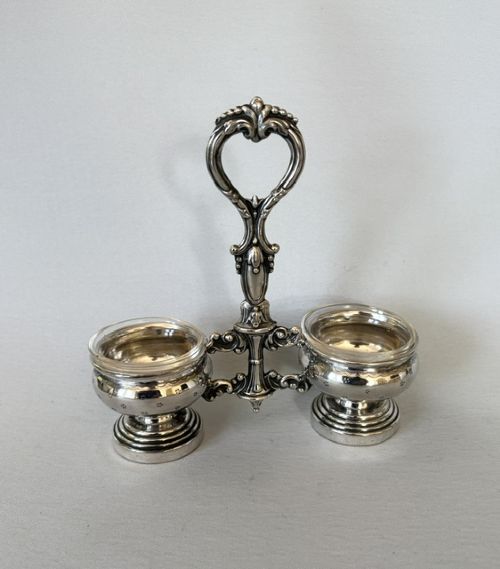
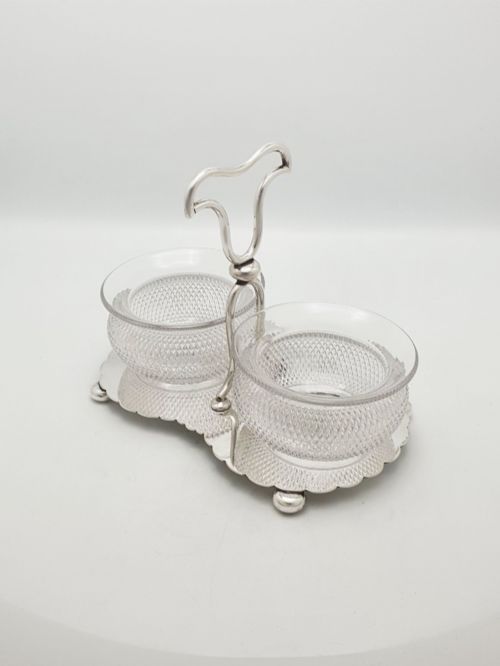
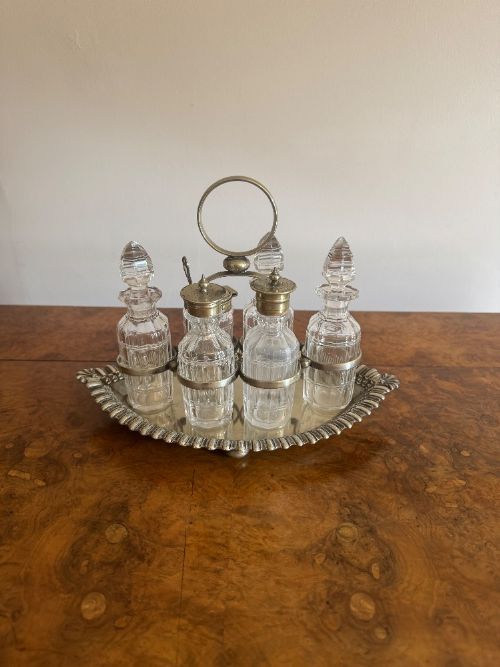
An antique condiment stand gathers small vessels for sauces, vinegars, salts, and preserves onto a single portable base for the table. The pieces found here span from the eighteenth century through the Edwardian era, with silver plate and cut glass examples from the late Victorian period appearing most frequently.
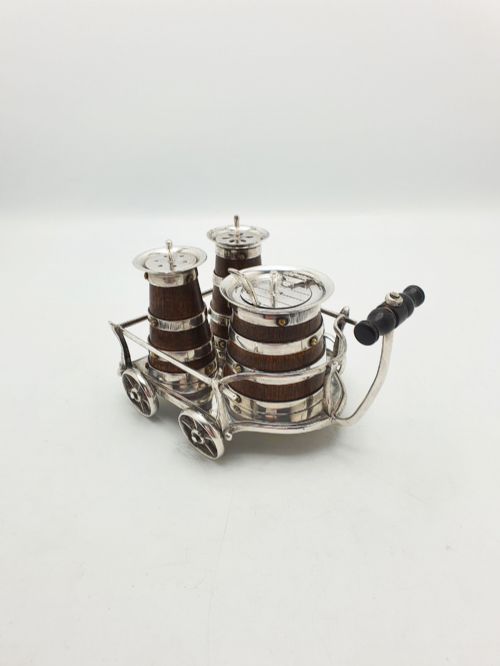
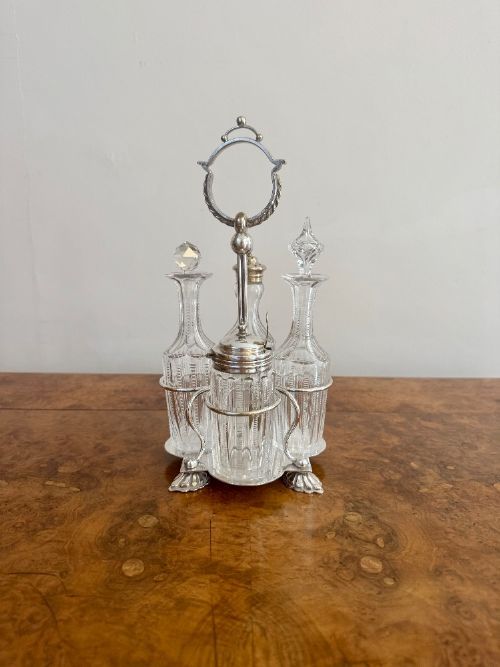
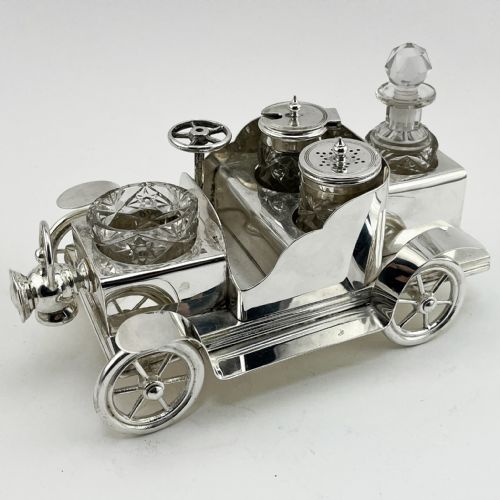
Forms range from simple bachelor cruets holding two bottles to large Georgian and Victorian frames accommodating up to seven or eight matching vessels. Collectors also encounter novelty designs shaped as vintage cars, farmyards, or oak barrels alongside utilitarian caddies and relish holders.
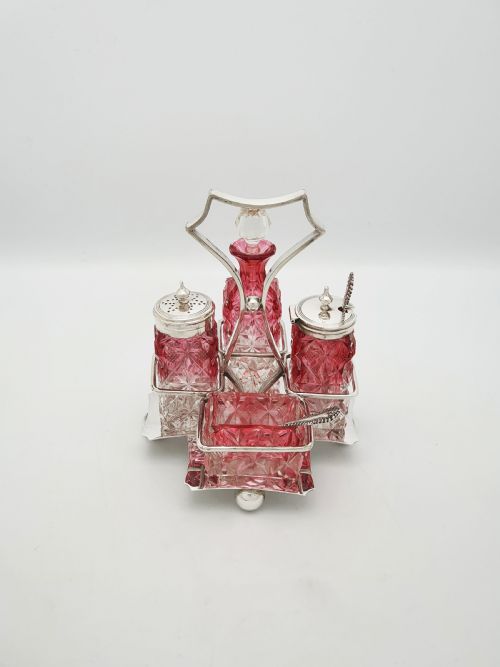
Materials shift across the decades from solid sterling silver and Old Sheffield Plate to later silver plate combined with clear, cranberry flashed, or heavy lead crystal glass. Oak and walnut appear in frames, providing sturdy contrast to polished metal wirework and handles.
Materials and Manufacture
Frames rely upon casting, silver plating over base metals, and solid sterling silver fabrication, paired with glass that is hand cut, blown, or flashed in rich colours like cranberry. Silversmiths soldered delicate wirework or cast ornate French Rococo and Georgian patterns to support the weight of multiple bottles.
Glass bottles and jars were shaped to fit specific apertures within each stand, often featuring ground glass stoppers and matching condiment spoons. Makers combined these glass elements with fitted wooden bases or metal frames equipped with central carrying rings.
Listings feature silver plate, sterling silver, oak, walnut, and brass alongside cut glass, cranberry glass, and heavy lead crystal.
Distinctions in Quality
Quality rests upon the completeness of the set, the clarity and matching nature of the glass bottles, and the crispness of the silversmith's work on the stand itself. Sets retaining their original cut glass stoppers and matched condiment spoons hold greater integrity than those assembled from mismatched parts over time.
Heavier gauge silver plate, substantial sterling silver construction, and hand-cut lead crystal distinguish superior examples from standard utilitarian pieces. The refinement of decorative handles and the stability of the frame under the weight of full bottles indicate higher workshop standards.
Mappin Brothers·Walker & Hall·Charles Thomas Fox·Elkington & Co·Hester Bateman
The Antique Condiment Stand Glossary
- Cruet set
- A matched collection of bottles and casters for oils, vinegars, and condiments held within a dedicated frame. These sets formed an essential centrepiece for formal dining tables.
- Old Sheffield Plate
- An early fusing technique where a sheet of silver is fused to a copper core before shaping. This method creates a durable material with a characteristic warm glow.
- Cranberry glass
- A rich red-pink glass created by adding gold chloride to the molten batch. It appears frequently in Edwardian preserve bowls and cruet bottles.
- Caster
- A small jar with a perforated top used for sprinkling sugar or dry spices. Casters are often found alongside open salts in traditional cruet sets.
- Bachelor cruet
- A smaller scaled condiment stand designed for individual use or intimate dining. These compact pieces typically hold two to four bottles.
Antique Condiment Stand: Frequently Asked Questions
What is an antique condiment stand?
An antique condiment stand is a portable metal or wooden frame designed to hold glass bottles, cruets, and jars of sauces and seasonings for the dining table.
These pieces organise dining accompaniments into a single decorative unit featuring a central carrying handle and fitted compartments.
How were these stands used?
Dining guests utilised the stand to pass oils, vinegars, mustards, and preserves down the table during meals.
They kept essential flavourings within reach while protecting fine linens from spills and keeping the table service orderly.
How do I date a silver condiment set?
Dating relies upon silver hallmarks stamped into the metal, stylistic cues such as Georgian symmetry versus Edwardian lightness, and manufacturing techniques.
Silver plate items often feature registry marks or maker ciphers that narrow down the decade of production.
How should I clean a silver plated cruet stand?
Silver plate requires gentle cleaning with a mild silver polish and a soft cloth to preserve the underlying metal without wearing through the plating.
Glass inserts and bottles can be washed separately in warm soapy water using a soft brush.