


Cut Glass Condiment Bottles
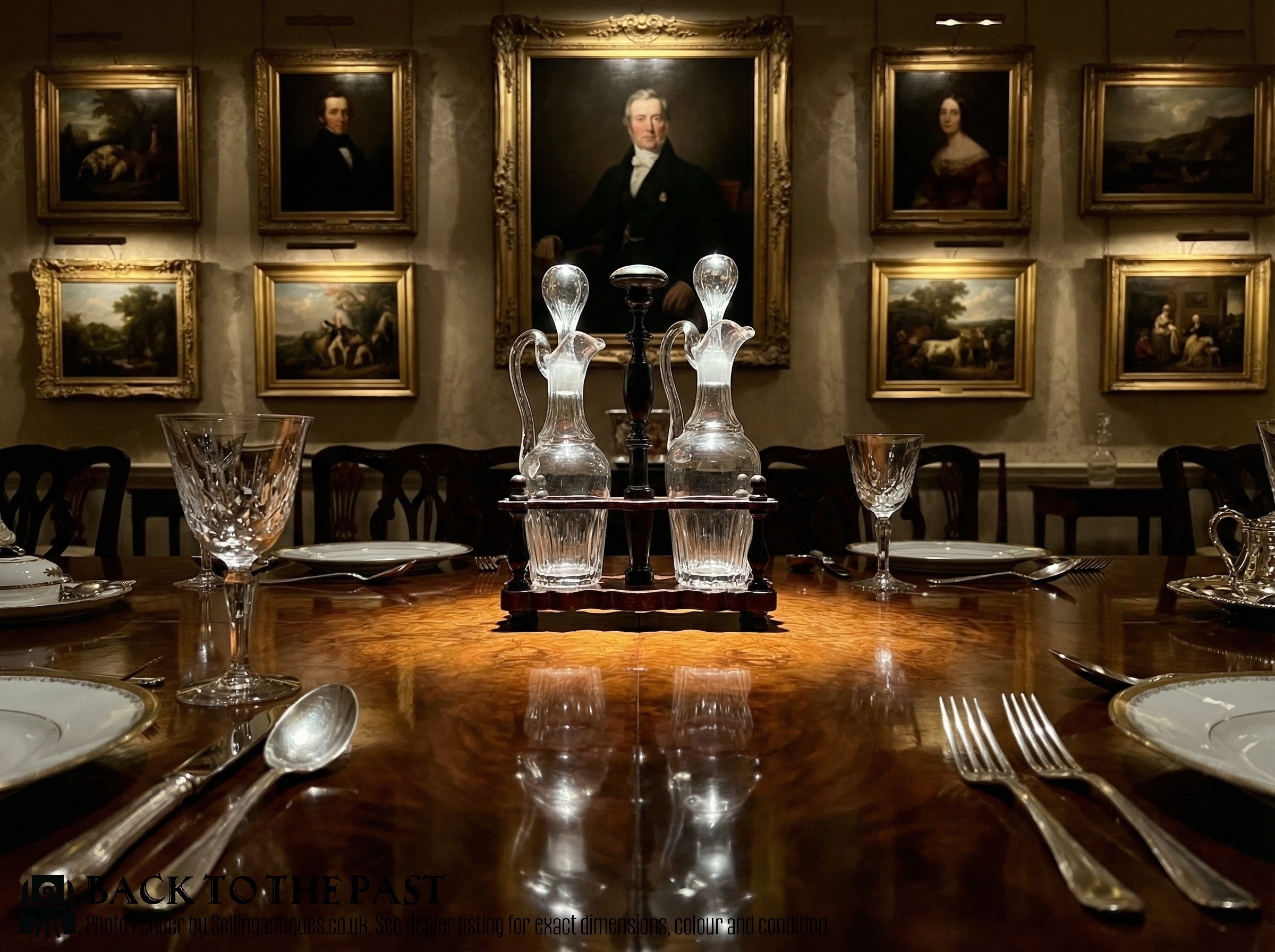
Cut glass condiment bottles bring functional elegance to the table, combining heavy pressed or hand-cut vessels with gleaming silver mounts.

Cut Glass Condiment Bottles
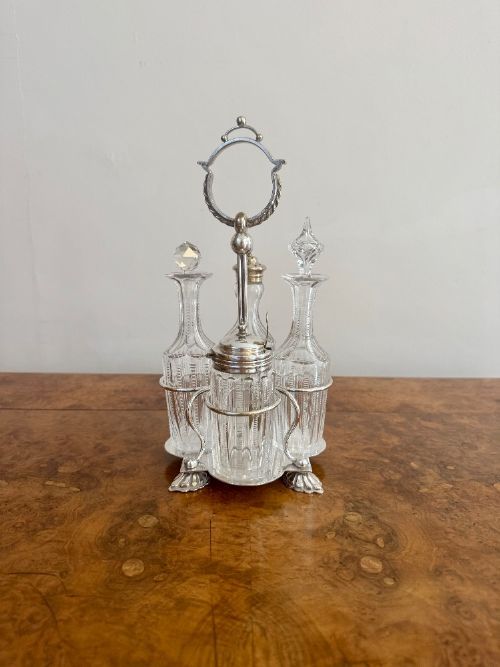
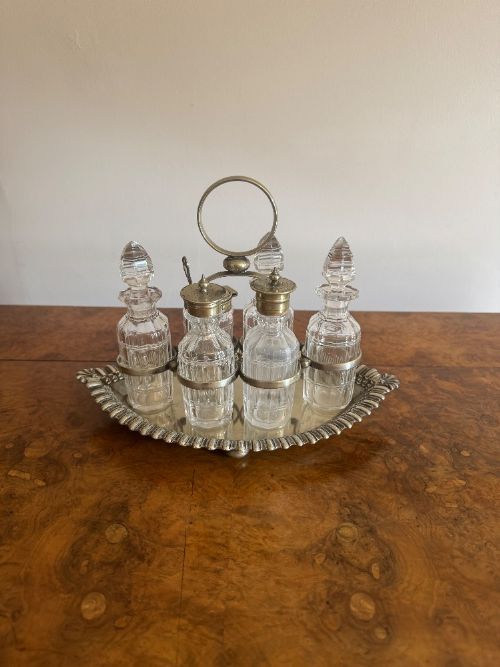
Cut glass condiment bottles appear most frequently as part of larger cruet sets, cruet stands, and decanter sets spanning the Georgian, Victorian, and Edwardian periods. These vessels held oils, vinegars, mustards, and sauces, sitting securely within fitted metal frames on the dining table.
The selections on this page range from single nineteenth century oil and vinegar bottles to multi-bottle stands incorporating sterling silver, silver plate, and Old Sheffield Plate. Edwardian silver plated examples dominate the current availability, alongside earlier Georgian and Victorian multi-bottle formations.
Materials and manufacture
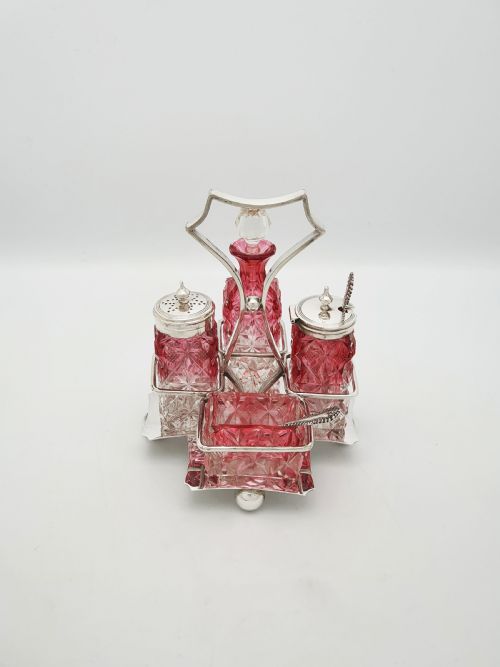
The glass components utilise cut glass, crystal, and heavy lead crystal, sometimes enhanced by cranberry flashed glass techniques. Artisan glassmakers shaped and faceted the vessels to catch the light, producing deep geometric patterns and prismatic effects.
Mounts, collars, and stands bring together sterling silver, silver plate, Old Sheffield Plate, and occasional ebonised wood. Silversmiths cast and chased the metal elements to secure the glass bottles and provide sturdy handles and feet.
Cut Glass Condiment Bottles Retail Price Guide 2026
Typical asking prices for cut glass condiment bottles among the pieces listed under this phrase on Sellingantiques today, from the lower quarter to the upper quarter. They describe what is for sale here now, not the wider market.
Listings span from the 18th Century through the Georgian, Victorian, and Edwardian eras into Art Deco production.
Assessing quality
Quality rests in the crispness of the glass cutting and the weight of the metal mountings. Superior pieces show deep, clean facets on the glass and substantial silver or silver plate without thin wear. Matching sets with original glass stoppers and fully hallmarked silver elements stand apart from assembled groups.
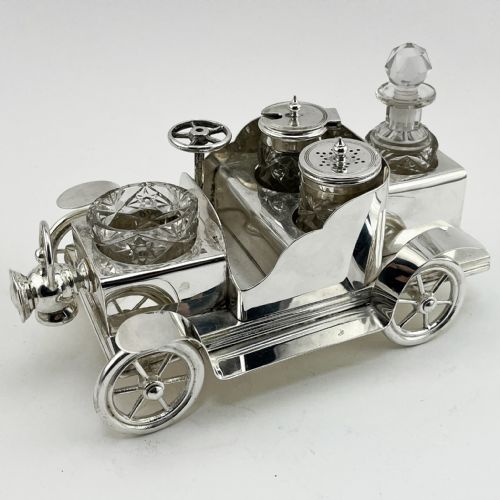
Design ambition also separates standard production from exceptional works. Elaborate Victorian novelty frames, hand-cut lead crystal from the Art Deco period, and complete Georgian seven-bottle sets demonstrate higher craftsmanship than standard multi-bottle Edwardian table sets.
Walker & Hall·Charles Thomas Fox·Elkington & Co·Hester Bateman·Wade Wingfield Wilkins
The Cut Glass Condiment Bottles Glossary
- Cruet set
- A fitted stand holding multiple glass bottles or castors for condiments, vinegar, oil, and spices. These sets were central to formal dining arrangements throughout the eighteenth and nineteenth centuries.
- Cranberry glass
- Transparent red glass produced by adding gold chloride to the molten batch. It appears frequently in decorative Edwardian tablewares.
- Old Sheffield Plate
- A composite material made by fusing a thin sheet of sterling silver to a thicker copper base. This technique preceded modern electroplating.
- Lead crystal
- Glass containing metal oxide that increases weight, brilliance, and refractive index. It allows for deep, sharp hand-cutting.
- Sterling silver
- An alloy containing a high proportion of pure silver by weight, marked with British hallmarks to guarantee standard. It forms the mounts and stands of finer antique sets.
Cut Glass Condiment Bottles: Frequently Asked Questions
What are cut glass condiment bottles used for?
These bottles held individual table seasonings, including oils, vinegars, pepper, mustard, and sauces, during formal meals. They allowed diners to adjust flavours directly at the table.
They sat within specialised stands or frames, often featuring stoppers or pouring spouts designed for each specific liquid or powder.
How do I date an antique cruet set?
Dating relies on a combination of silver hallmarks, glass manufacturing techniques, and the overall style of the stand. Georgian pieces often display distinct silversmith marks and simpler, heavier frames.
Victorian and Edwardian examples introduce more ornate silver plating, novelty designs, and brighter cranberry or heavy lead crystal colourations.
Are the stoppers original?
Checking originality involves examining the fit, glass colour, and cut pattern matching between the bottle neck and the stopper. Hand-ground stoppers often feature matching numbers or subtle wear patterns unique to that specific bottle.
Replacements remain common because individual glass stoppers were easily misplaced or broken during everyday household use.
How should I clean antique silver and glass?
Silver mounts require gentle cleaning with a specialised soft cloth to preserve plating and hallmarks, avoiding harsh chemical dips that strip age. Glass bottles benefit from warm soapy water and soft bottle brushes.
Remove glass stoppers before cleaning to prevent moisture trapping, and ensure all metal parts dry thoroughly to prevent tarnish.