
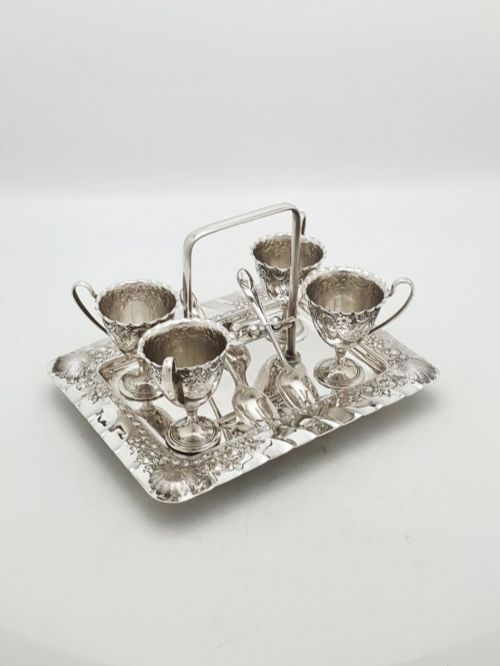
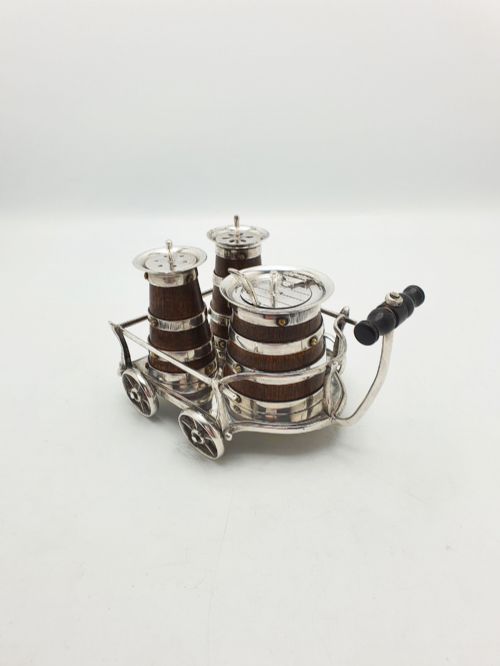
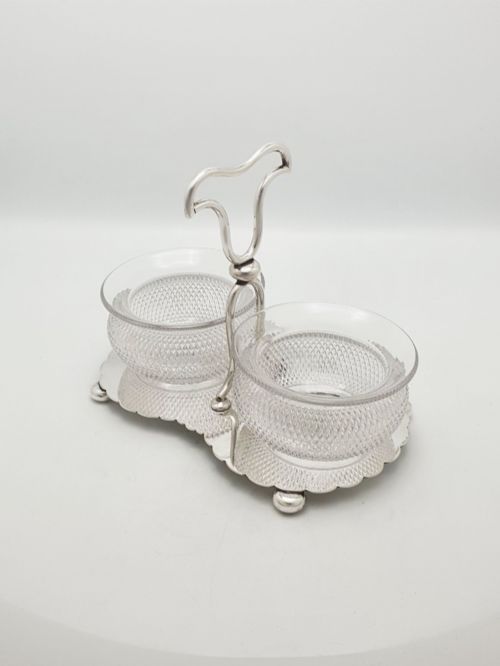
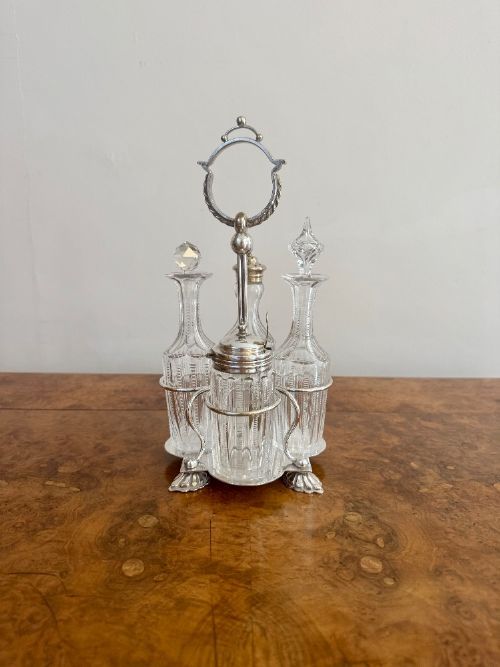


Silver Plated Cruet Stand
These silver plated cruet stand examples bring character to the table with period charm and clever bottle arrangements.

What silver plated cruet stands are
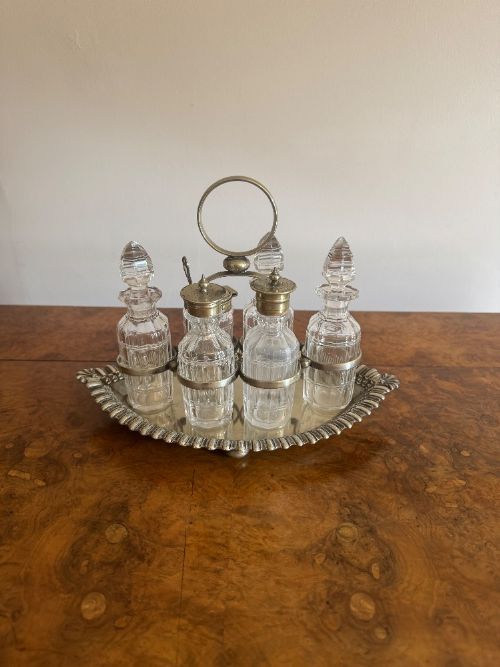
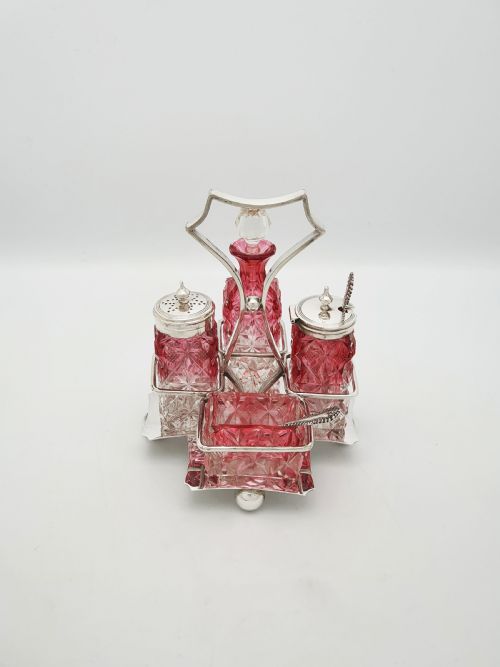
A silver plated cruet stand provides a neat frame to hold bottles of condiments and sauces for the dining table. When exploring this selection, buyers encounter pieces spanning the Georgian, Victorian, Edwardian, and Art Deco periods, alongside novelty forms.
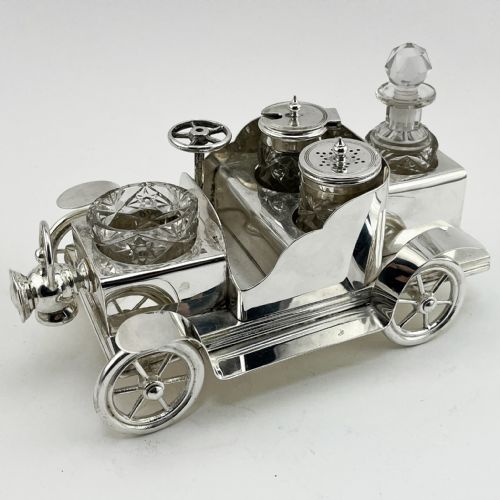
The objects on offer appear as traditional multi-bottle frames as well as playful designs shaped like barrels, cars, donkeys, and golf clubs. These sets combine silver plate with materials such as cut glass, oak, and wood to create functional centrepieces.
How they were made
Manufacturers applied a layer of silver over base metal foundations to produce a durable yet gleaming finish for the dining room. Artisans combined this silver plate with turned oak bases, carved wooden frames, and heavy cut glass bottles.
Makers utilised casting techniques for novelty items like standing donkeys, cars, and golf equipment, requiring precise metalwork to securely house the glass condiment bottles within unusual sculptural forms.
Retail Price Guide 2026
Typical UK retail prices for silver plated cruet stand, calculated from the Sellingantiques database of over a million retail prices indexed since 2003. This retail price guide relies exclusively on Sellingantiques data; no external sources or auction records are used, so the figures do not describe the wider market.
What varies in quality
Plain domestic frames rely on balanced wirework and sturdy wooden or oak platforms, whilst exceptional pieces integrate complex mechanical novelty elements or unusual multi-bottle configurations that mark out ambitious silversmith work.
The Silver Plated Cruet Stand Glossary
- Silver plate
- A thin layer of silver bonded to a base metal core. This technique allowed makers to achieve the appearance of solid silver at a lower cost.
- Cruet set
- A collection of glass bottles or cruets for holding vinegar, oil, mustard, and other condiments, held together in a fitted stand.
- Cut glass
- Glass decorated by grinding facets or patterns into the surface using a wheel. It catches the light and adds considerable weight to condiment bottles.
- Novelty
- An object shaped into an amusing or unusual form, such as an animal, vehicle, or sports equipment, popular during the Victorian period.
- Condiment
- An edible substance added to food to impart a particular flavour, traditionally served from the bottles housed in these stands.
Frequently Asked Questions
How were cruet stands used?
These stands sat in the centre of the dining table during meals so guests could easily access salt, pepper, mustard, and oils. The handle at the top of the stand allowed servants or diners to lift and pass the entire set.
In domestic settings, they served both a practical purpose in food service and a decorative role as part of the table setting.
How do I date a cruet stand?
Dating relies on the overall style, manufacturing materials, and decorative motifs present on the metal frame and glass bottles. Georgian and Victorian examples often feature heavier cast ornamentation, whereas Edwardian and Art Deco pieces show cleaner lines or lighter framing.
Novelty items like car or golf-themed stands point towards the later nineteenth and early twentieth centuries when playful designs gained popularity.
What materials are used?
The primary materials are silver plate over a base metal, paired with cut glass bottles for holding the condiments. Many stands also incorporate wooden elements, particularly oak bases or turned wooden components.
Combination pieces utilise all these elements together, uniting metalwork, glass, and timber in a single table accessory.