
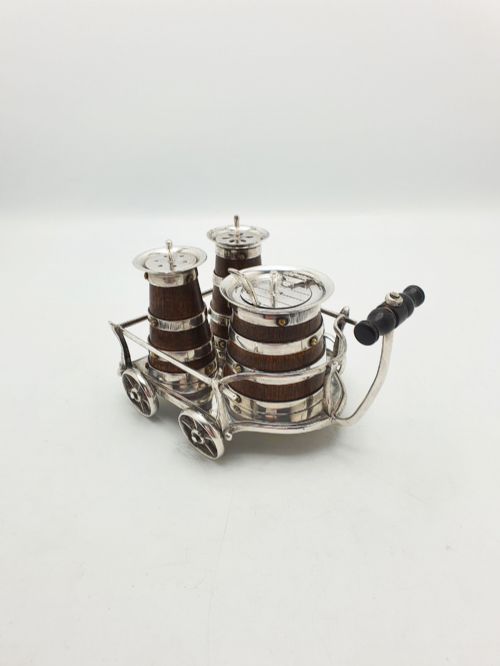


Silver Plated Pepper Shaker
A silver plated pepper shaker brings domestic history to the dining table, offering charming miniature design in durable metal.
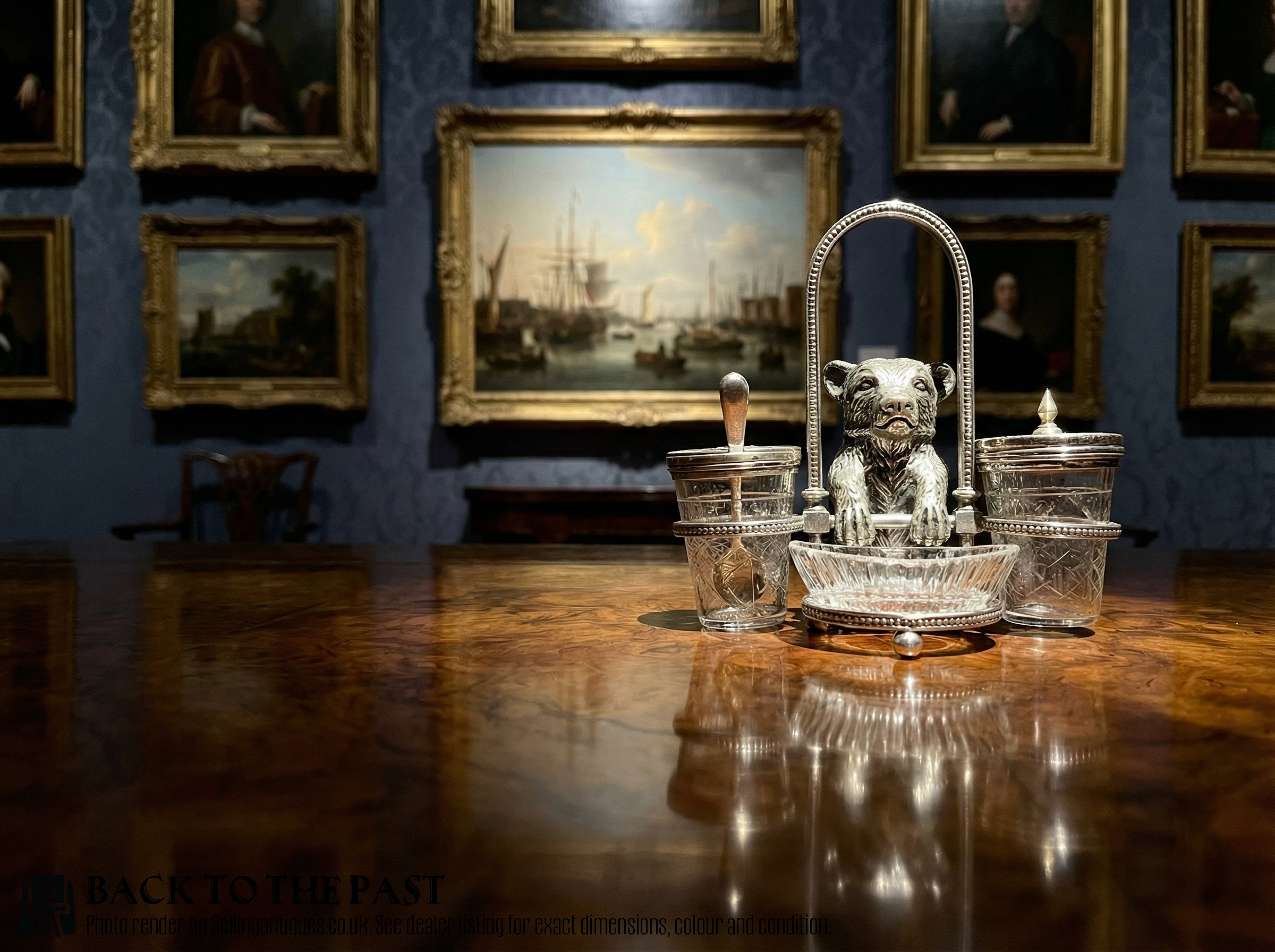
Silver Plated Pepper Shaker
A silver plated pepper shaker forms part of larger dining arrangements, appearing across Victorian, Edwardian, and Georgian periods. When searching this phrase, buyers frequently encounter pieces connected to broader cruet sets and condiment stands rather than solitary vessels.
The selections span functional household items and novelty forms such as oak barrels, farmyards, carriages, and equestrian themes. These items emerge from manufacturing traditions of the nineteenth and early twentieth centuries, reflecting the domestic habits of those eras.
How they were made
These items utilise silver plate and electroplated nickel silver over base metals, often combined with cut glass and oak or other woods. Metalwork techniques shape the outer shells, while glass inserts provide functional inner containers for the condiments.
Makers integrated various materials to create durable dining accessories, employing gilt accents and wooden framework to support multi-bottle arrangements and novelty casing.
Farmyard animals and miniature carriages double as functional dining hardware.
What varies in quality
Quality rests in the intricacy of the novelty modelling and the crispness of the casting across the silver plate. Pieces shaped as carriages, animals, or barrels demonstrate greater artistic ambition than standard condiment containers.
The integrity of the combination materials, such as clear cut glass and well-joined oak mounts, distinguishes finer productions from standard workshop output.
Mappin & Webb
The Silver Plated Pepper Shaker Glossary
- Cruet set
- A collection of small glass bottles or pots mounted on a stand for holding vinegar, oil, salt, pepper, and mustard at the dining table. These assemblies often include dedicated silver plated pepper shakers.
- Electroplated nickel silver
- A base metal alloy of copper, nickel, and zinc coated with a thin layer of pure silver through an electrolytic process. This method became widespread during the nineteenth century for producing affordable tableware.
- Novelty
- An object shaped to resemble an animal, vehicle, building, or everyday item rather than following traditional vessel geometry. Victorian and Edwardian silversmiths frequently applied this playful design approach to condiment containers.
- Condiment
- An edible substance added to food to impart a specific flavour, requiring specialised tableware containers like shakers and pots. These substances formed an essential part of formal dining customs in earlier periods.
Silver Plated Pepper Shaker: Frequently Asked Questions
What is a silver plated pepper shaker?
A silver plated pepper shaker is a small tabletop vessel designed to dispense ground pepper, featuring a perforated top and a metal-plated exterior.
These items date from the nineteenth and early twentieth centuries, often accompanying larger cruet sets or condiment stands.
How were these pieces used?
They were placed on dining tables to allow guests to season their food during meals.
Many functioned as part of matched condiment sets containing multiple bottles and shakers for various seasonings.
How do I care for silver plate?
Silver plate requires gentle cleaning with appropriate metal polishes to maintain the surface without wearing away the coating.
Storing pieces in dry environments prevents tarnishing and protects any integrated wood or glass components.
How do I date these items?
Dating relies on stylistic clues, manufacturer marks, and the combination of materials such as cut glass and electroplated nickel silver.
Victorian and Edwardian examples often feature distinct aesthetic markers and novelty forms typical of their respective decades.