


Edwardian Silver Condiment Set
An edwardian silver condiment set brings refined dining tables to life with matched mustard pots, salt cellars, and pepper shakers.
Edwardian Silver Condiment Set
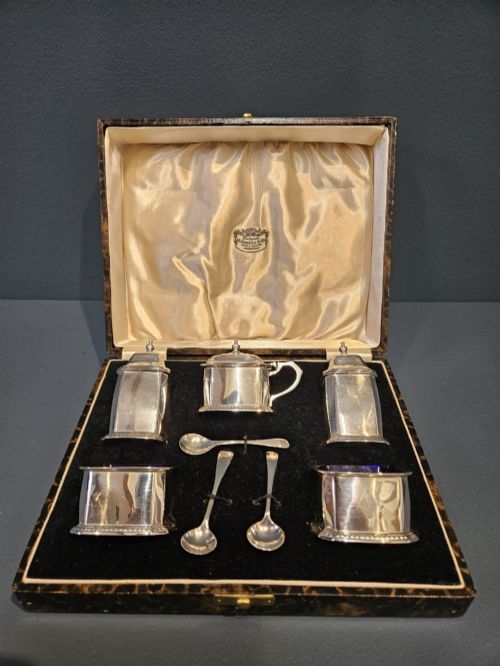
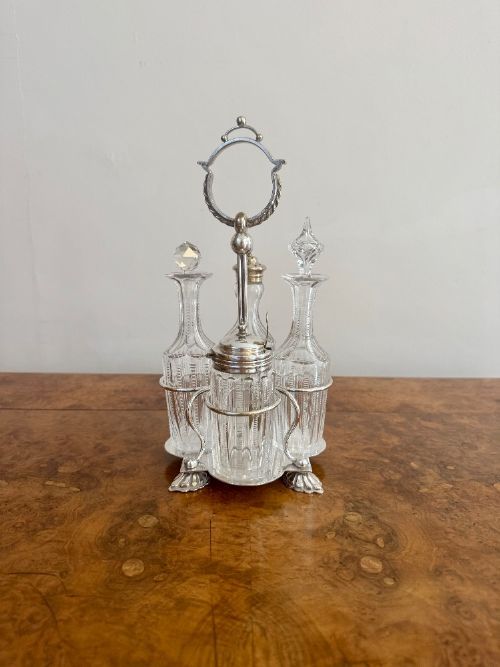
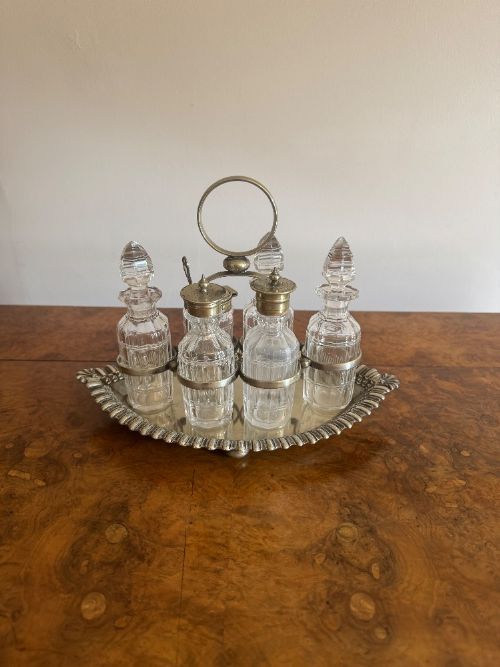
An edwardian silver condiment set gathers essential table seasonings into matched or fitted assemblies designed for formal dining. Buyers encounter everything from compact three-piece salt and mustard collections to large multi-bottle cruet stands housing oil, vinegar, and sauces.
Many examples span the Edwardian period proper alongside related Victorian and early twentieth-century interpretations. These domestic implements range from individual table salts and novelty pepper pots shaped like birds to comprehensive cased sets lined with silk and velvet.
How they were made
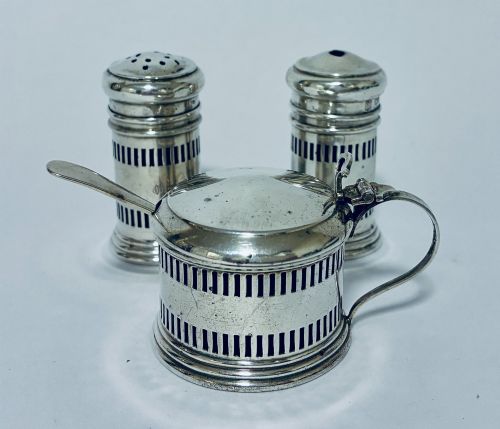
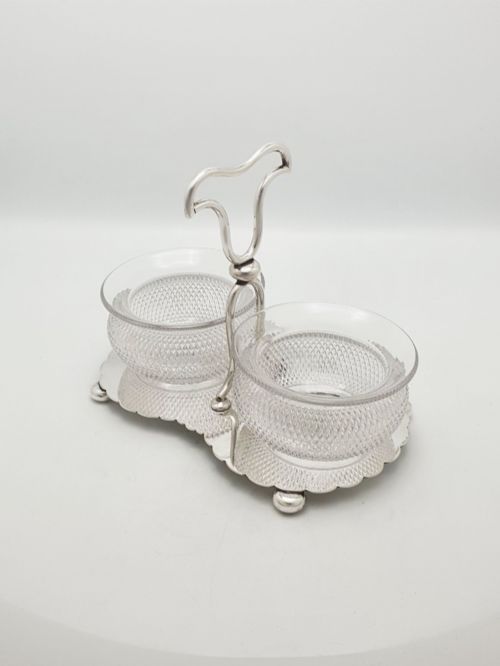
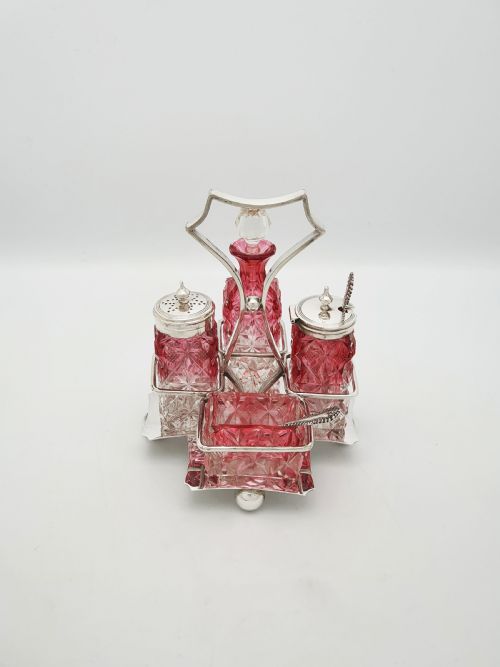
Silversmiths shaped sterling silver and durable silver plate into structured frames, stands, and vessel bodies, frequently employing piercing techniques to create decorative patterns. Cut glass and colourful cranberry flashed glass insert bowls provide contrast against the metallic frames.
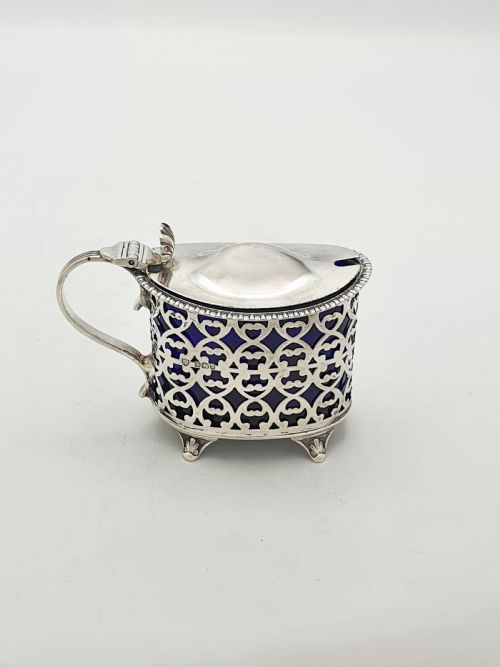
Interior components often rely on blue glass liners to protect the silver from corrosive salts and mustard, while fitted presentation cases utilise velvet and silk linings to secure each individual piece.
Listings feature items spanning the Victorian era through the Art Deco period, utilising sterling silver, silver plate, and cut glass.
What varies in quality
The distinction between standard domestic wares and superior examples rests upon maker prestige, structural complexity, and completeness. Sets bearing marks from esteemed makers or complete with original fitted presentation boxes and matching spoons command greater attention.
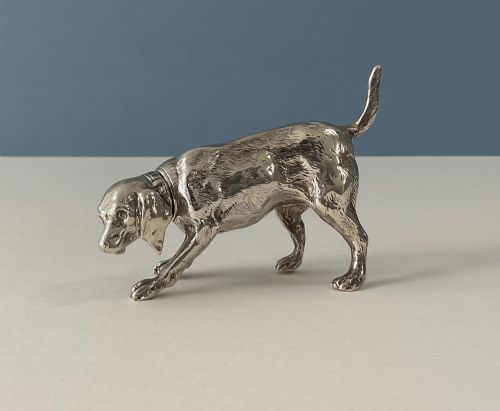
Artistry in novelty pieces, such as detailed animal models or intricate piercing work, elevates a set beyond utilitarian table service into decorative metalwork.
Goldsmith & Silversmith's·Walker & Hall·Bricks & Sons·Sampson Mordan·Elkington·Charles Horner·Ashbury·Harrods
The Edwardian Silver Condiment Set Glossary
- Cruet set
- A fitted stand holding multiple bottles, jars, or shakers for vinegar, oil, and condiments. These assemblies often feature central carrying handles for table service.
- Salt cellar
- An open vessel used to hold loose salt at the dining place before the invention of the spring-loaded shaker. They frequently include cobalt blue glass liners.
- Mustard pot
- A small covered jar designed to hold prepared mustard, usually accompanied by a tiny spoon. Many possess pierced sides revealing coloured glass inserts.
- Pepperette
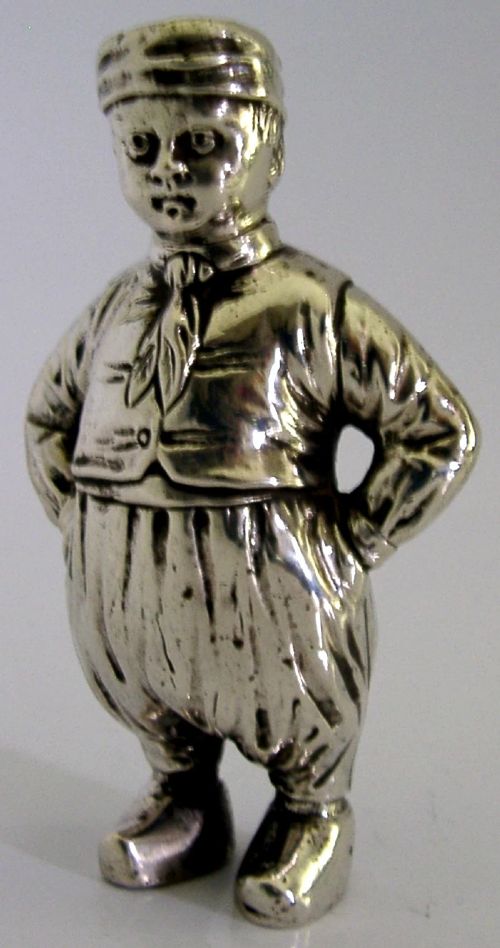
- A small shaker or pot intended for ground pepper. Edwardian examples often take imaginative novelty forms modelled after animals.
- Silver plate
- A base metal coated with a thin layer of silver through electroplating. This technique allowed makers to produce elaborate tableware at accessible costs.
Edwardian Silver Condiment Set: Frequently Asked Questions
What pieces belong in a complete edwardian silver condiment set?
A standard grouping typically includes mustard pots, salt cellars, and pepper shakers, sometimes accompanied by matching spoons. Larger sets incorporate cruet frames with glass bottles for oil and vinegar.
Completeness depends on the original configuration, with many surviving alongside their fitted presentation cases.
How do I care for silver plated condiment sets?
Maintenance involves gentle cleaning with dedicated silver polish to preserve the metallic surface without wearing away the plating. Glass liners should be washed separately in warm soapy water.
Harsh chemical dips can damage original patinas and delicate glass components.
Were these sets used daily or saved for guests?
These assemblies formed a standard part of formal Edwardian dining tables, utilised during multi-course meals to serve seasonings. Cased sets were frequently given as wedding gifts or presentation pieces.
Their practical design allowed hosts to pass condiments easily among diners.
How can I tell an Edwardian set from a Victorian one?
Edwardian pieces generally exhibit lighter, more graceful proportions influenced by early twentieth-century design shifts. Victorian examples often display heavier ornamentation and more robust forms.
Assay office marks and date letters stamped into the silver provide precise manufacturing years.