
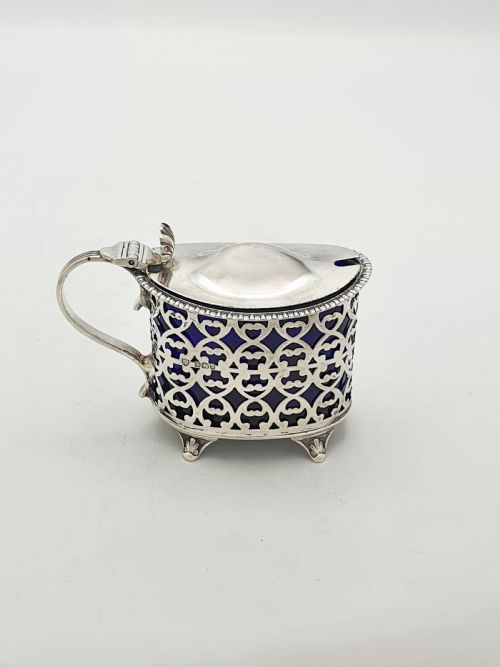


Edwardian Glass Condiment Holder
These edwardian glass condiment holder pieces bring brilliant colour and bright metal to the dining table, combining practical service with period charm.
Edwardian Glass Condiment Holder
When you search for an edwardian glass condiment holder, you are looking at table wares designed to serve sauces, preserves, and mustards during meals. The examples on this page span the Edwardian period alongside Victorian and Art Deco pieces, with silver plated frames holding glass containers.
Most pieces you meet here take the form of cruet sets, mustard pots, or preserve dishes. They combine metal stands with clear, cranberry, ruby red, or blue glass inserts.
The origins stretch from the Victorian era into the 1920s, showing how dining table arrangements evolved across these decades. A buyer finds everything from single mustard pots to six bottle cruet frames.
How they were made
These items combine silver, sterling silver, or silver plate with cut glass and coloured glass. Silversmiths formed the metal frames through casting, piercing, and plating techniques.
Glassmakers shaped the inserts using cranberry glass, ruby red glass, blue glass, or clear cut glass. The resulting vessels fit securely into matching metal stands.
Some cruet frames take whimsical figural shapes from the Victorian novelty trend, bringing unexpected animal forms to the dinner table.
What varies in quality
Quality rests in the weight of the metal frame and the crispness of the glass cutting. Better examples show refined piercing work in the silver or silver plate alongside rich colour in the glass inserts.
The distinction between standard pieces and finer ones lies in the completeness of the set and the harmony between the glass and metal components. Maker attention to detail elevates simple condiment vessels into decorative table centerpieces.
The Edwardian Glass Condiment Holder Glossary
- Cruet set
- A matched collection of bottles or pots for holding condiments like oil, vinegar, salt, pepper, and mustard upon a frame. These sets sit at the centre of the dining table for easy guest access.
- Cranberry glass
- A rich pinkish-red glass produced by adding gold chloride to the molten batch. It appears frequently in Edwardian preserve bowls and liners.
- Silver plate
- A thin layer of silver fused to a base metal like copper or Britannia metal. This technique allowed makers to produce bright tableware at a lower cost than solid sterling silver.
- Mustard pot
- A small covered jar designed specifically to hold prepared mustard, usually supplied with a matching spoon. They often feature blue glass or ruby red glass liners.
- Pierced work
- Metal decorated by cutting patterns through the surface to create openwork designs. Silversmiths used this technique on mustard pot bodies and cruet stands.
Edwardian Glass Condiment Holder: Frequently Asked Questions
What is an edwardian glass condiment holder used for?
These pieces held condiments, sauces, and preserves during formal and family meals. They kept mustards, relishes, and vinegars organised in one accessible table setting.
Guests served themselves from the glass inserts using small spoons or poured liquids directly onto their plates.
How do I clean an edwardian glass condiment holder?
Remove the glass inserts from the metal frame before washing them in warm soapy water. Avoid harsh abrasives that scratch the glass or wear down silver plating.
Polish the metal components gently with a cloth designed for silver to maintain the shine without damaging the underlying surface.
How can I tell Edwardian pieces from Victorian ones?
Edwardian items often display lighter, more restrained ornamentation compared to heavily decorated Victorian designs. The transition from Victorian to Edwardian style brought sleeker lines to table wares.
Date registry marks and hallmarks stamped on the metal parts help confirm the exact period of manufacture.
Are all glass inserts original to their frames?
Glass inserts frequently became chipped or broken over decades of use and were often replaced with later matches. Examining the fit of the glass inside the metal ring helps determine if they belong together.
Colour consistency between different bottles in a multi bottle set also indicates whether the collection remains intact.
How do I display these items at home?
These pieces suit dining room sideboards, display cabinets, or open shelving where light can catch the coloured glass. They bring period character to modern dining spaces when placed on a table.
Keeping them away from direct heat sources protects the glass and prevents accelerated tarnishing of the silver plate.