
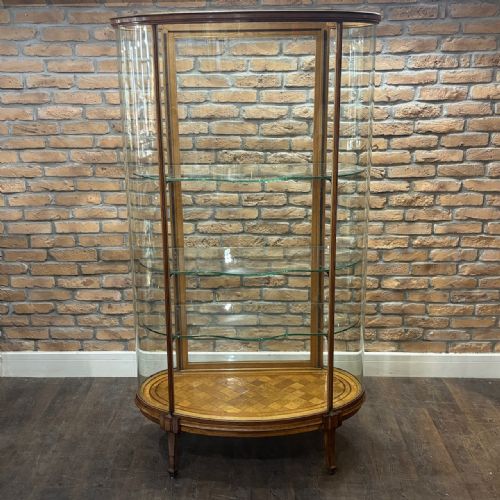
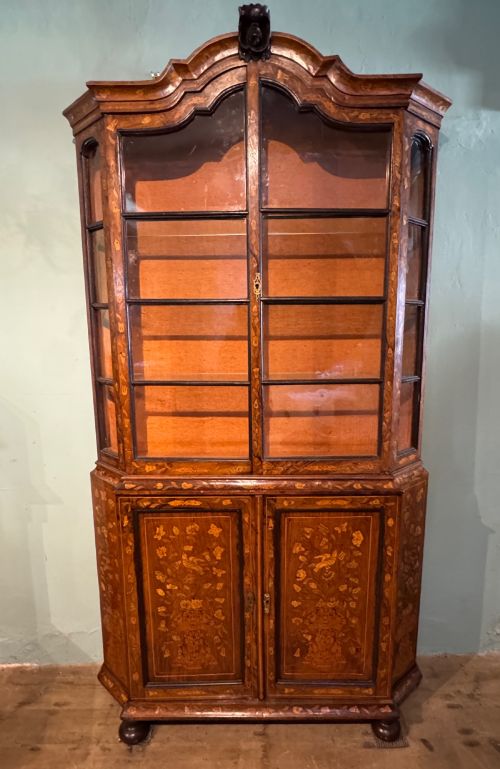
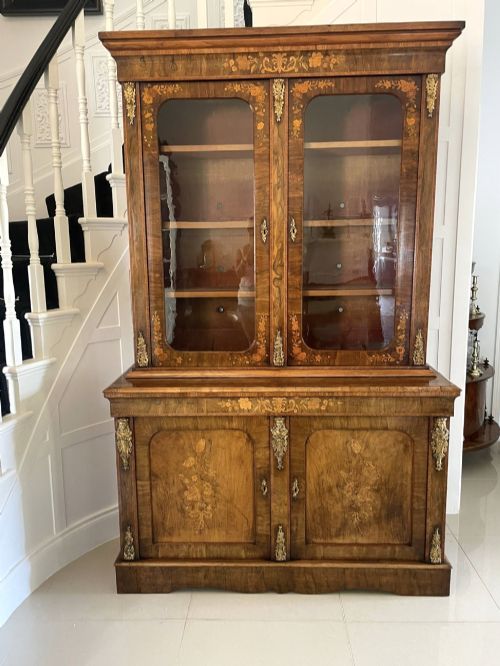
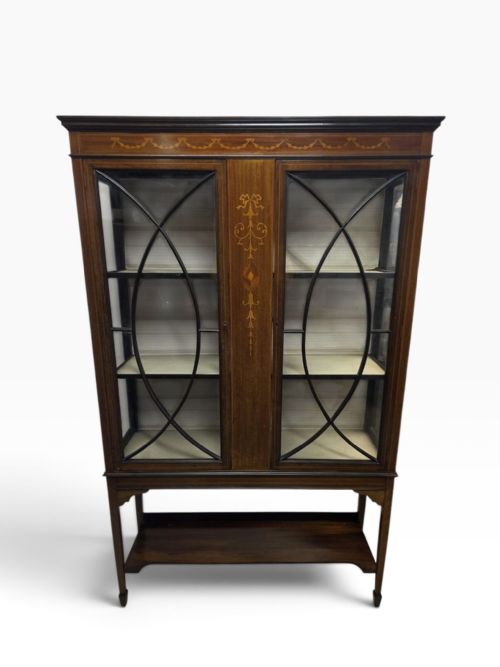
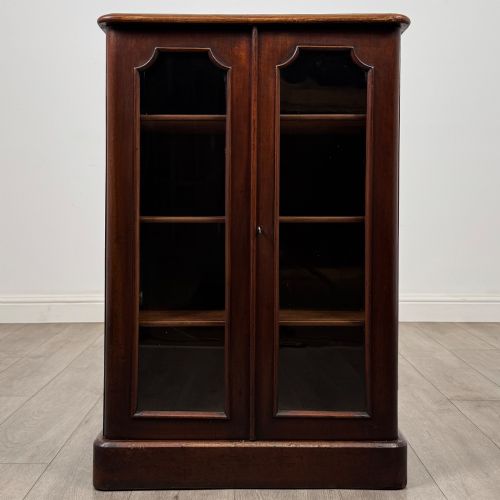
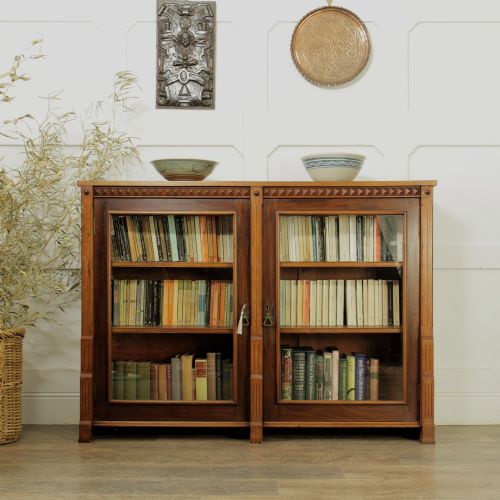
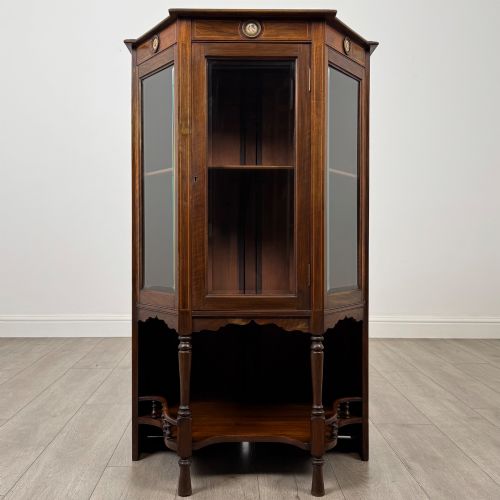
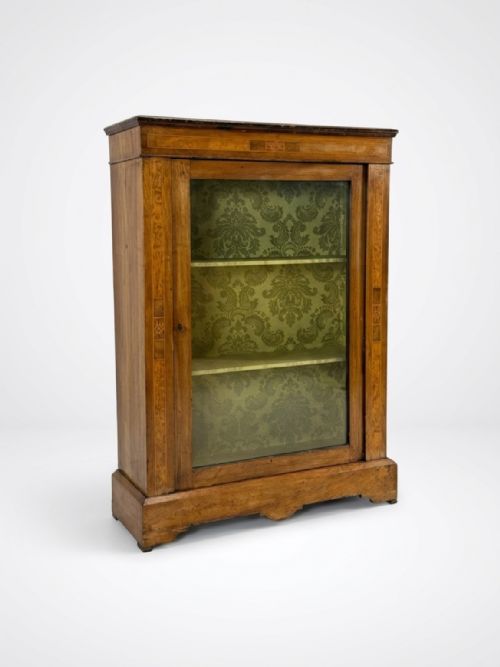
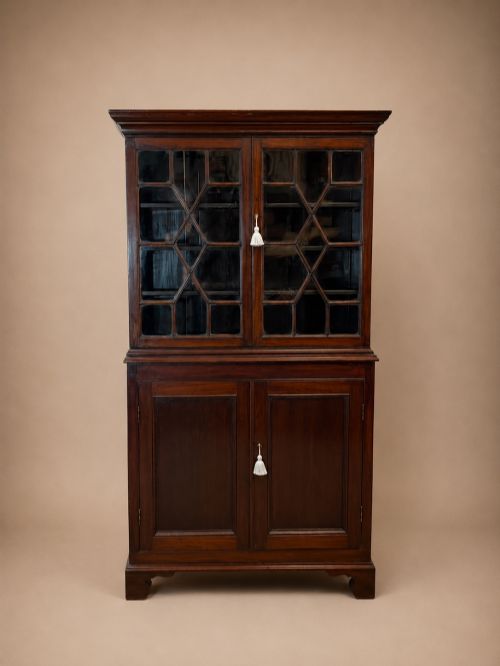
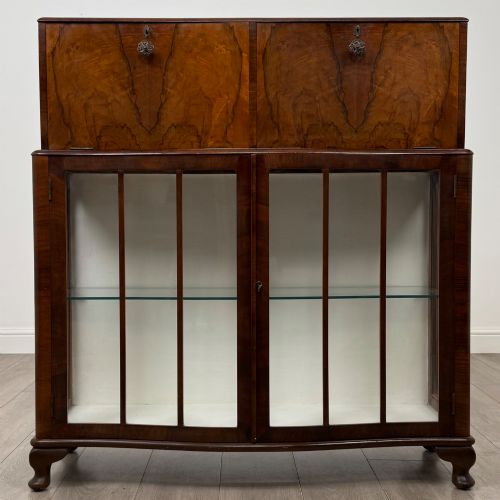
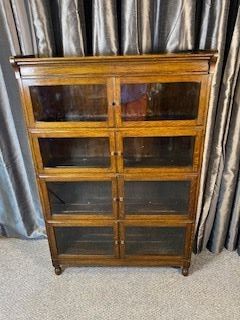
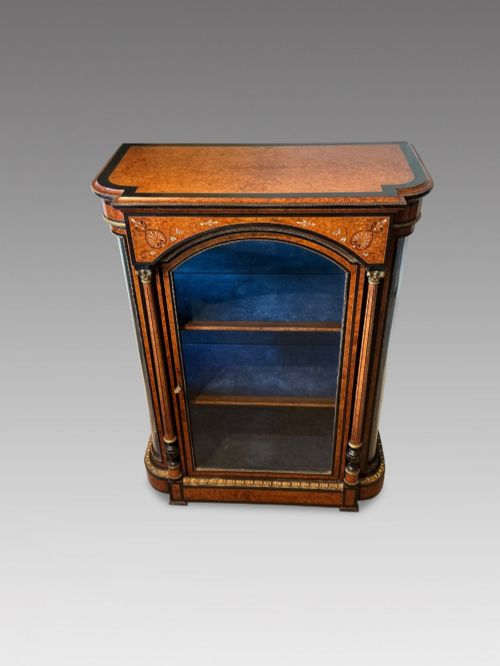
Glass Front Display Cabinet
A glass front display cabinet brings together timber frames and clear panes to hold and show treasured possessions in any room.
Identifying your glass front display cabinet
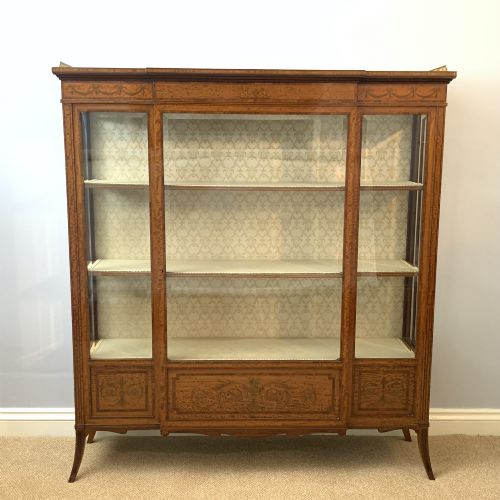
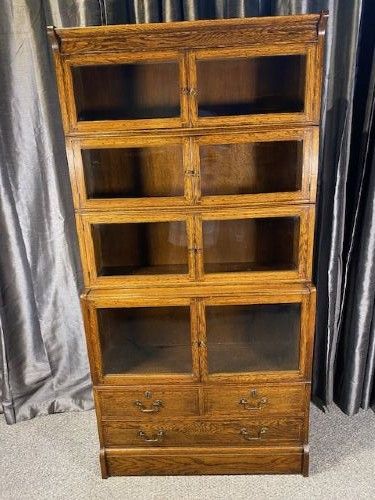
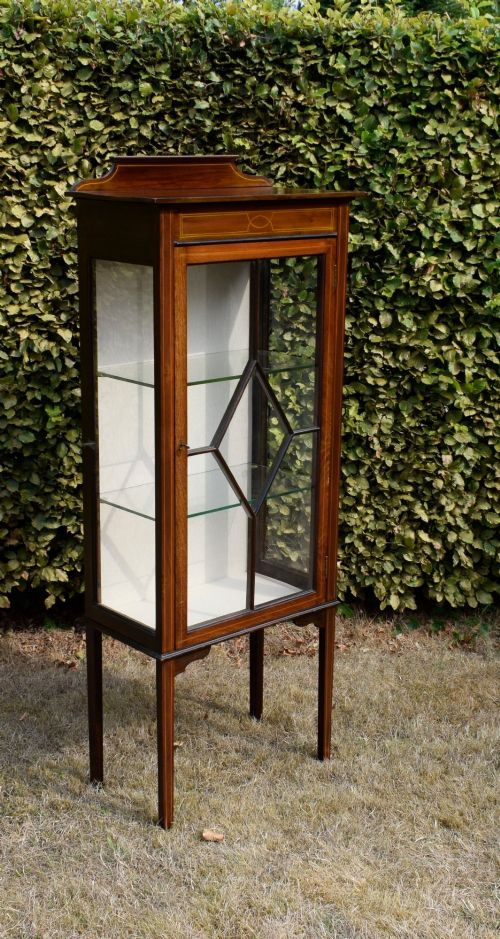
When you search for a glass front display cabinet, you meet a variety of freestanding furniture forms designed to showcase objects behind glazed doors. The selection includes tall bookcases, corner cupboards, and dedicated vitrines suited to drawing rooms or studies.
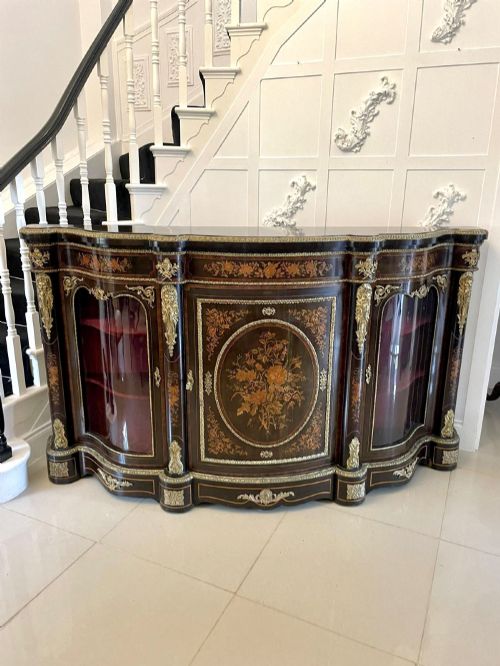
Pieces span multiple periods and revival styles, ranging from Edwardian examples and 1930s designs down to nineteenth-century creations. Common stylistic influences appearing across the items include Sheraton, Chippendale, and French Rococo revivals alongside French Belle Epoque details.
Most pieces stand on timber legs or plinths, enclosing shelving behind single or paired glazed doors. Some variations incorporate bow fronts or internal fabric linings to highlight the items placed within.
Materials and construction methods
Cabinet makers relied heavily on solid and veneered timbers such as mahogany, walnut, oak, and satinwood to build the structural carcases. Brass mounts, handles, and hinges provide structural and decorative accents on the doors and corners.
Glazing forms the primary viewing area, utilising clear glass panes fitted into timber frames or doors. Selected interiors feature fabric backdrops or built-in drawers to organise smaller collections.
Retail Price Guide 2026
Typical UK retail prices for glass front display cabinet, calculated from the Sellingantiques database of over a million retail prices indexed since 2003. This retail price guide relies exclusively on Sellingantiques data; no external sources or auction records are used, so the figures do not describe the wider market.
One past piece included nine internal drawers alongside its glass front, perfect for hiding away stray pipe collections.
Assessing quality and craftsmanship
The standard of a cabinet rests on the selection of timber figures and the precision of the joinery around the glazed doors. Finer examples display harmonious proportions and subtle decorative veneers rather than heavy or plain surfaces.
Hardware choice also distinguishes finer items, where solid brass mounts and well-fitted locks show greater attention to detail. The integration of curved bow front glass panels or intricate revival styling marks out more ambitious workshops.
The Glass Front Display Cabinet Glossary
- Vitrine
- A glass-sided cabinet specifically designed for the display of porcelain, silver, or small curiosities. These pieces often feature glass on multiple sides to maximise ambient light.
- Bow front
- A convex curved cabinet front that projects outward in a smooth arc. This shape softens the linear geometry of traditional room layouts.
- Revival
- A design style that reinterprets historical aesthetics from earlier centuries, such as Chippendale or Sheraton. Makers adapted these classical proportions for contemporary homes.
- Pier cabinet
- A low freestanding display case intended to stand against a narrow section of wall between windows. They typically feature a glazed door to protect delicate ornaments.
- Satinwood
- A lustrous, fine-grained timber with a golden yellow colour, frequently used for contrasting veneers or stringing. It adds brightness to dark mahogany carcases.
Frequently Asked Questions
How do I clean the glass?
Use a soft microfiber cloth and a mild glass cleaning solution sprayed directly onto the cloth rather than the wood. This prevents moisture from damaging antique timber finishes or brass mounts.
Take care around older panes which may be thinner or hand-blown with slight surface irregularities.
Can I adjust the shelves?
Most period display cabinets feature fixed wooden or glass shelves supported by internal wooden battens rather than modern adjustable metal pegs. Check the interior construction before planning to house unusually tall items.
Adding extra shelves requires professional carpentry to match the existing interior timber and finish.
Are these cabinets secure?
Many Edwardian and nineteenth-century cabinets retain their original working locks and keys to keep doors closed during daily use. However, these historic mechanisms are designed for light enclosure rather than heavy security.
Consider adding discreet modern safety brackets if the cabinet sits in a busy household with children or pets.
How do I protect interior fabrics?
Silk or velvet linings inside display cases benefit from gentle dusting with a soft brush attachment on a low-suction vacuum. Direct sunlight fading can be reduced by placing the cabinet away from unshaded windows.
Rotating displayed items periodically prevents uneven fading of both the backing fabric and the objects themselves.