


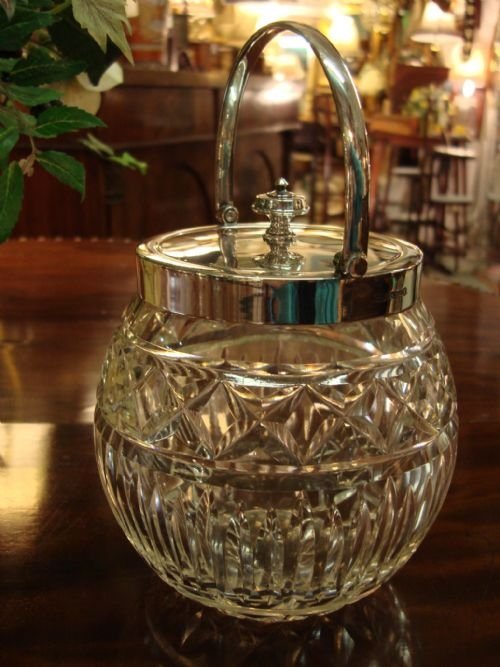
Glass Barrel Biscuit Box
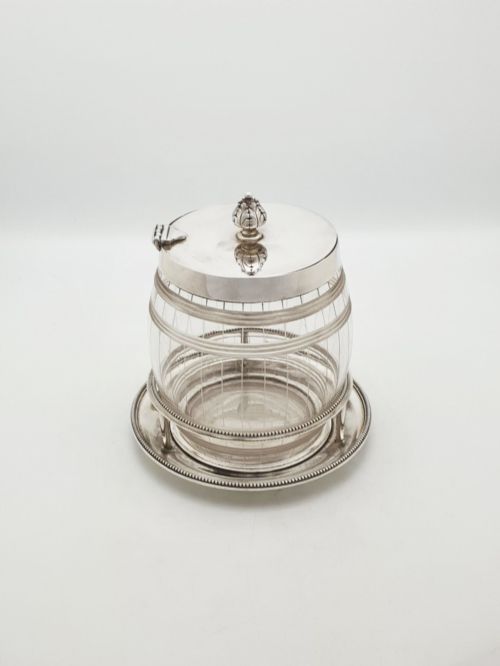
A glass barrel biscuit box is a heavy table centrepiece designed to hold dry treats, combining bright crystal with shining metal mounts.
Glass Barrel Biscuit Box
A glass barrel biscuit box brings a satisfying weight and sparkle to the dining table. When you search for this phrase, you find cylindrical or rounded vessels made to store dry baked goods securely under a fitted lid.
The pieces on this page span the Victorian, Edwardian, and Art Deco periods, alongside Georgian and later twentieth-century examples. You will frequently encounter heavy cut glass and lead crystal bodies fitted with silver-plated or sterling silver mounts, swing handles, and detailed finials.
How they were made
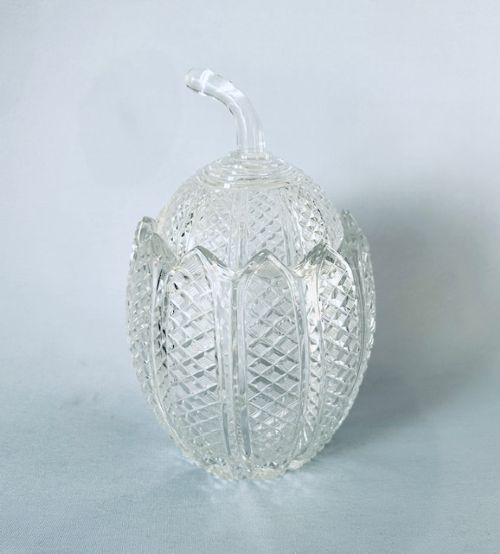
Makers shaped the heavy glass barrels using cutting, facet-cutting, and hobnail techniques to catch the light from every angle. Cranberry glass and coloured overlays appear alongside clear lead crystal.
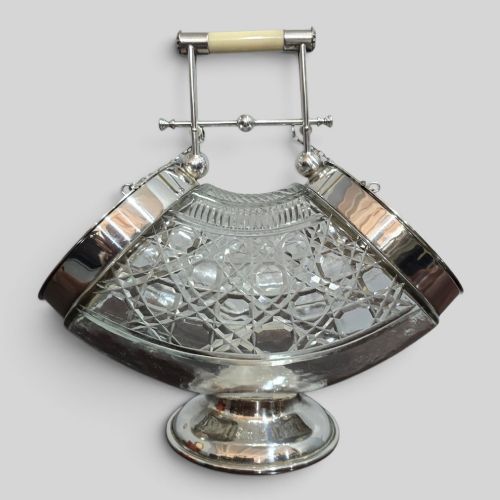
Metalworkers cast and plated the mounts in silver plate or sterling silver, often adding pierced galleries, hinged lids, and heraldic dragon finials. Some pieces feature complex automated mechanisms or matching stands.
Materials across these listings include cranberry glass, lead crystal, silver plate, and sterling silver spanning periods from Georgian to Art Deco.
What varies in quality
The depth and precision of the glass cutting dictate the visual crispness of a piece, separating sharp hobnail patterns from softer moulding. Heavier lead crystal and thick cranberry glass denote a more substantial object.
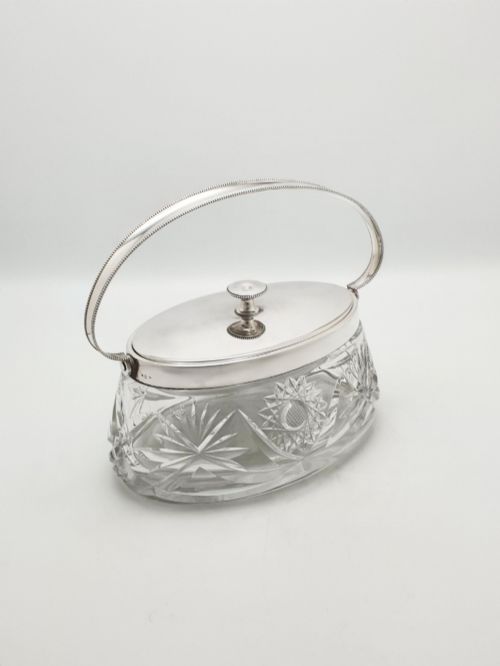
The quality of the metal mounts, from heavy silver plating over a solid base to fully hallmarked sterling silver, changes the character of the vessel. Intricate details like pierced galleries and cast finials elevate the work.
Elkington·WMF·Walker and Hall·James Dixon and Sons·Sowerby·Grinsell and Sons·William Hutton
The Glass Barrel Biscuit Box Glossary
- Hobnail cut
- A decorative glass cutting pattern featuring rows of small, raised pyramidal facets that resemble hobnails on heavy boots. It creates a tactile texture that catches the light brilliantly.
- Cranberry glass
- A rich red glass produced by adding gold chloride to the molten batch. It appears frequently in Edwardian examples combined with silver-plated mounts.
- Silver plate
- A layer of pure silver fused to a base metal such as copper or Britannia metal. Most nineteenth-century biscuit barrels utilise this technique for their mounts and swing handles.
- Finial
- The decorative knob or sculpture mounted on top of the lid. Victorian pieces sometimes feature heraldic creatures or floral motifs in this position.
- Jugendstil
- The continental European style movement contemporary with British Art Nouveau. It influences the flowing, organic metal mounts found on certain twentieth-century vessels.
Glass Barrel Biscuit Box: Frequently Asked Questions
What is a glass barrel biscuit box?
A glass barrel biscuit box is a covered container designed to hold dry biscuits on the dining table. These pieces combine a heavy glass or crystal body with metal mounts and a lid.
They emerged as popular dining accessories during the Victorian period and continued through the Edwardian era into the Art Deco years.
How were they used?
These vessels sat on the dining table during dessert or tea service, keeping biscuits dry and protected. The hinged lid lifted to offer guests treats after a meal.
Many included a matching swing handle so the vessel could be carried easily from the sideboard to the table.
How do I date a piece?
Stylistic clues and manufacturing marks help establish the age of a vessel. Victorian and Edwardian examples often feature heavy hobnail cutting and ornate silver-plated mounts.
Later Art Deco pieces tend to show cleaner geometric lines or coloured glass bodies from the nineteen-thirties.
How do I care for the glass and silver?
Wash the glass liner or body gently in warm soapy water without harsh abrasives. Keep silver-plated or sterling silver mounts polished with a suitable cloth to prevent tarnishing.
Avoid submerging pieces that have delicate mechanisms or glued mounts in water for extended periods.