


Gilt Wood Mantle Mirror
Choosing a gilt wood mantle mirror brings large reflective glass and carved historical frames into the heart of a room.
Gilt Wood Mantle Mirror
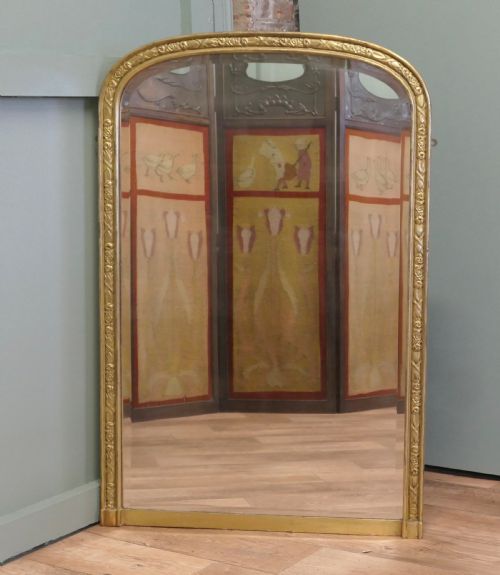
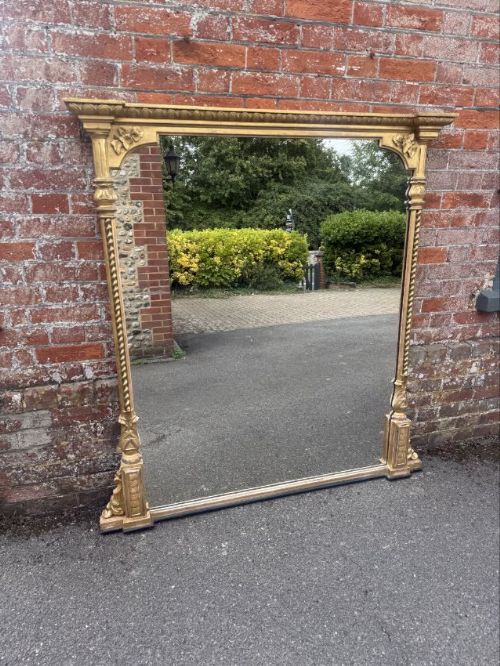
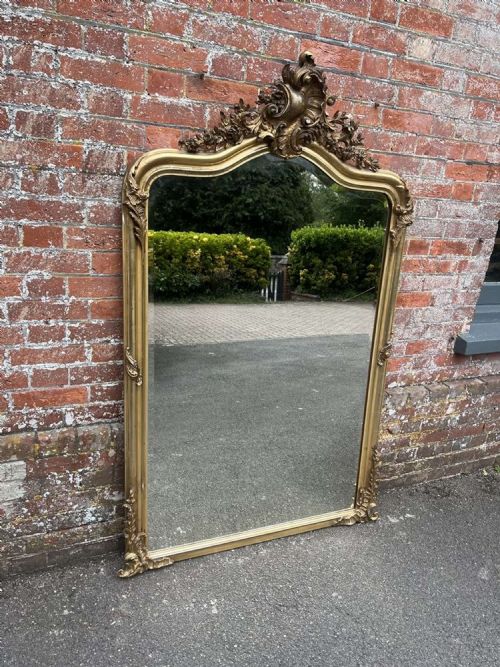
A gilt wood mantle mirror serves as a grand architectural focal point, traditionally hung above a fireplace opening. The examples gathered here span from the eighteenth century through the Victorian era, offering generous proportions suited to period interiors.
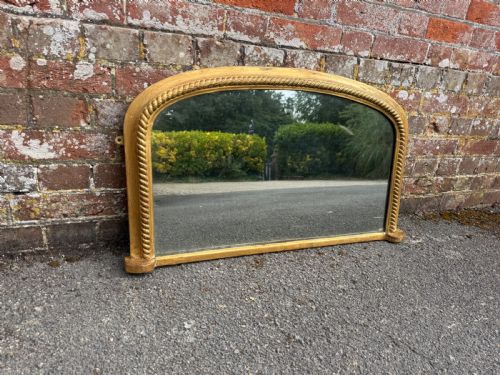
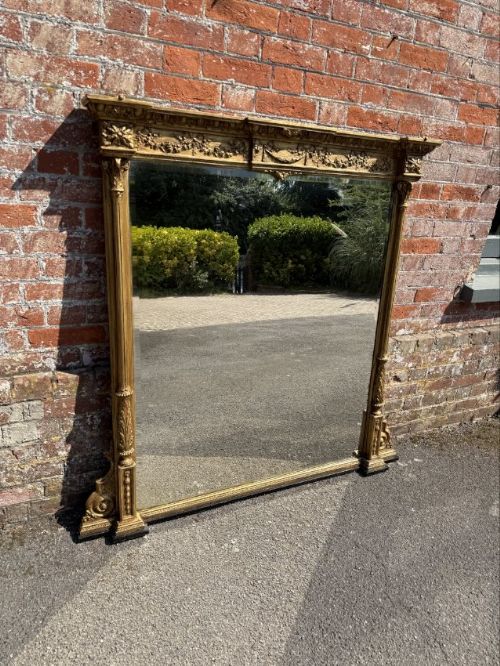
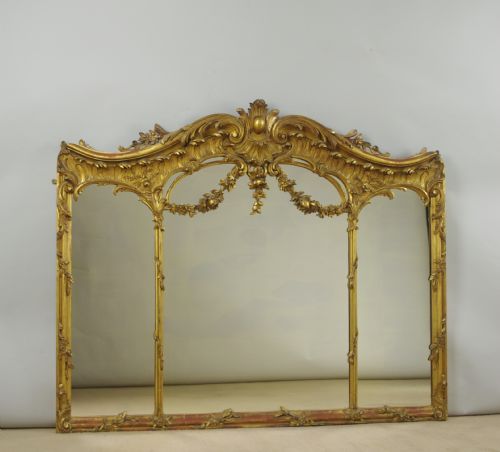
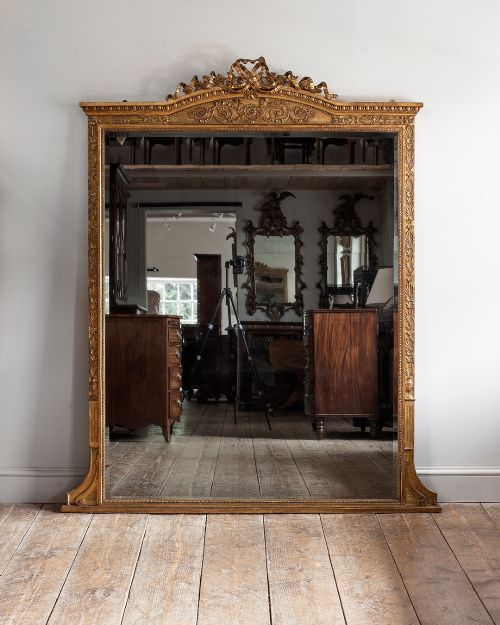
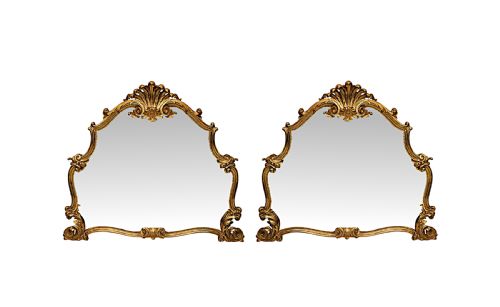
Most pieces encountered on this page belong to the nineteenth century, frequently taking the form of large English overmantle mirrors with arched or shaped tops. Makers and artisans constructed these to command attention, often reflecting light deep into drawing rooms and parlours.
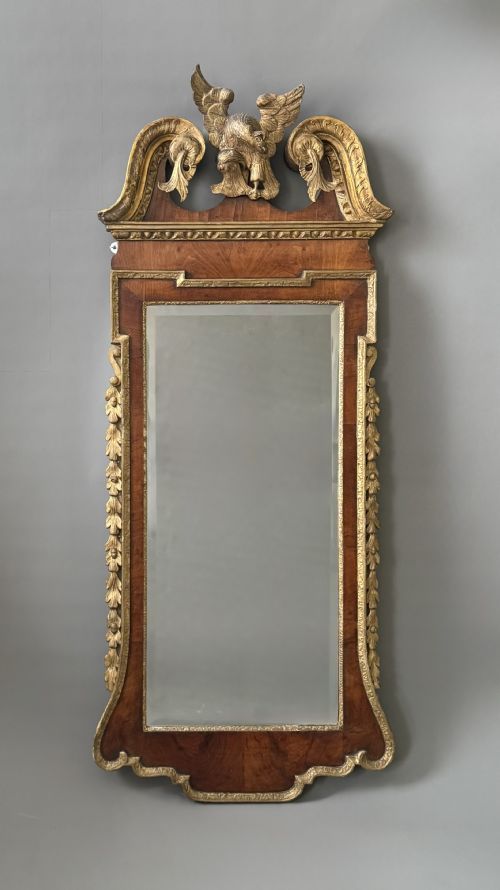
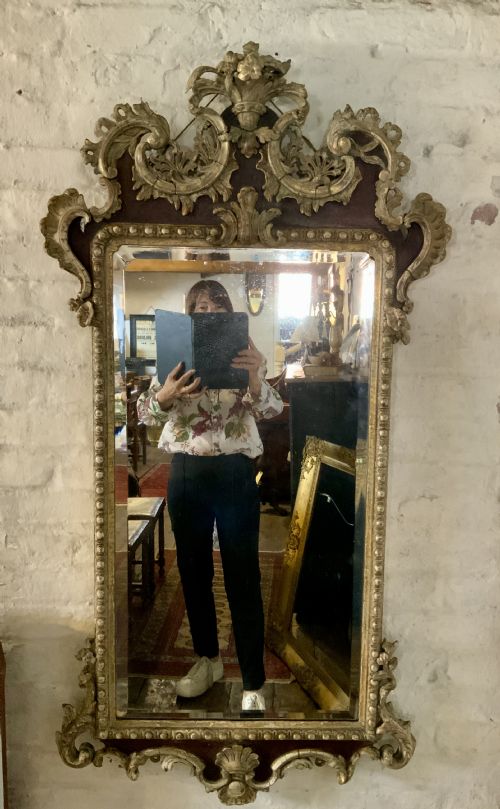
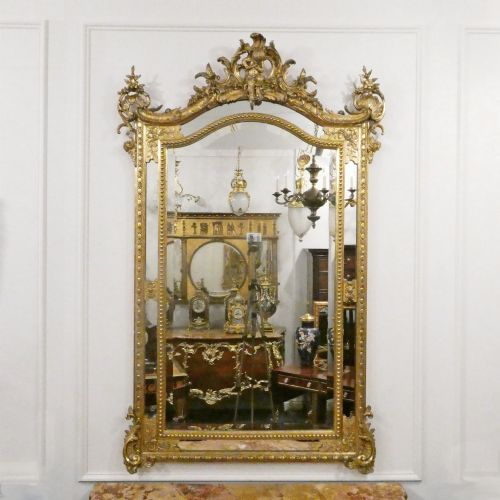
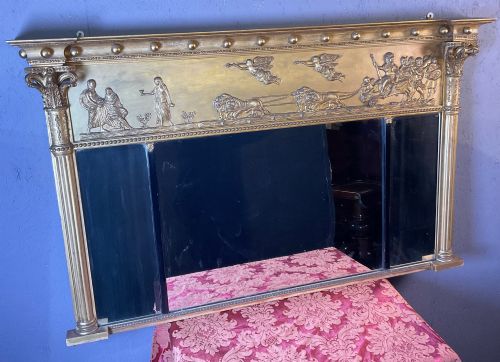
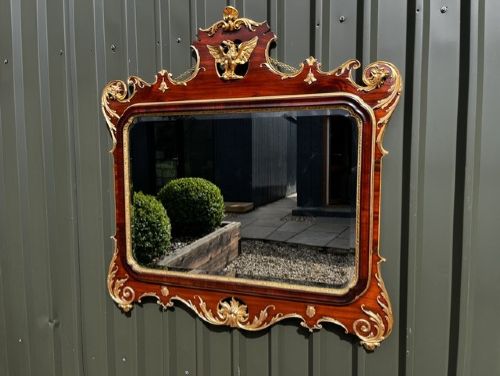
Alongside standard English overmantles, the selection includes French wall mirrors, Regency compartmental frames, and eighteenth-century walnut or mahogany pieces with parcel gilt details. These variations reflect diverse stylistic revivals, from Rococo curves to restrained neoclassical lines.
How They Were Made
Craftsmen shaped the core structure from timber such as pine, mahogany, walnut, or birch, building robust wooden frames designed to support heavy glass plates. Artisans then applied layers of gesso - a fine plaster mixture - over the carved wood base to create smooth surfaces and crisp relief details.
The characteristic golden finish relies on the application of gold leaf or gilt paint adhered to the prepared gesso and wood ground. Carved elements like rope twists, columns, and floral motifs were painstakingly modelled before gilding, uniting structural carpentry with decorative plasterwork.
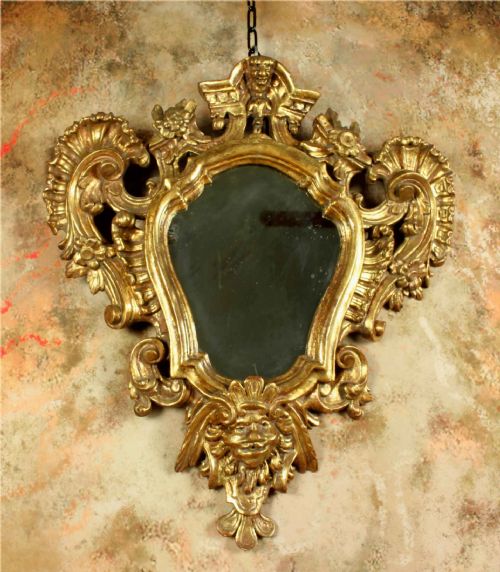
Several mirrors include decorative masks peering out from the gilded plasterwork.
What Varies in Quality
The depth and sharpness of the hand-carved woodwork and applied gesso ornamentation set finer pieces apart from simpler productions. Superior examples display crisp, undercut foliage and well-defined mouldings rather than soft or blurred decorative relief.
The condition and integrity of the original gilding and mirror plates heavily influence overall character. Pieces retaining their original mercury or early silvered glass plates, alongside undisturbed gold leaf layers, demonstrate greater historical authenticity.
The Gilt Wood Mantle Mirror Glossary
- Gesso
- A mixture of plaster of Paris and glue used as a base for moulding and gilding. Artisans built up relief decorations on wooden frames with this compound before applying gold leaf.
- Parcel gilt
- Partially gilded woodwork where gold leaf highlights specific carved details against a contrasting wood surface such as walnut or mahogany. This technique was favoured during the eighteenth century.
- Overmantle
- A large mirror designed specifically to hang on the wall directly above a fireplace mantle. These pieces frequently feature horizontal or arched formats tailored to domestic hearths.
- Compartmental mirror
- A glass plate divided into multiple sections by internal wooden or gilded bars. This configuration appears frequently in Regency and eighteenth-century designs.
- Rococo revival
- A nineteenth-century design style drawing on eighteenth-century French aesthetics. It is characterised by asymmetrical scrolls, naturalistic foliage, and shell motifs.
Gilt Wood Mantle Mirror: Frequently Asked Questions
Where should I hang an overmantle mirror?
These mirrors traditionally anchor the space directly above a fireplace mantelpiece, where their generous scale draws the eye upward. They also function effectively on principal living room walls to amplify natural daylight.
Because of their substantial weight, secure wall fixings and proper load-bearing wall anchors are essential for safe installation.
How do I identify a Regency period mirror?
Regency pieces often display classical architectural motifs such as columns, ball accents, and compartmentalised glass plates. The frames tend to exhibit restrained symmetry compared to later Victorian revivals.
Examining the construction timbers and joining methods helps confirm the early nineteenth-century timeline.
What is the difference between gesso and carved wood?
Carved wood forms the structural frame and primary decorative relief directly from timber like pine or mahogany. Gesso is a plaster compound layered over the wood to build up smooth surfaces and fine ornamental details.
Most antique gilt mirrors utilise both techniques in combination.
How do I clean antique giltwood frames?
Dust gilt surfaces gently with a dry, soft brush or microfibre cloth to protect the delicate gold leaf layer. Avoid liquid cleaners, moisture, and abrasive cloths entirely, as they strip the historic gilding.
Professional conservation advice is recommended for heavily soiled or damaged frames.