
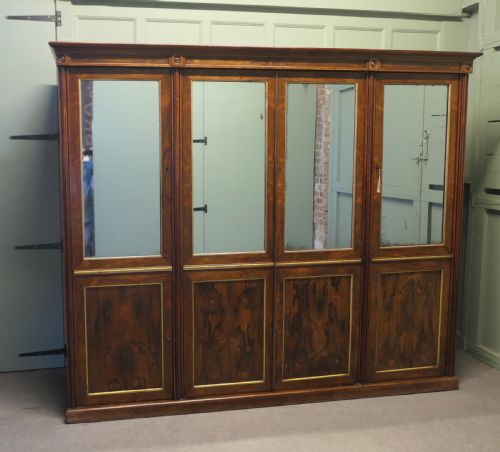
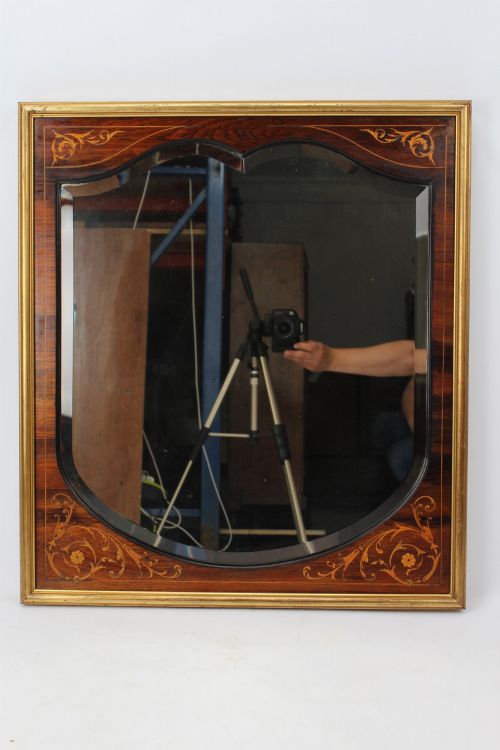


Large Rosewood Mirror
A large rosewood mirror brings rich grain and deep warmth to a room, offering both presence and light.
Large Rosewood Mirror
A large rosewood mirror forms a commanding focal point in an interior, combining deep timber tones with expansive reflective glass. These pieces serve practical functions while adding architectural weight to a chimney breast or hallway wall.
Buyers encounter versions spanning the Regency, Victorian, and Edwardian eras, with wall mirrors and overmantel mirrors appearing most frequently in the listings. Some examples integrate gilt wood details or intricate marquetry to enhance the natural figure of the rosewood.
The objects vary from restrained Regency architectural frames to ornate Victorian overmantels designed to sit above a fireplace. Each piece reflects the dominant decorative taste of its period, from clean classical lines to elaborate nineteenth century flourishes.
How they were made
Craftsmen utilised dense rosewood veneers applied to solid secondary timbers to create rich, figured surfaces across wide frames. Cabinetmakers selected boards with striking grain patterns to catch the light effectively.
Makers incorporated brass accents, giltwood highlights, and satinwood inlay to contrast against the dark body of the rosewood. Traditional joinery methods secured the heavy glass plates within sturdy wooden chassis.
Several mirrors carry the quiet echo of nineteenth century drawing rooms, having spent generations reflecting the flicker of coal fires and evening candlelight.
What varies in quality
The depth and selection of the rosewood veneer dictate the visual impact of the frame, with well matched grain patterns separating superior examples from simpler ones. Superior pieces display thoughtful composition where the timber flows seamlessly around the corners.
The crispness of carved giltwood details and the subtlety of inlaid satinwood indicate the skill of the original workshop. Heavier architectural mouldings and original mirror glass with appropriate ageing further distinguish the finest items.
The Large Rosewood Mirror Glossary
- Rosewood
- A dense, heavily figured timber prized for its dark purple-brown colour and contrasting black grain lines. It takes a high polish and formed the primary surface for luxury furniture across the nineteenth century.
- Overmantel mirror
- A large mirror designed specifically to hang on the wall directly above a fireplace mantelpiece. These pieces often feature landscape orientations to fill the horizontal space beneath a ceiling.
- Giltwood
- Wood that has been coated with a thin layer of gold leaf or gilt paint to provide decorative highlights. It frequently appears alongside rosewood in nineteenth century frames to add brightness.
- Satinwood
- A lustrous, pale yellow timber native to India and Ceylon, used extensively for contrasting inlay and stringing on darker woods. It creates sharp visual definition against rosewood borders.
Large Rosewood Mirror: Frequently Asked Questions
How do I date a large rosewood mirror?
Dating relies on the stylistic cues of the frame, such as classical columns from the Regency period or elaborate scrollwork from the Victorian era. Construction methods and the type of mirror glass also offer clues to the decade of manufacture.
Examining the backboards and fixings provides further evidence. Older frames often utilise hand sawn timbers and early screw types that align with documented historical periods.
Where should I hang a large overmantel mirror?
These mirrors traditionally anchor the space above a fireplace, reflecting light back into the room and balancing the hearth below. They also function effectively on blank dining room walls to create an illusion of depth.
Ensure the wall structure and fixings can support the considerable weight of the timber and glass. Positioning the mirror opposite a window maximises the distribution of natural daylight.
How do I care for antique rosewood?
Maintain the timber by dusting with a dry, soft cloth and avoiding silicone based polishes that build up over time. Keep the piece away from direct sunlight and strong heat sources to prevent the rosewood veneer from drying out.
Occasional application of microcrystalline wax helps nourish the polished surface and protects the grain. Take care not to let cleaning liquids seep between the wooden frame and the mirror glass.
What is the difference between wall and overmantel mirrors?
Wall mirrors are designed to hang independently on any flat surface, often featuring balanced proportions for vertical spaces. Overmantel mirrors tend to be wider than they are tall, specifically proportioned to span the width of a fireplace.
Overmantel frames frequently incorporate lower ledges or resting feet intended to sit directly upon the mantelpiece shelf. Their decorative motifs also tended to match the formal reception room styles of their respective eras.