

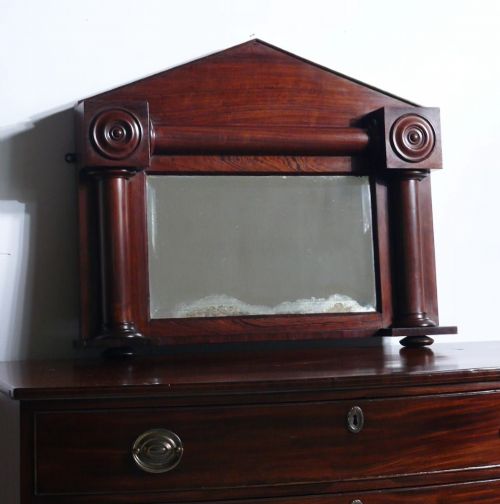


Regency Rosewood Mirror
A regency rosewood mirror brings warmth and architectural presence to a room through dense tropical timber and bright glass.
Regency Rosewood Mirror
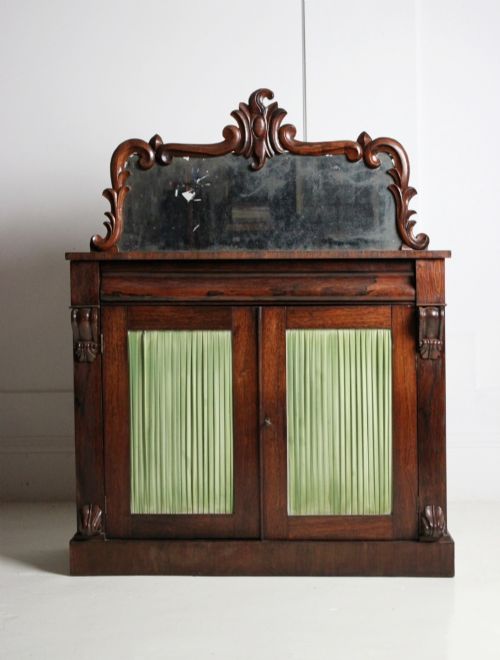
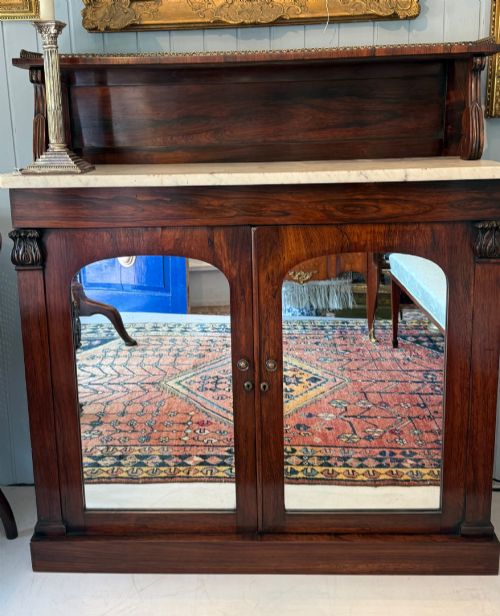
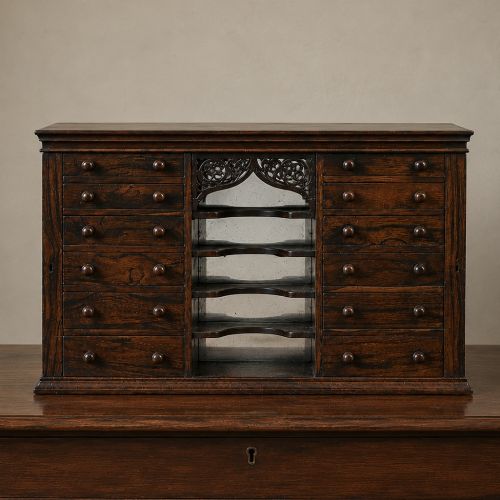
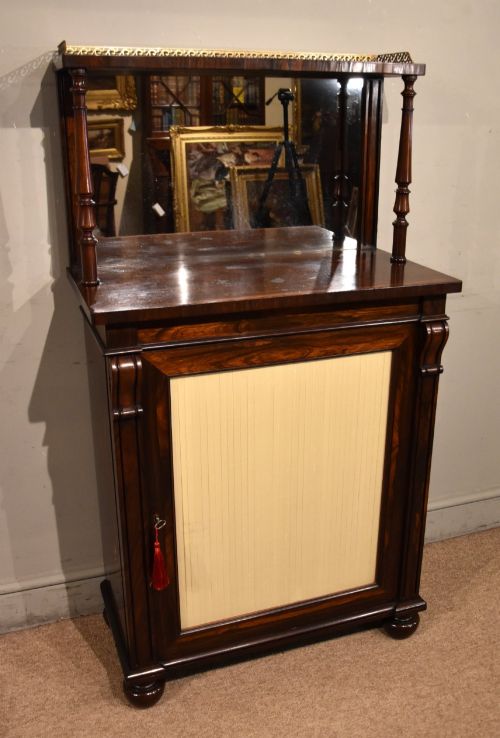
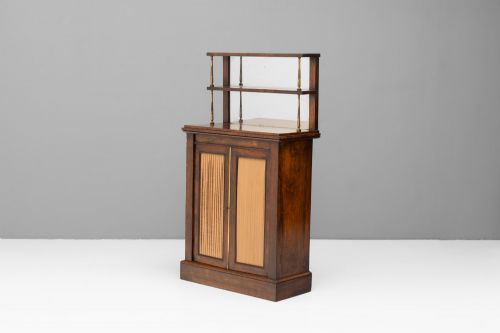
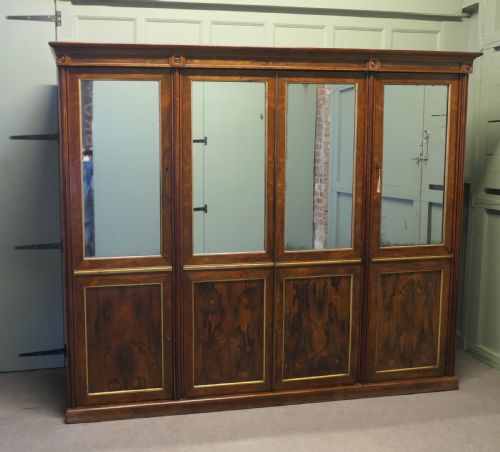
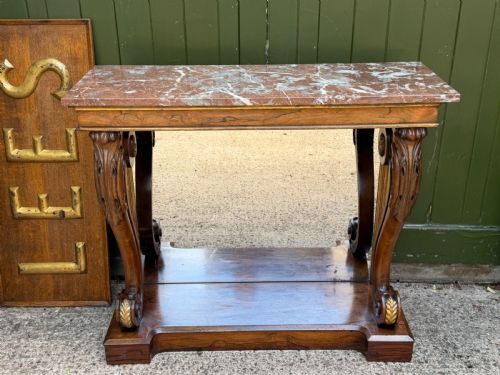
When you search for a regency rosewood mirror, you encounter wall mirrors, overmantels, pier glasses, and dressing mirrors originating primarily from the nineteenth century, including the Regency, George IV, and William IV periods. These pieces often incorporate brass inlay, parcel-gilt accents, and cushion frames alongside related furniture forms such as chiffoniers and console tables.
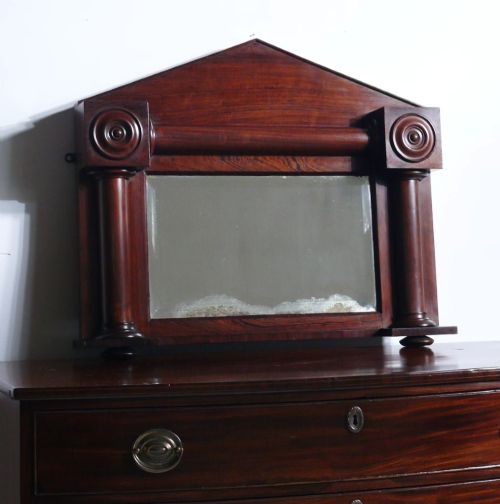
The wall and overmantel versions dominate the selection, designed to hang above mantelpieces or anchor large wall spaces. Surviving examples demonstrate how cabinetmakers utilised deep timber frames to reflect light and expand interior spaces in townhouses and country homes.
Workmanship spans simple domestic looking glasses to grand architectural overmantels embellished with gilt enrichments. The pieces on this page reflect the aesthetic of early nineteenth-century interiors, where dark exotic woods paired with metallic detailing.
Materials and construction
Makers constructed the primary frames using solid or veneered rosewood, selected for its rich grain patterns and dark coloration. Workshops frequently applied brass inlay in geometric or classical motifs directly into the wooden surface.
Giltwood elements appear alongside the dark timber, often highlighting inner bezels, Corinthian details, or carved crestings. Mirror glass was set into the frame behind original backboards, frequently constructed from oak or mahogany.
Regency Rosewood Mirror Retail Price Guide 2026
Typical asking prices for regency rosewood mirror among the pieces listed under this phrase on Sellingantiques today, from the lower quarter to the upper quarter. They describe what is for sale here now, not the wider market.
Some travelling mirrors fold neatly away for the Victorian road, proving that impeccable grooming standards easily survived a bumpy stagecoach ride.
Assessing quality and proportion
The distinction between standard domestic looking glasses and exceptional cabinetwork lies in the crispness of the brass inlay and the depth of the frame moulding. Superior examples exhibit tightly fitted mitres, substantial timber thickness, and well-balanced proportions that relate to contemporary console tables and chiffoniers.
The integrity of the reflective plate contributes significantly to the character of the piece. Original mirror glass with aged foxing demonstrates authenticity, whereas poorly executed restorations or mismatched gilding diminish the historical harmony of the object.
Gillows
The Regency Rosewood Mirror Glossary
- Overmantel mirror
- A wide looking glass specifically designed to hang on the wall above a fireplace mantelpiece. These pieces often feature horizontal rectangular proportions.
- Pier mirror
- A tall, narrow mirror manufactured to hang on the wall space between two windows, frequently positioned above a matching pier table or console.
- Cushion frame
- A convex, rounded frame profile that swells outward toward the outer edge, characteristic of Regency and William IV cabinetwork.
- Parcel-gilt
- Partially gilded woodwork where gold leaf highlights specific carved details, mouldings, or ornamental mounts against a dark rosewood ground.
- Chiffonier
- A low cabinet with shelves or drawers, occasionally featuring a mirrored back or superstructure, frequently associated with rosewood furniture of this era.
Regency Rosewood Mirror: Frequently Asked Questions
How do I distinguish a Regency mirror from a Victorian one?
Regency and early nineteenth-century pieces display specific classical restraint, utilising clean architectural lines, precise brass inlay, and parcel-gilt highlights. Cabinetmakers of this era favoured dense figured rosewood and cushion moulding rather than the heavier, deeply carved ornamentation typical of later Victorian revivals.
Examine the construction methods visible on the reverse, including oak or mahogany backing boards and hand-cut fixings. The presence of original mercury silvering on the glass plate also indicates early production.
Did these mirrors come as part of matching furniture sets?
Cabinetmakers frequently produced looking glasses to complement other principal furnishings within a domestic interior, such as console tables, side cabinets, and chiffoniers. Surviving examples occasionally share identical brass inlay patterns, timber veneers, or gilt motifs with accompanying case pieces.
Matching pairs of pier mirrors or combined mirror-back console tables reflect the unified decorative schemes popular in Regency drawing rooms. These coordinated suites demonstrate the high standard of interior design during the period.
How should I care for the rosewood frame and glass?
Maintain the polished rosewood surface by dusting gently with a dry, soft cloth, avoiding modern silicone sprays or harsh chemical polishes. Protect the antique timber from direct sunlight and sudden humidity changes to prevent veneer lifting or timber splitting.
Clean the mirror glass sparingly using a cloth slightly dampened with water or a mild glass cleaner, taking care not to let moisture seep behind the frame into the original backing boards.