
Gilt Porcelain Decorative Dish
These gilt porcelain decorative dish selections span European factories and Japanese workshops, offering hand-painted botanical studies, armorial patterns, and gilded cabinet displays for the home.
Gilt Porcelain Decorative Dish
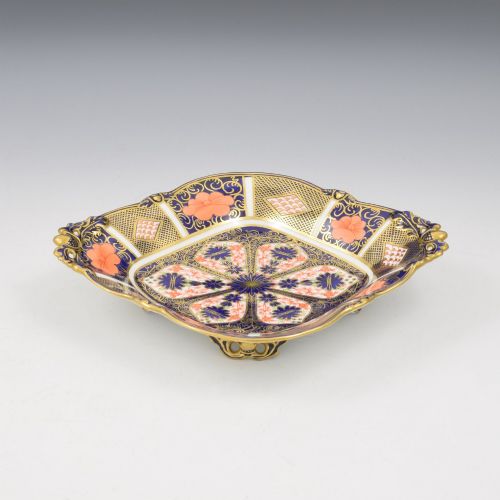
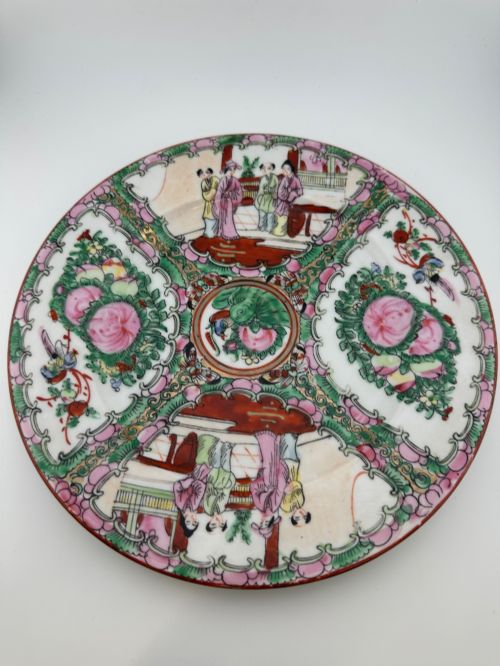
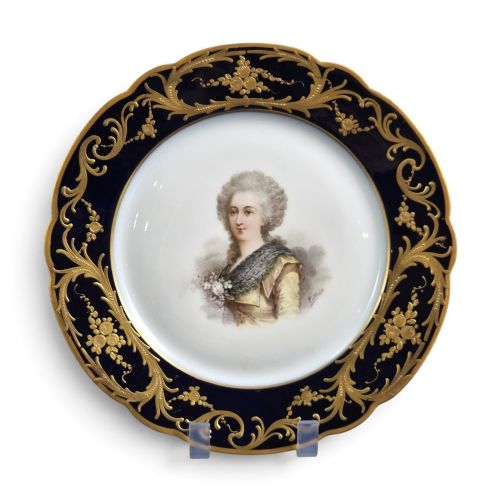
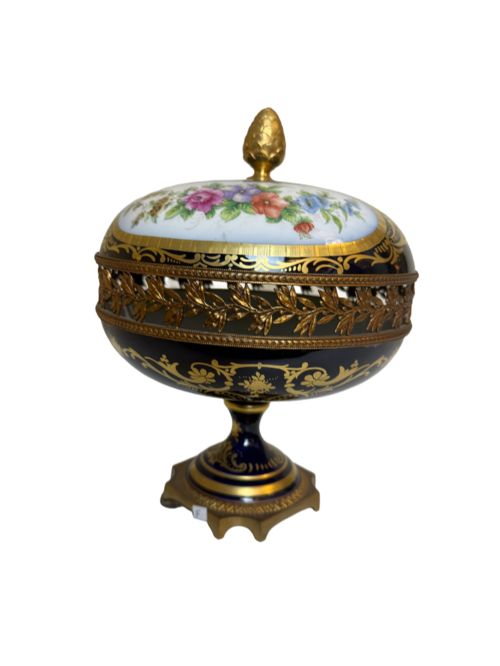
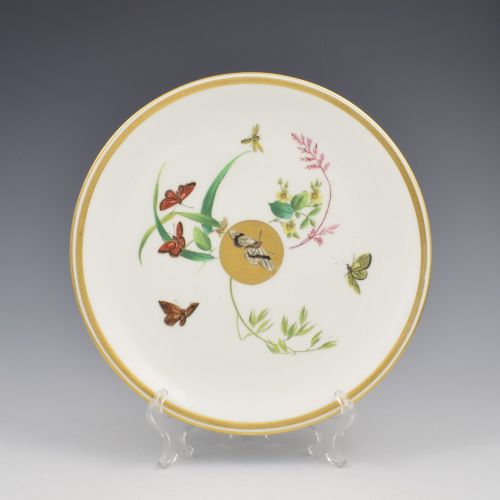
A gilt porcelain decorative dish serves primarily for display rather than dining, taking the form of cabinet plates, shallow bowls, chargers, and footed trays. These items originate from major European ceramic centres as well as Japanese Meiji period kilns.
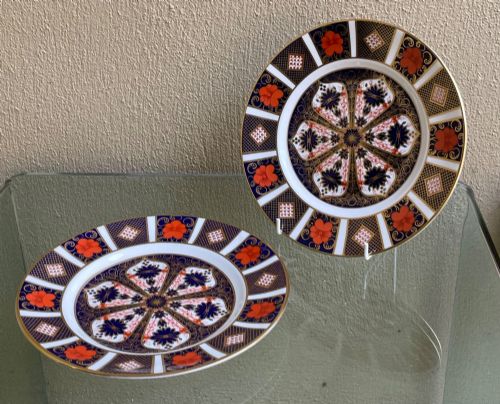
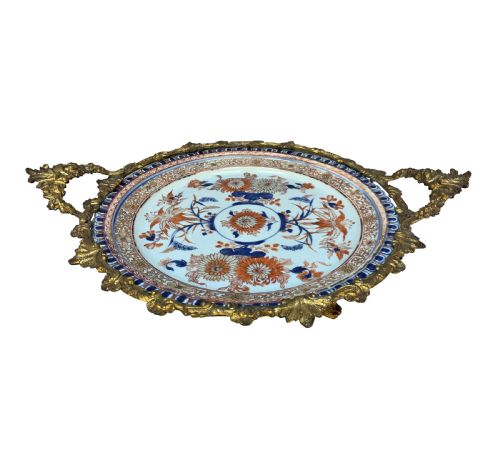
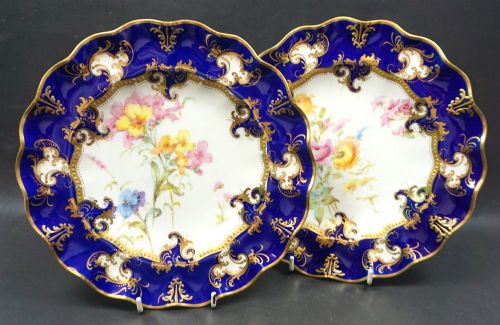
The selection here includes Victorian and Edwardian English works alongside French Sèvres-style services, Limoges porcelain, and Imari pattern chargers. Cabinet plates and decorative dishes form the core of the current range.
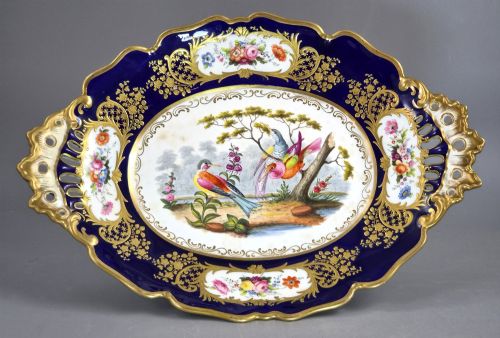
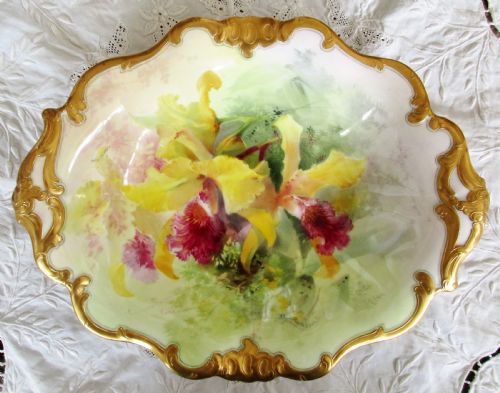
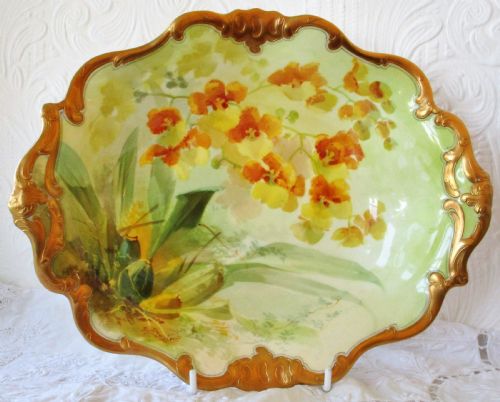
Makers utilised porcelain, bone china, earthenware, and ironstone as foundations for intricate hand-painted scenes, topographical views, and bird studies framed by heavy gilding.
How they were made
The foundation bodies consist of hard-paste or soft-paste porcelain, bone china, and ironstone, shaped into plates, bowls, and trays before initial firing. Artisans then applied underglaze cobalt blue, enamel colours, and detailed hand-painted motifs.
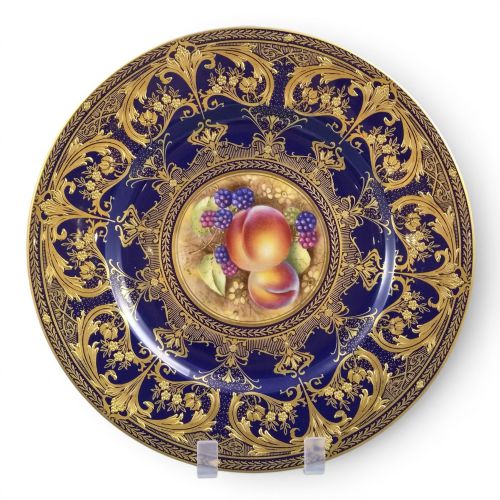
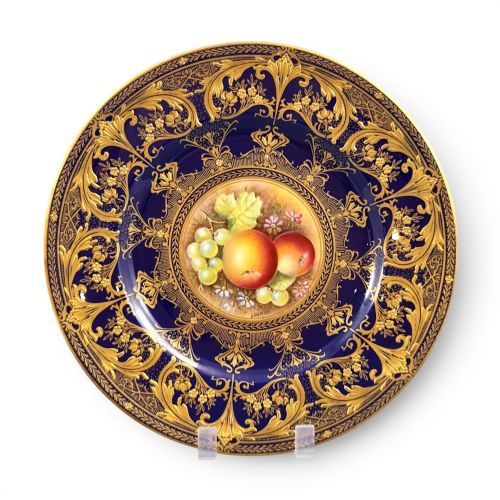
Gilding was achieved using gold leaf or liquid gold preparations, fixed through subsequent kiln firings to create rich metallic borders and highlights. Certain pieces incorporate ormolu mounts, champlevé enamel, or bronze fittings added after the ceramic firing process.
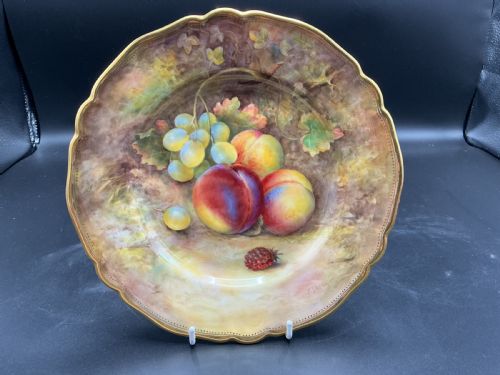
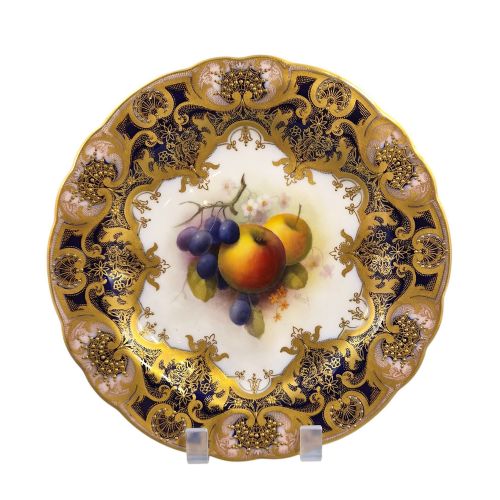
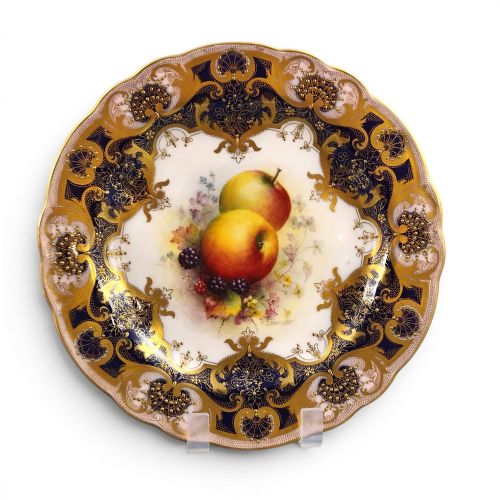
Several plates depict detailed botanical fruit studies painted by artists who clearly spent more time observing orchards than washing brushes.
What varies in quality
The distinction between standard production and masterwork items lies in the execution of the hand-painted artistry and the precision of the gilding. Signed works by noted botanical or portrait painters demonstrate superior draughtsmanship compared to factory-standard transfer prints with touch-ups.
The weight and purity of the porcelain body, the complexity of pierced or moulded borders, and the depth of the gold leaf application determine the overall refinement of each individual dish or charger.
Royal Crown Derby·Royal Worcester·Royal Doulton·John Davenport of Longport·Barr Flight and Barr·Minton
The Gilt Porcelain Decorative Dish Glossary
- Cabinet plate
- A decorative ceramic plate intended for display in a glass cabinet or on a wall rather than for practical table use. These plates often feature detailed hand-painted scenes by named artists.
- Charger
- A large decorative plate or dish used traditionally as a base under other courses or hung on walls for visual effect. In antique ceramics, chargers measure significantly larger than standard dining plates.
- Gilding
- The application of gold leaf or powdered gold to the surface of porcelain to create decorative borders, motifs, or highlights. This metallic layer is fused to the glaze through high-temperature firing.
- Imari
- A style of Japanese porcelain exported from Arita, characterised by underglaze blue, iron red, and abundant gold highlights. European factories frequently copied these distinct aesthetic patterns during the 18th and 19th centuries.
- Ironstone
- A type of durable earthenware patented in the 19th century by English potteries to imitate Chinese porcelain. It provides a heavy, strong body suitable for brightly coloured enamel decoration and gilding.
Gilt Porcelain Decorative Dish: Frequently Asked Questions
How do I display a cabinet plate safely?
Cabinet plates and decorative dishes require secure wall mounts with rubber-tipped prongs or dedicated display stands designed for heavy porcelain. Positioning them away from direct sunlight preserves the vibrant enamel colours and gold leaf.
For open shelving or tables, ensure the support surface is stable and use padded plate stands to prevent accidental slips or scratching to the foot rims.
Can I use these decorative dishes for food?
Most antique cabinet plates and decorative dishes are intended strictly for display and appreciation rather than culinary use. Historic glazes and heavy exterior gilding can wear down or react poorly to acidic foods and modern dishwashing detergents.
Items featuring hand-painted enamels from the 19th century should be kept away from moisture and handled only with clean hands to protect the fragile surface decoration.
How do I identify Imari style porcelain?
Imari porcelain is easily recognised by its strict palette of cobalt blue underglaze, iron red enamel, and heavy application of gold leaf. The patterns typically feature dense floral arrangements, brocade motifs, and panels of exotic birds.
Originating in Japan, this distinctive decorative scheme was widely adopted by European potteries throughout the Victorian period to satisfy Western demand for Eastern aesthetics.
What is the difference between porcelain and ironstone?
Porcelain is a fine, vitrified ceramic fired at extremely high temperatures until non-porous, offering a delicate appearance and translucent quality. Ironstone is a heavy, robust type of earthenware developed to withstand daily wear while mimicking the appearance of true porcelain.
Both materials served as ideal surfaces for intricate hand-painted botanical studies and rich gilding during the 19th century.