

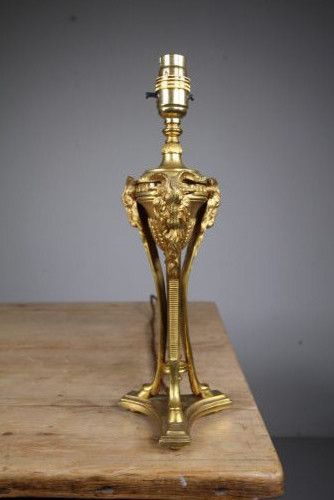

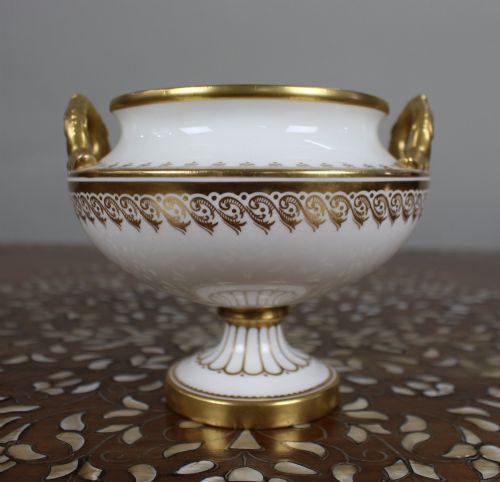
Gilt Neoclassical Urn
A gilt neoclassical urn brings symmetry, classical ornament and gilt surface to a room, drawing the eye instantly.
Gilt Neoclassical Urn
A gilt neoclassical urn represents a disciplined engagement with classical antiquity, appearing across this page in forms designed to anchor interiors.
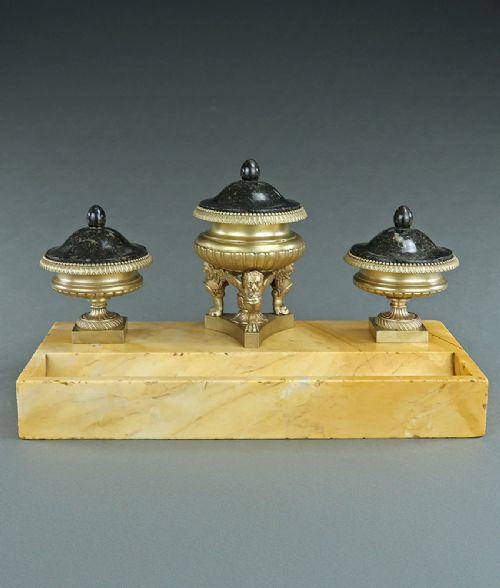
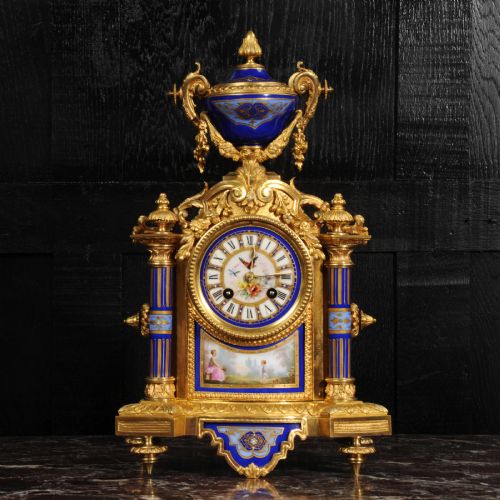
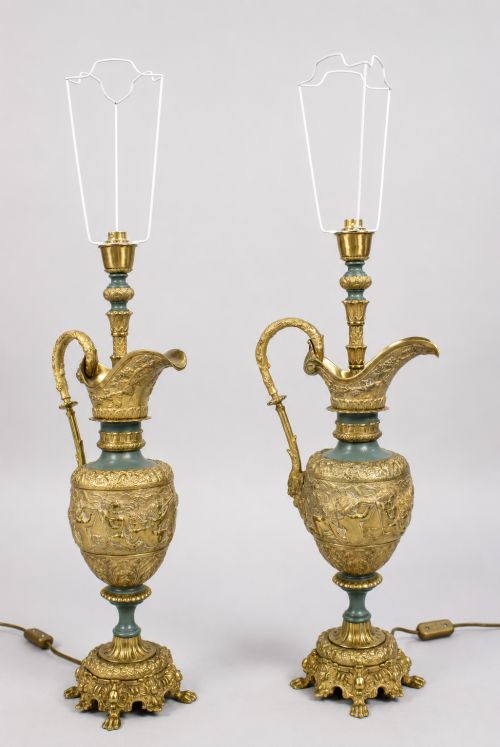
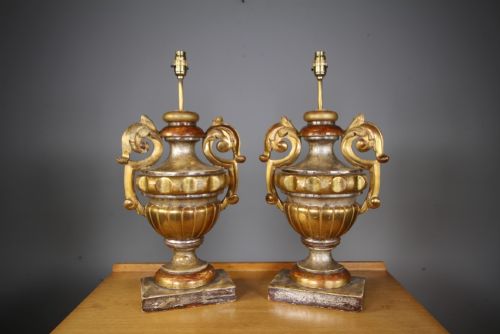
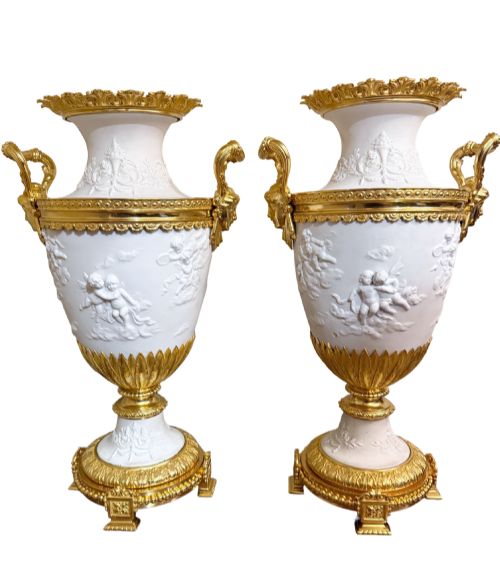
The selection ranges from decorative vessels and table lamps to porcelain bodies mounted in ormolu, drawing on eighteenth-century design vocabularies.
These objects bridge decorative utility and architectural display, often emerging from nineteenth-century revivals of Louis XVI and Adam styles.
Materials and construction methods
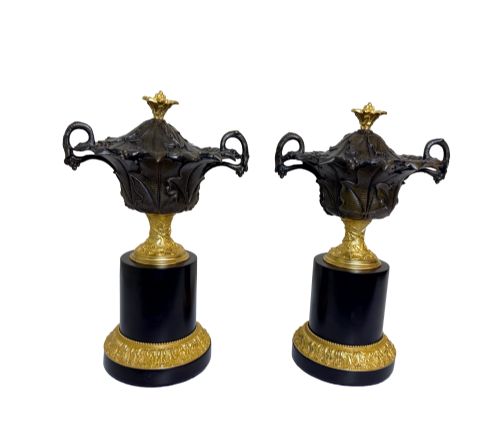
Gilt bronze and ormolu provide the shimmering metallic contrast essential to the style, cast with crisp classical detailing and hand-chased highlights.
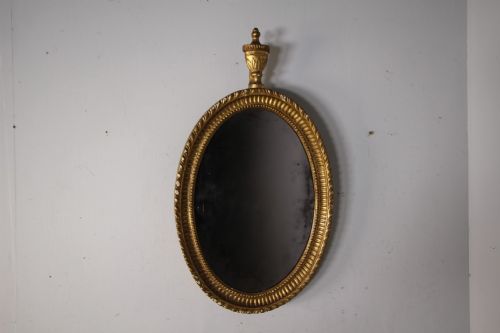
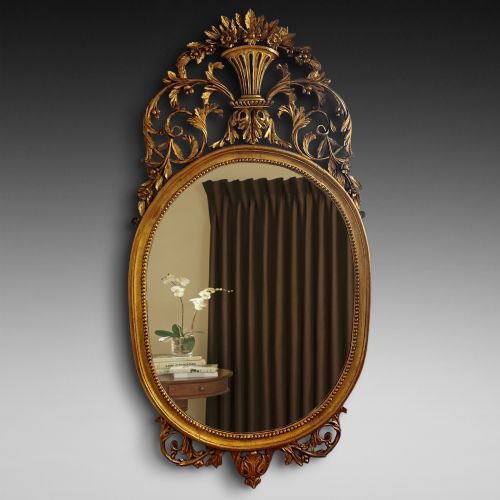
Carved giltwood and gesso form the structure of mirrors and wall sconces, layering gold leaf over prepared wooden grounds.
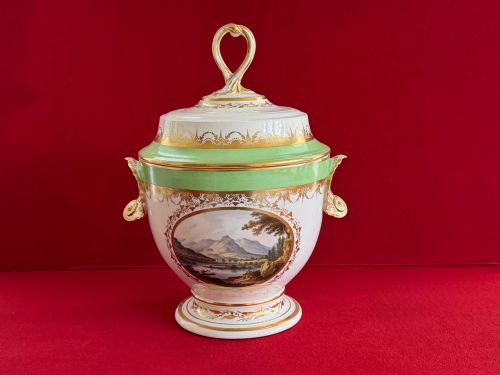
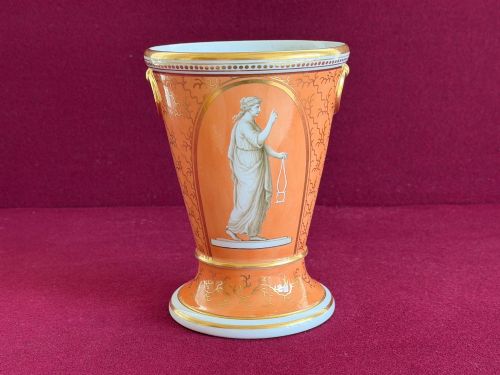
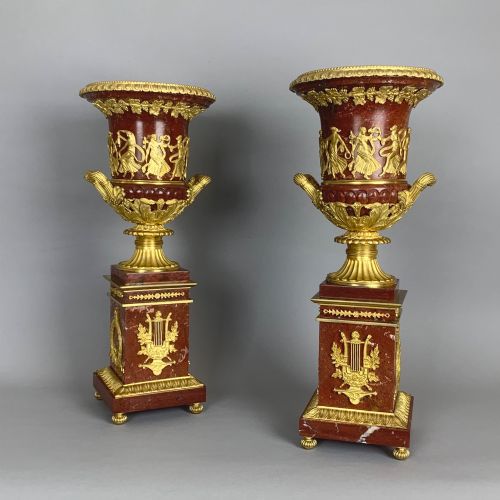
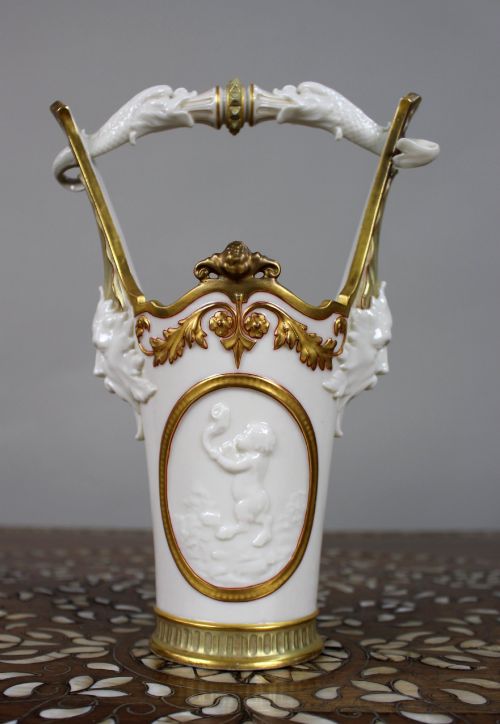
Porcelain and marble bodies introduce smooth, cool surfaces of Sevres, Derby, or Worcester, combined with bronze mounts and stone pedestals.
Distinctions in execution and finish
The precision of the metal casting and the depth of the subsequent chasing separate standard production from superior workshop output.
The quality of gilding determines how light travels across the surface, with genuine gold leaf and finely amalgamated ormolu retaining their warmth over centuries.
The integration of mixed materials - such as the alignment of bronze mounts upon carved marble or porcelain - reveals the hand of the master craftsman.
Japy Freres·Flight And Barr·Royal Worcester·Helena Wolfsohn
The Gilt Neoclassical Urn Glossary
- Ormolu
- Gilded bronze produced by applying a mercury and gold amalgam to a bronze base and heating it to drive off the mercury. This technique creates a distinctive, deep golden lustre characteristic of fine French metalwork.
- Cassolette
- A decorative vessel that doubles as a perfume burner, featuring a reversible or pierced lid. It often takes the form of a classical urn mounted on a marble plinth.
- Gesso
- A plaster-like mixture applied to wood as a base for gilding. It is carved or moulded into intricate classical reliefs before the application of gold leaf.
- Ewer
- A large jug with a fluted body and a scrolled handle, designed originally for pouring water. In neoclassical design, it is rendered in bronze or porcelain purely as an ornamental display piece.
Gilt Neoclassical Urn: Frequently Asked Questions
What is a gilt neoclassical urn?
A gilt neoclassical urn is an ornamental vessel styled after ancient Greek and Roman forms, embellished with gold leaf, ormolu, or gilt bronze. These pieces draw on symmetrical, architectural motifs like swags, fluting, and classical masks.
Originating in revival periods from the eighteenth to the nineteenth centuries, they serve as focal points on mantelpieces, tables, and architectural consoles.
How were these urns used historically?
Historically, these urns functioned purely as decorative statements rather than utilitarian containers, reflecting an elite fascination with classical antiquity. They adorned grand salons, libraries, and dining rooms during successive neoclassical revivals.
Some variations were adapted to hold candles, house clock movements, or serve as luxurious table lamps during later domestic electrification.
How do I style a gilt neoclassical urn?
Place a single large urn on a prominent surface such as a side table, or flank a mirror with a matched pair to create formal symmetry. The reflective gilt surfaces work well against dark, saturated wall colours that make the metallic finish pop.
Keep surrounding objects minimal to let the classical proportions and chased details remain the primary focus of the room.
How do I date a neoclassical urn?
Dating relies on examining the construction of the base, the formulation of the porcelain body, and the casting quality of the metal mounts. Eighteenth-century pieces typically show hand-finished chasing and specific soft-paste porcelain characteristics.
Nineteenth-century revival pieces, while heavily inspired by earlier Louis XVI or Adam designs, reveal different casting marks, machine-made elements, and wiring adaptations if converted to lamps.