

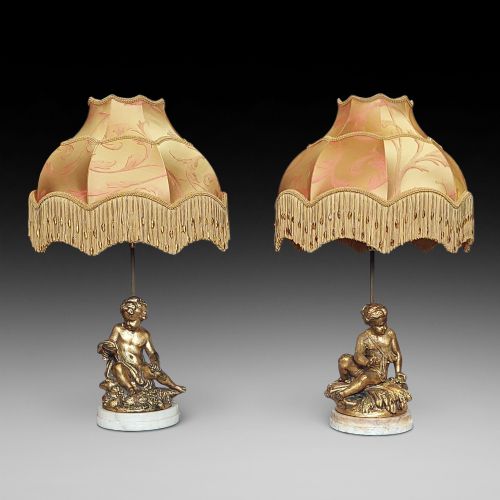


Gilt Mounted Table Lamps
Gilt mounted table lamps bring warmth and decorative presence to a room, combining rich metallic mounts with carved stone, ceramic or glass.
Gilt Mounted Table Lamps
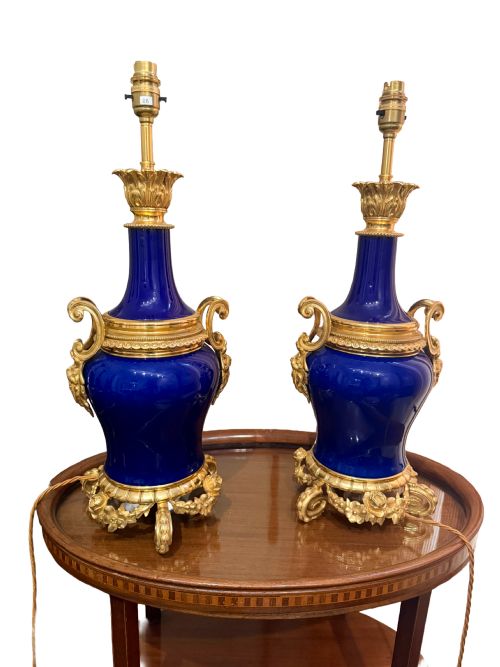
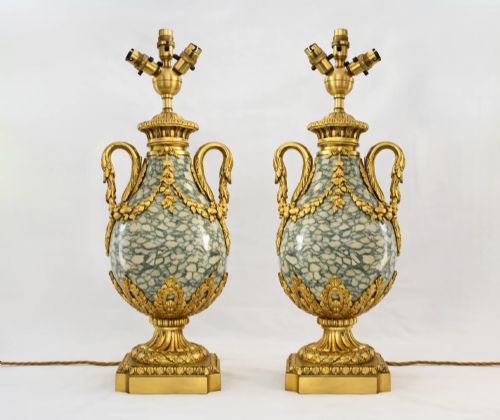
When searching for gilt mounted table lamps, buyers encounter lighting fixtures created by mounting metal fittings onto bodies formed from earlier vases, urns, or columns. These pieces emerge predominantly from the nineteenth century, drawing inspiration from French Neoclassical, Louis XV, and Louis XVI styles.
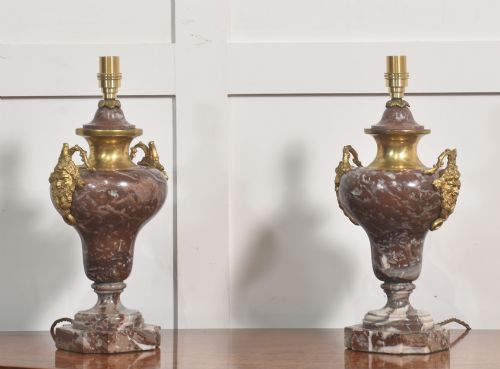
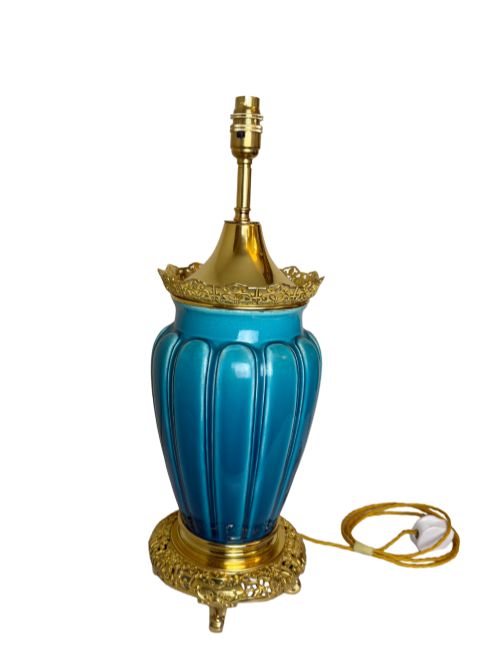
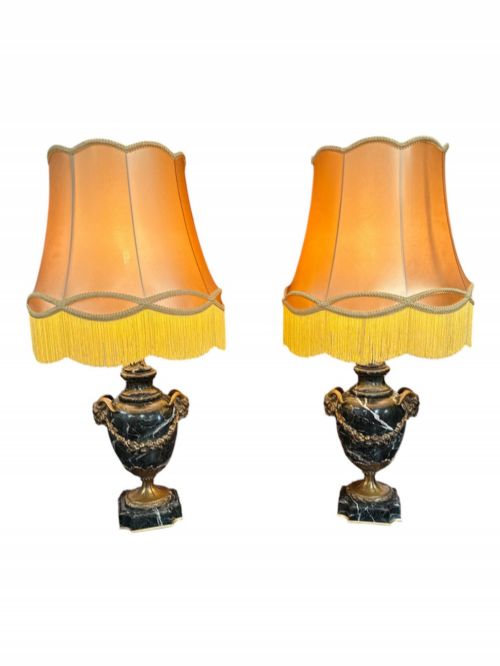
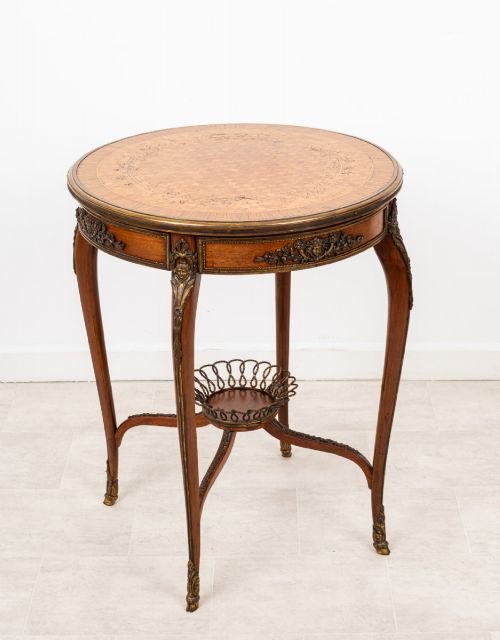
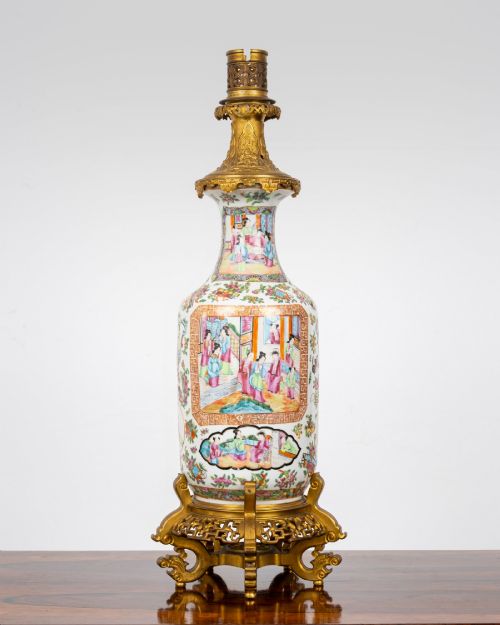
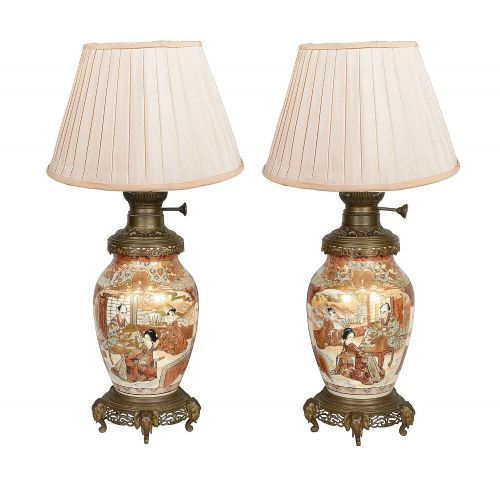
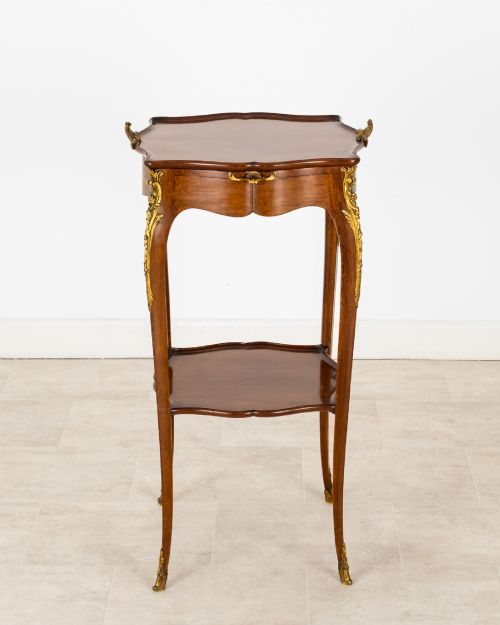
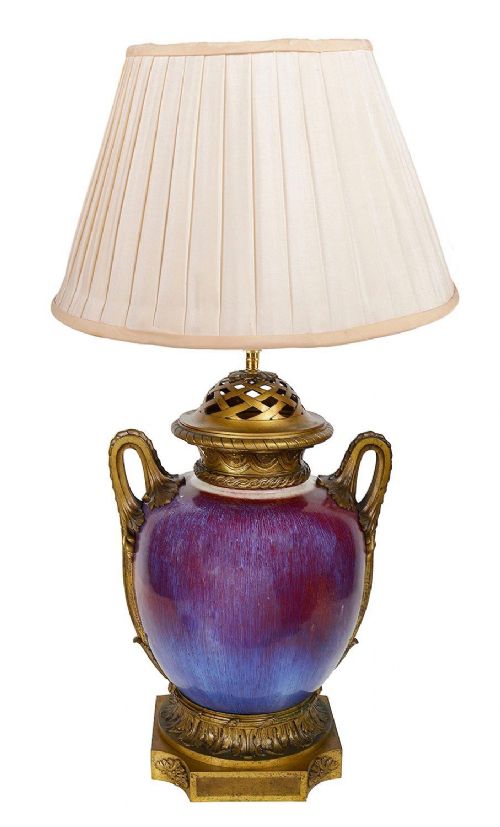
The selection frequently includes pairs adapted from Chinese porcelain vessels, Japanese ceramics, and French marble or alabaster urns. Alongside dedicated lighting, the record encompasses small tables designed to hold lamps or fitted with metal mounts.
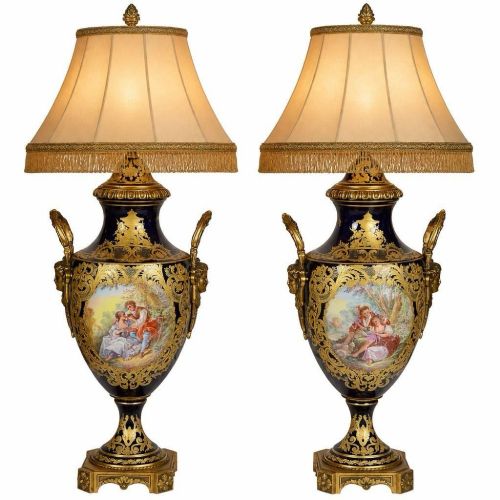
Origins trace largely to French workshops, alongside Italian alabaster pieces and Chinese export porcelain mounted in Europe. Forms range from slender crystal columns to substantial ceramic bodies flanked by cast handles.
How they were made
Construction relies on the combination of a primary body material, such as marble, porcelain, or glass, secured with cast metal mounts. Brass, gilt bronze, and ormolu provide the decorative collars, bases, and handles that define the aesthetic.
Metal components are shaped through casting and chasing, then gilded to achieve a bright or satin gold-coloured finish. These mounts are fitted precisely to stone bodies or ceramic vessels, often integrating electrical conversions or original oil lamp fittings.
Listings feature materials including porcelain, marble, mahogany, alabaster, crystal and cloisonné enamel.
What varies in quality
Quality rests upon the crispness of the metal chasing and the depth of the mercury gilding on the bronze or brass mounts. Finer examples display sharp definition in foliage, scrollwork, and figural details without soft edges from worn moulds.
The selection of the underlying material also dictates standing, with unblemished marbles, rich porcelain glazes, and heavy crystal columns marking superior production. Harmony between the mount and the vessel, where metal follows the contours precisely, separates standard workshop output from exceptional pieces.
François Linke
The Gilt Mounted Table Lamps Glossary
- Ormolu
- Gilt bronze produced by applying a finely ground mercury and gold amalgam to a bronze object before heating. This technique creates a durable, warm gold surface found on finer nineteenth-century mounts.
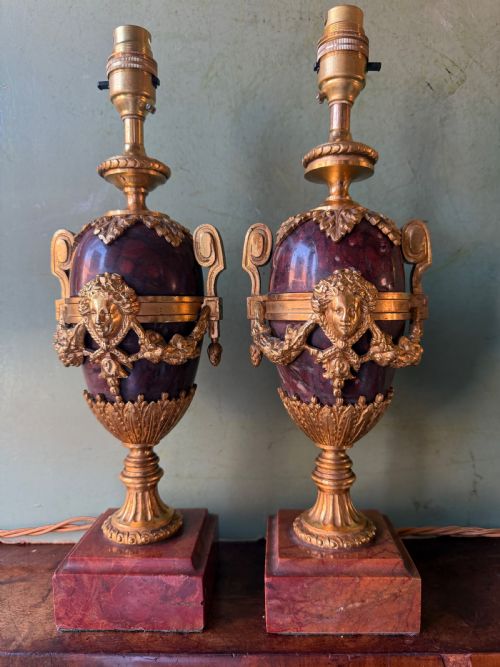
- Rouge marble
- A deep red ornamental limestone with white and grey calcite veins, frequently quarried in France. It provides a contrasting dark base for bright brass or ormolu mounts.
- Cloisonné
- An enamelling technique where metal strips are soldered to a base to form compartments filled with coloured paste and fired. These decorated vessels often appear converted into lamps.
- Cassolette
- A decorative vase or urn designed with a reversible lid that functions as a solid cover or an incense burner. Many period examples are adapted into lamp bases.
- Pâte-sur-pâte
- A ceramic decorating method where liquid white clay is painted in successive layers onto a tinted body to create a low relief cameo effect.
Gilt Mounted Table Lamps: Frequently Asked Questions
What are gilt mounted table lamps?
These lamps consist of decorative bodies made from materials like marble, porcelain, crystal or alabaster, fitted with cast metal mounts in brass, gilt bronze or ormolu. Many originate from the nineteenth century and draw on French decorative styles.
Makers frequently repurposed older ceramic vessels, such as Chinese vases or French urns, turning them into lighting fixtures for grand interiors.
How were they used historically?
Originally, many of these bodies served as ornamental vases, cassolettes or oil lamps before being converted to electricity later on. They stood on side tables, console tables and chests in principal reception rooms.
Their primary purpose was to provide ambient illumination while contributing to the formal decorative scheme of a nineteenth-century interior.
How do I live with these lamps?
Integrating these pieces into a room works best when paired with sturdy wooden furniture, such as mahogany or walnut side tables, where the stone and metal finishes create visual contrast. Silk or fabric shades complement the reflective surfaces of the gilt mounts.
Care involves gentle dusting of the mounts to preserve the finish and handling the heavy marble or ceramic bodies with caution during placement.
How can I tell periods apart?
Distinguishing periods relies on observing the style of the metal mounts and the nature of the body materials. Pieces reflecting Louis XV Revival favour asymmetrical rococo scrolls and organic forms, while Louis XVI examples display strict symmetry, neoclassical urns and crisp fluting.
Nineteenth-century interpretations often combine these historical motifs with nineteenth-century manufacturing methods, such as machine-turned components or later wiring assemblies.