




Pink Enamelled Chinese Urn
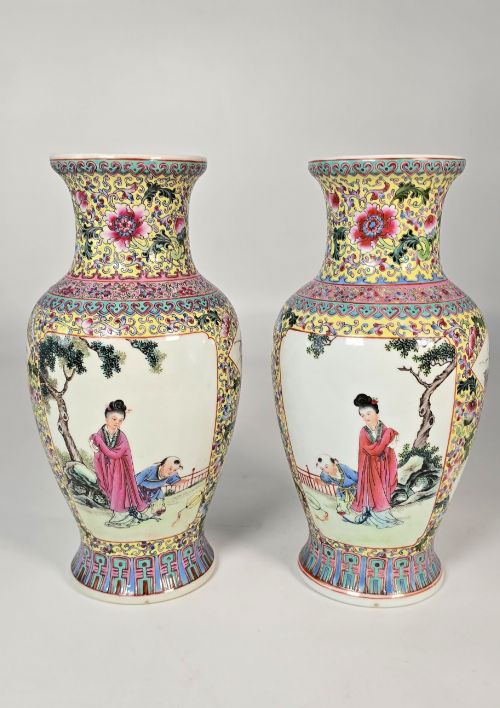
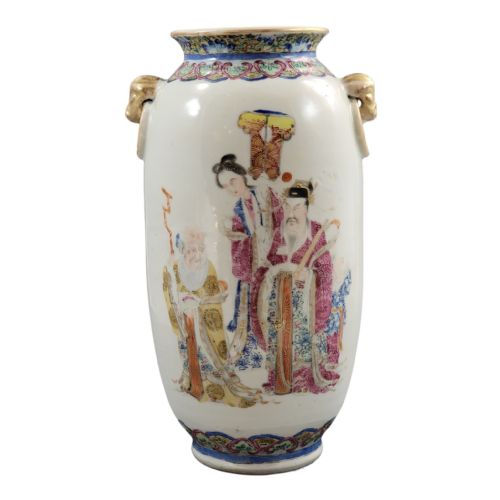
These pink enamelled Chinese urn examples bring vibrant Victorian and Qing Dynasty porcelain into a room with rich hand-painted detail.
Pink Enamelled Chinese Urn
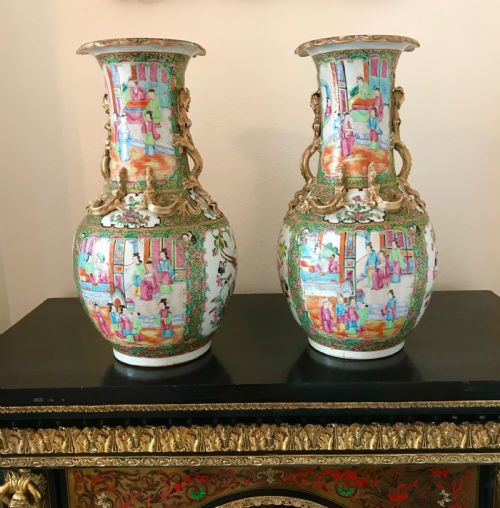
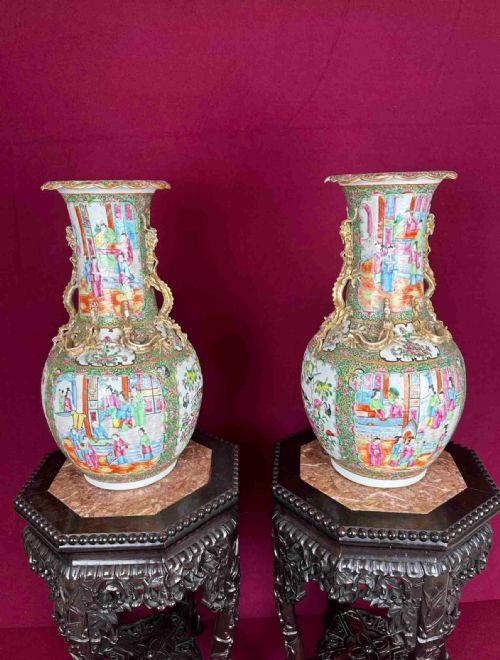
A pink enamelled Chinese urn search brings up nineteenth century porcelain vases, including Canton and Rose Medallion forms from the Qing Dynasty and the Chinese Republic period. Buyers meet large decorative vases, often supplied as matching pairs, which range from domestic mantelpiece items to monumental floor vases.
The selection on this page draws heavily on late nineteenth century Chinese export porcelain, alongside pieces dated around eighteen eighty and nineteen thirty. These objects display the characteristic palette of the period, featuring dominant pink enamel work combined with figures, birds and floral motifs.
Most entries reflect Cantonese production traditions, with specific types such as Rose Medallion appearing frequently across the available stock. Collectors encounter both lidded vessels and open vases, some of which have been adapted into lamps while retaining their original ceramic bodies.
How they were made
Potters shaped these vessels from high-fired porcelain, applying opaque glaze before the detailed surface decoration took place. Artisans then built up the imagery using coloured enamels, incorporating vitreous pigments alongside touches of gold leaf and gilt work.
The distinctive pink tones derive from gold-based enamel preparations, which were meticulously hand-painted onto the fired ceramic surface. Subsequent low-temperature firing fixed the enamel and gold highlights permanently to the glaze.
Pink Enamelled Chinese Urn Retail Price Guide 2026
Typical asking prices for pink enamelled chinese urn among the pieces listed under this phrase on Sellingantiques today, from the lower quarter to the upper quarter. They describe what is for sale here now, not the wider market.
Some nineteenth century urns quietly moonlight as table lamps, shedding light on the matter after a lifetime of looking decorative.
What varies in quality
Quality in these porcelain pieces rests upon the precision and density of the hand-painted enamels, particularly the finesse shown in facial expressions, robes and floral borders. Finer examples display crisp outlining and deliberate placement of gold gilt accents that remain bright against the glaze.
Scale and ambition also define the tier of a piece, separating standard cabinet vases from monumental floor-standing items or matched pairs with complex narrative scenes. The discipline of the brushwork across large surfaces dictates whether the decoration feels balanced or crowded.
The Pink Enamelled Chinese Urn Glossary
- Famille rose
- A major palette of Chinese ceramic enamel colours introduced in the Qing Dynasty, dominated by an opaque pink derived from colloidal gold. This palette allowed for nuanced shading and detailed pictorial representation on porcelain.
- Canton porcelain
- Export ceramics decorated in the port city of Guangzhou using blanks sent from interior kilns such as Jingdezhen. The style typically employs vibrant colours and crowded panels of figures, birds, and butterflies.
- Rose Medallion
- A specific pattern style of nineteenth century Canton export porcelain featuring alternating panels of figures and birds or flowers, arranged around a central medallion. The design relies heavily on pink enamel and gilt detailing.
- Qing Dynasty
- The final imperial dynasty of China, lasting from sixteen forty-four until nineteen twelve, which encompasses the vast majority of nineteenth century export wares seen here. Production during this era included extensive output tailored for Western markets.
- Vitreous enamel
- A glass-like substance fused to the surface of porcelain through firing, providing durable colour and gloss. In these urns, it forms the textured, raised elements of the painted design.
Pink Enamelled Chinese Urn: Frequently Asked Questions
How do I identify a Qing Dynasty piece?
Qing Dynasty porcelain is identified through stylistic markers such as famille rose enamel palettes, hand-painted narrative scenes, and typical export forms from the nineteenth century. Details like specific reign periods help narrow down the date of production.
Examination of the porcelain body, glaze consistency, and enamel application also assists in confirming the historical era of manufacture.
Are these vases functional or decorative?
These pieces function primarily as decorative objects rather than utilitarian vessels for holding water. Their elaborate hand-painted surfaces and historical porcelain bodies make them centerpieces for display.
Some examples have historically been converted into lamps, integrating the ceramic base with electrical fittings while preserving the original artwork.
What distinguishes Canton porcelain from other wares?
Canton porcelain is defined by its vibrant palette, dense compartmentalised decoration, and specific focus on export tastes. The workshops in Canton received plain white porcelain blanks from interior kilns to apply their distinctive enamels.
This division of labour resulted in a recognisable aesthetic that prioritises visual abundance and rich pink enamel colouring.