





Pink Green Porcelain Vases
Pink green porcelain vases bring vibrant colour and intricate hand-painted detail into a room, making them a brilliant choice for adding period character to any mantelpiece.
Pink Green Porcelain Vases
When you search for pink green porcelain vases, you encounter striking nineteenth-century Chinese export wares alongside continental European pieces from the same era. These objects take the form of baluster vases, lidded urns, and matched pairs that were frequently converted into table lamps in later decades.
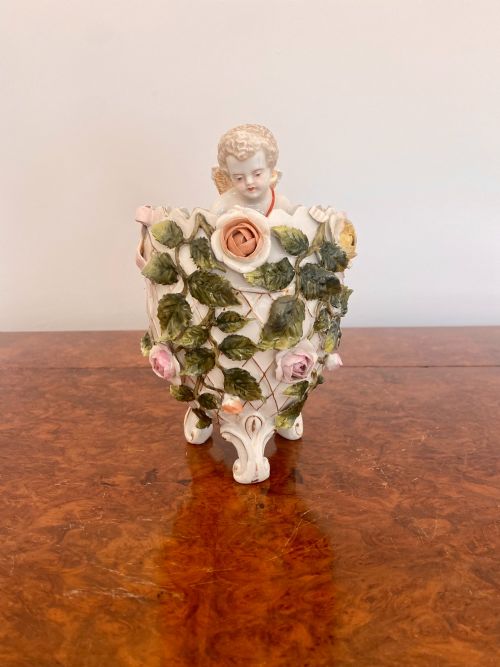
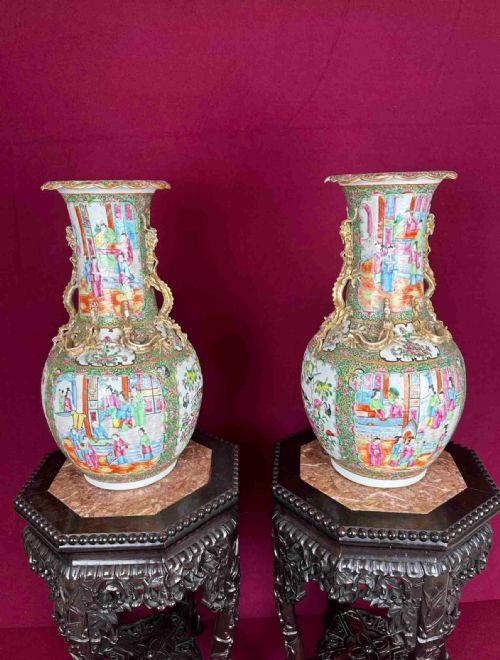
The Chinese export tradition dominates the selection, specifically Cantonese pieces decorated in the Rose Medallion and Famille Rose styles. Alongside these, nineteenth-century European factories produced romantic figures and decorative jugs incorporating similar floral palettes.
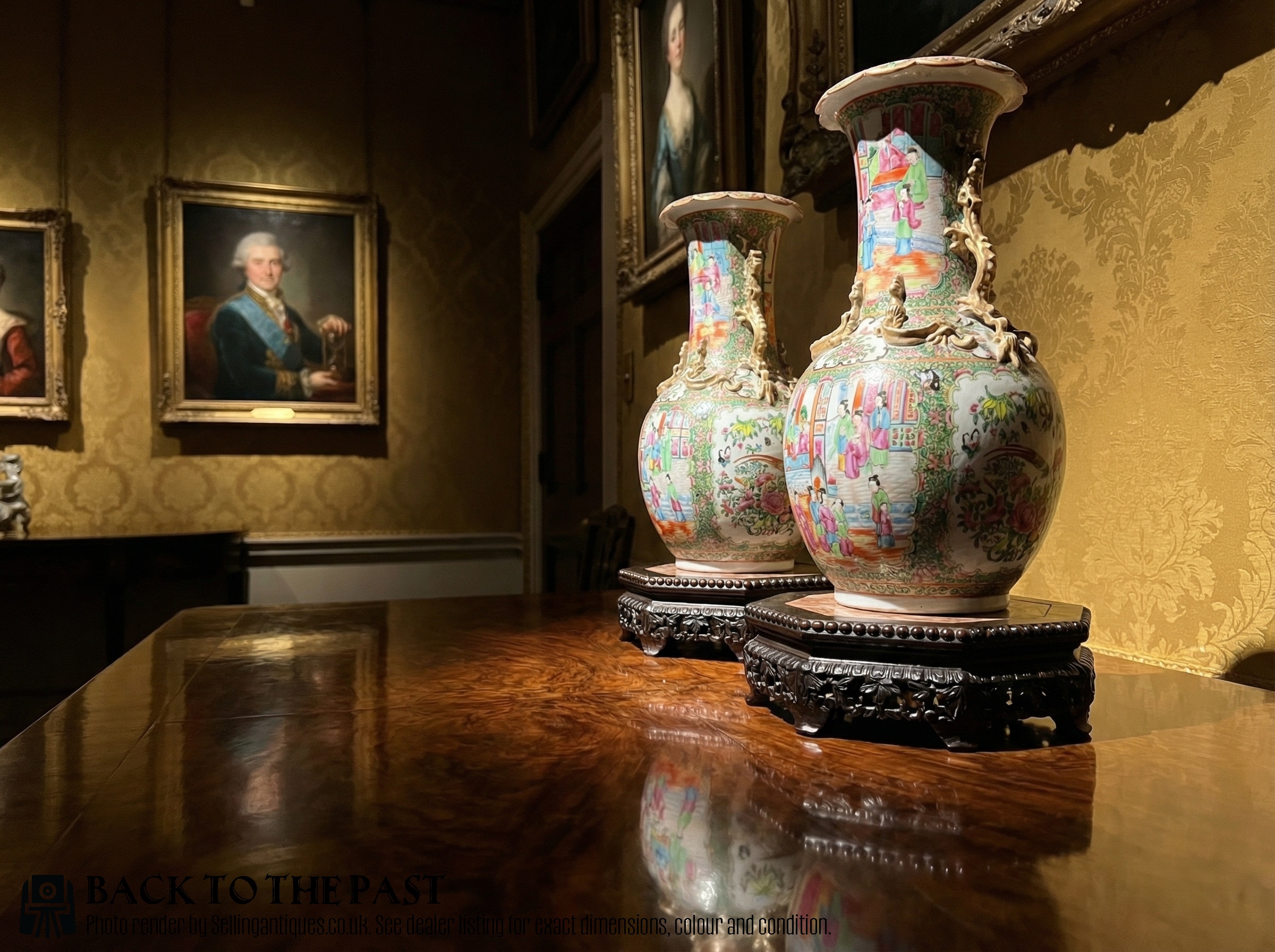
Victorian examples sit alongside Qing Dynasty pieces, demonstrating how nineteenth-century makers across different continents embraced rich enamel decoration. Buyers frequently find large-scale floor vases and sturdy vessels intended for prominent display in principal reception rooms.
Materials and construction methods
Potters shaped these vessels from ceramic and porcelain, applying white glazes as a smooth foundation before adding detailed pictorial scenes. Kiln firing fixed the body and the initial underglaze layers before enamel work took place.
Makers applied polychrome enamel pigments by hand, utilising distinctive pink and green tones alongside gold leaf and gilding to highlight borders and figures. Brass components appear on pieces adapted into lamps during subsequent periods of use.
Pink Green Porcelain Vases Retail Price Guide 2026
Typical asking prices for pink green porcelain vases among the pieces listed under this phrase on Sellingantiques today, from the lower quarter to the upper quarter. They describe what is for sale here now, not the wider market.
Water nymphs and cherubs occasionally share shelf space with stoic imperial figures, proving that nineteenth-century decorators loved a little drama with their flowers.
Assessing quality in nineteenth-century porcelain
Quality reveals itself in the precision of the hand-painted enamel work and the crispness of the gilt detailing across the surface. Superior examples display finely rendered figures and balanced floral panels that cover the porcelain body without crowding the form.
The scale and ambition of the piece also distinguish the range, from modest decorative vessels to monumental baluster vases requiring exceptional kiln control during manufacture. Condition and the preservation of original gilding remain central to the integrity of each piece.
Royal Vienna·Royal Dux
The Pink Green Porcelain Vases Glossary
- Baluster vase
- A tall vase form with a rounded lower body that tapers toward a narrower neck and flared rim. This classic shape provides a generous surface area for intricate painted narratives.
- Famille Rose
- A palette of opaque enamels dominated by an opaque rose-pink colour, introduced to Chinese porcelain during the Qing Dynasty. The style allowed artists to achieve subtle tonal gradations in floral and figural motifs.
- Rose Medallion
- A specific style of Cantonese export porcelain featuring alternating panels of birds, flowers, and court figures arranged around a central medallion. The dense composition relies heavily on vibrant pink and green enamels.
- Gilding
- The application of gold leaf or powdered gold to ceramic surfaces to accentuate rims, handles, and borders. Careful burnishing brings out a warm metallic lustre against the glazed porcelain.
- Qing Dynasty
- The final imperial dynasty of China, spanning from the seventeenth to the early twentieth century, noted for prolific export porcelain production. Pieces from this era often carry specific reign marks or characteristic decorative schemes.
Pink Green Porcelain Vases: Frequently Asked Questions
What are pink green porcelain vases?
These pieces are nineteenth-century ceramic vessels, primarily originating from Chinese export kilns in Canton or European factories. They combine glazed porcelain bodies with detailed hand-painted enamel decoration in distinct pink and green palettes.
Many surviving examples take the form of large baluster vases or matched pairs. Over the decades, a number of these decorative vessels were adapted into table lamps while retaining their original hand-painted surfaces.
How do I style pink green porcelain vases?
These colourful vases work effectively as focal points on sideboards, mantels, or large tables where their detailed enamel work can be appreciated up close. Placing a matched pair symmetrically creates a classic formal arrangement.
When dealing with lamp conversions, pair them with simple fabric shades that complement the pink and green tones without competing with the painted narrative scenes on the porcelain body.
How can I tell Chinese export from European pieces?
Chinese export pieces, such as Canton Rose Medallion wares, typically feature dense panelled compositions filled with figures, birds, and butterflies executed in bright opaque enamels. The paste tends to be thick and heavy, characteristic of nineteenth-century export production.
European factories like Royal Vienna or Royal Dux approached similar colour palettes through a Western neoclassical or Art Nouveau lens. Their work often incorporates moulded figural elements, cherubs, or water nymphs alongside hand-painted floral motifs.