




Rose Medallion Floor Vases
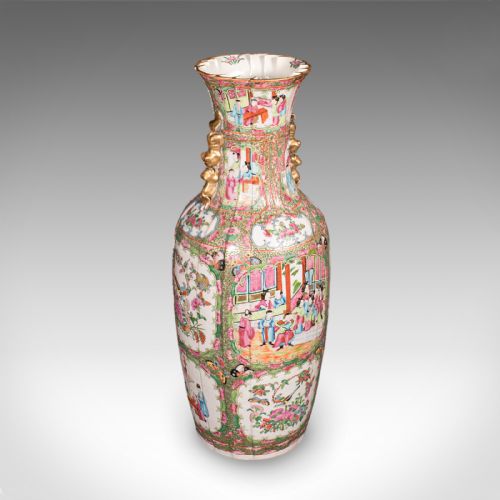
Rose medallion floor vases bring vivid nineteenth-century Chinese artistry into large rooms with their dense enamel panels and gilded detail.
Rose Medallion Floor Vases
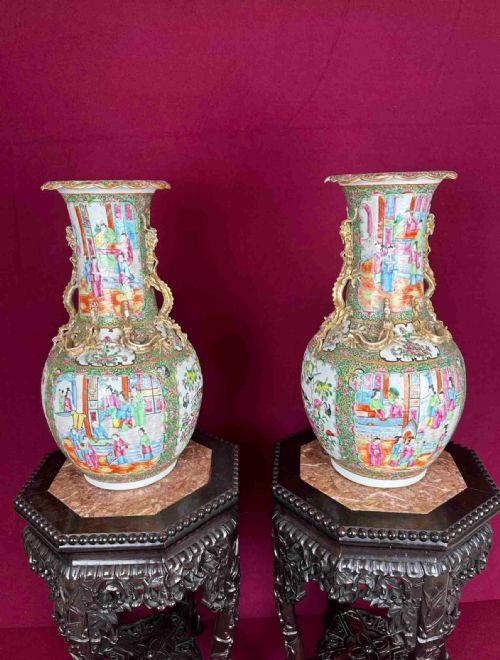
When you search for rose medallion floor vases, you are looking at large nineteenth-century Chinese export porcelain pieces decorated with intricate figurative panels and floral borders. These grand vessels include baluster vases with covers, centrepieces, and pairs resting on stands.
The versions you are most likely to meet on this page date from the Victorian era and the Qing Dynasty. They span individual ceramic centrepieces as well as large matching pairs designed to anchor substantial spaces.
These items reflect traditional Cantonese craftsmanship made for export markets. Their distinct panels alternate between court scenes and dense arrangements of birds, butterflies, and flowers.
Materials and Construction
These pieces are constructed from heavy porcelain, shaped into large baluster forms and finished with vibrant enamel pigments. Artisans applied rich polychrome colours by hand to build up the complex figurative and botanical scenes.
Gold leaf and gilding were incorporated to highlight borders, frame the distinct medallions, and add metallic depth to the painted surfaces. Some examples also include companion wood stands designed to support the height and weight of the vases.
Rose Medallion Floor Vases Retail Price Guide 2026
Typical asking prices for rose medallion floor vases among the pieces listed under this phrase on Sellingantiques today, from the lower quarter to the upper quarter. They describe what is for sale here now, not the wider market.
Listings feature nineteenth-century Chinese export porcelain utilising enamel, gold leaf, and associated wood stands.
Judging Quality
Quality rests in the precision of the hand-painted brushwork across the enamel panels and the crispness of the gilded detailing. Superior examples display finely rendered facial expressions in the court scenes and carefully balanced botanical motifs.
The presence of matching covers on baluster forms and the inclusion of original stands elevate the completeness of the pieces. Consistency in the firing and the vibrancy of the palette separate standard production from finer workmanship.
The Rose Medallion Floor Vases Glossary
- Porcelain
- A hard, fine-grained ceramic material fired at high temperatures, forming the base body for these vases.
- Baluster
- A vase shape with a rounded body that tapers toward the base and swells outward before reaching the neck.
- Qing
- The final imperial dynasty of China, spanning the seventeenth to the early twentieth century, noted for prolific export porcelain production.
- Enamel
- A decorative glass-like coating fused to the ceramic surface through firing, providing the bright colours seen in the medallions.
Rose Medallion Floor Vases: Frequently Asked Questions
How were they used historically?
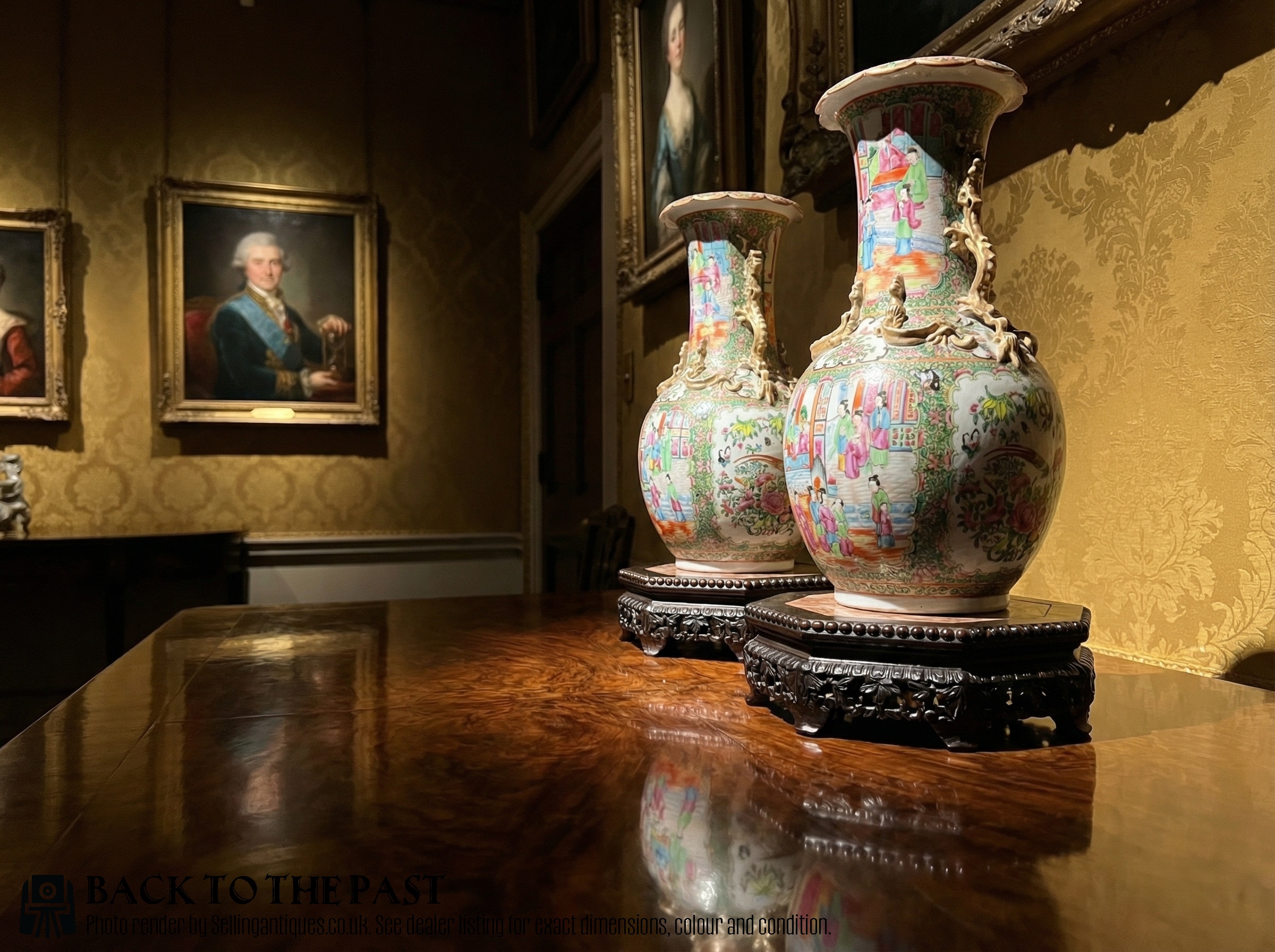
These large vases served as prominent decorative centrepieces in grand nineteenth-century homes and reception rooms.
Matched pairs were frequently displayed on stands to create symmetry and anchor large architectural spaces.
How do I style them today?
Their substantial scale makes them ideal for placement directly on the floor in hallways, entrance halls, or spacious living areas.
Keep surrounding furniture simple to let the dense enamel colours and gilded details remain the focal point of the room.
How can I tell the period?
Dating relies on examining the characteristics of the nineteenth-century porcelain body, the style of the hand-painted enamel palettes, and the specific motifs.
References to the Qing Dynasty or Victorian era align with the production methods and export trends of that time.