



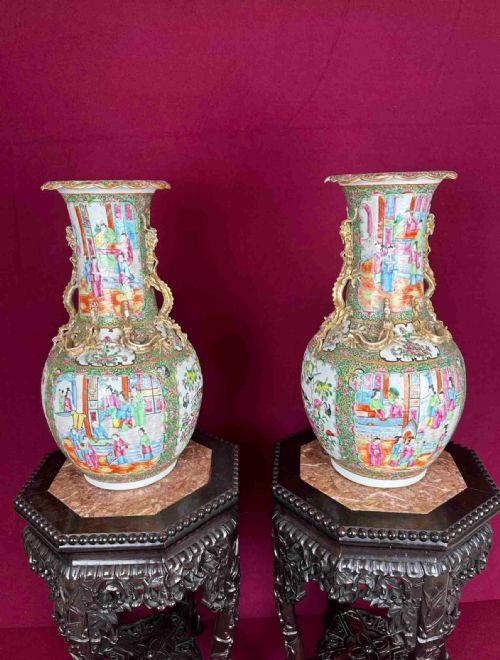
Late Qing Export Ceramics
Late Qing export ceramics bring vibrant hand-painted enamel and crisp porcelain to a room, carrying centuries of global trade history.
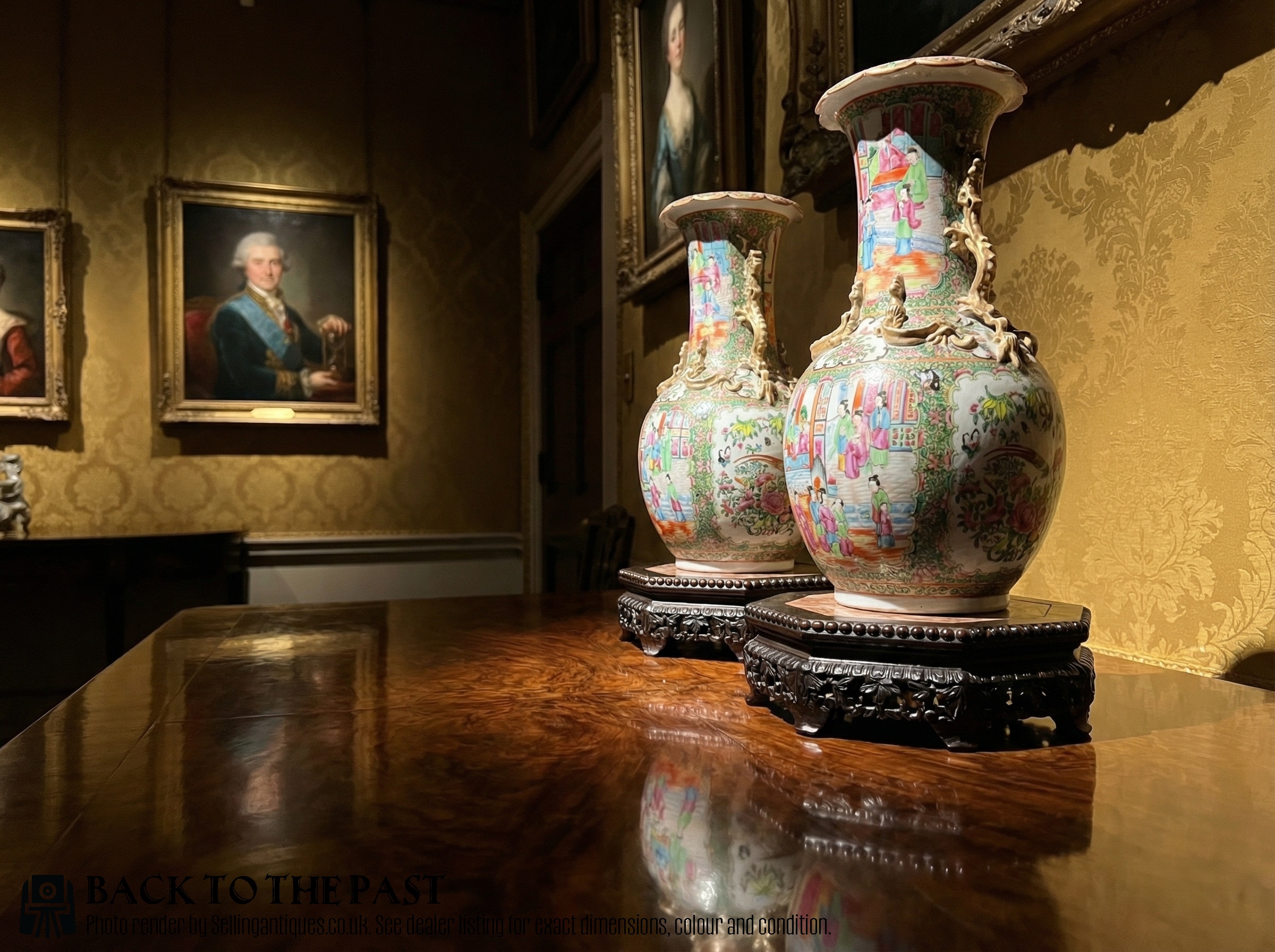
Late Qing Export Ceramics
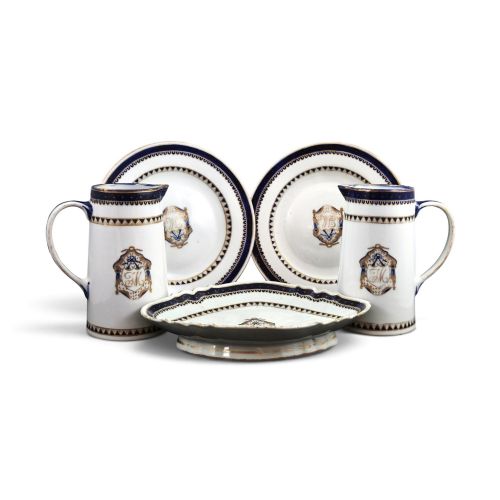
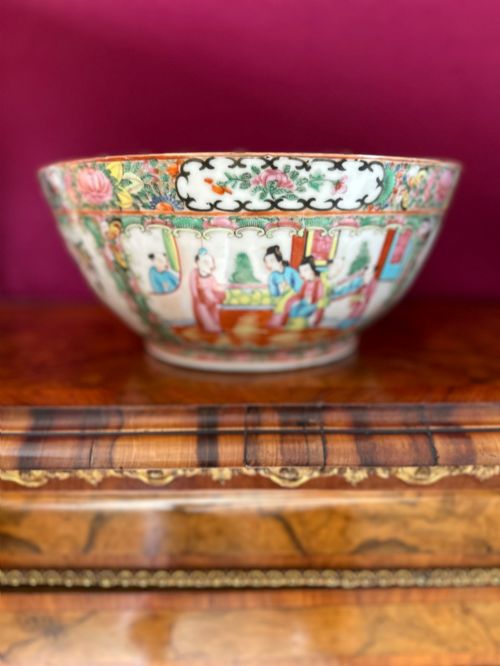
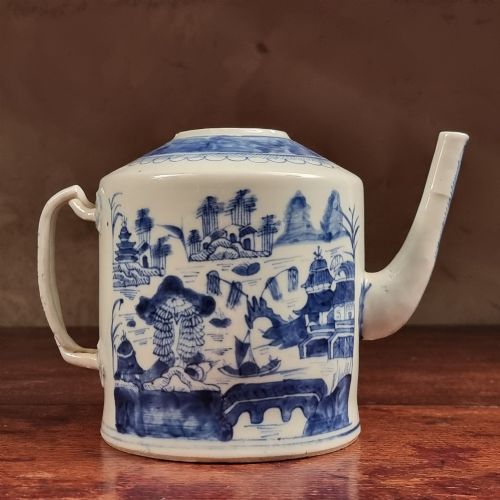
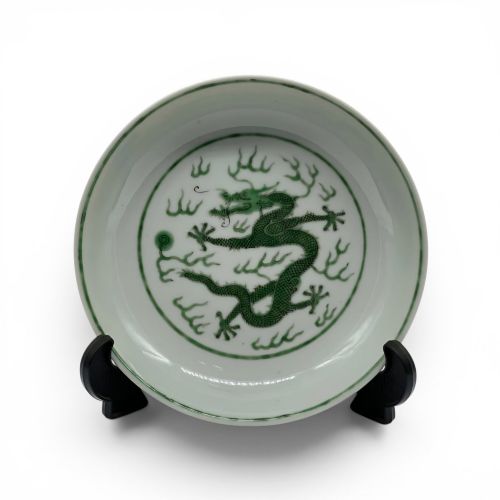
Late Qing export ceramics comprise decorative bowls, teapots, tableware, and figures made in China for Western markets, spanning the nineteenth century and Victorian periods. These pieces often arrive in vibrant Cantonese Famille Rose palettes, alongside blue, white, and gilt styles from earlier transitional dates.
The objects seen here range from large punch bowls and eggshell bowls to hand-painted vases, cockerel figures, and pheasant sculptures. Buyers frequently encounter late nineteenth-century Canton production, alongside monogrammed or armorial services originating in the eighteenth century.
How they were made
Makers shaped fine porcelain before applying cobalt underglaze, enamel glazes, and gold leaf highlights. Artisans then fired these pieces to fix the pigments, occasionally adding meticulous hand-painted details in red, green, and pink.
Techniques relied on precise brushwork for intricate motifs like the thousand lohan or melon and butterfly patterns. Gilding and gold gilt finish many surfaces, catching the light against cobalt blue and polychrome enamels.
Late Qing Export Ceramics Retail Price Guide 2026
Typical asking prices for late qing export ceramics among the pieces listed under this phrase on Sellingantiques today, from the lower quarter to the upper quarter. They describe what is for sale here now, not the wider market.
Forms range from teapots and table lamps to decorative cockerels and pheasant figures.
What varies in quality
Quality rests upon the crispness of the porcelain body and the precision of the hand-painted enamel work. Superior examples display dense, vibrant brushwork without blurring, whilst simpler items show heavier, more uniform application.
The depth of the glaze and the preservation of the gold leaf or gilt details dictate the visual impact of each vessel. Finer forms, such as eggshell bowls or imperial-style dishes, demand greater technical skill from the potter and painter.
The Late Qing Export Ceramics Glossary
- Famille Rose
- A palette of opaque pink and rose enamels introduced in Chinese porcelain decoration. It allowed for nuanced shading of floral and figural motifs.
- Canton
- A major trading hub in China associated with brightly coloured export porcelain. Canton wares often feature dense panels of figures, birds, and flowers.
- Cobalt Underglaze
- A blue pigment painted directly onto the raw porcelain body before glazing and firing. This technique produces deep blue designs that withstand high temperatures.
- Eggshell Porcelain
- Exceptionally thin and delicate porcelain vessels prized for their lightness. They require immense skill to throw and fire successfully without warping.
- Gilt
- A thin layer of gold applied to the surface of porcelain or metal mounts. It provides rich highlights that complement painted enamel scenes.
Late Qing Export Ceramics: Frequently Asked Questions
Where were these export ceramics made?
Kilns across China produced these wares specifically for international trade, with significant output centred around production hubs like Jingdezhen and export ports like Canton. Artisans tailored the forms and decorative styles to suit Western tastes and interior decoration.
Items shipped across global trade routes, finding homes in European and British households. This dual heritage bridges traditional Chinese potting techniques with nineteenth-century Western collecting trends.
Can I use these teapots and bowls for food?
Most collectors display these historic ceramics rather than use them for daily dining, due to their age and delicate enamel surfaces. Historic glazes may also contain materials unsuited for modern consumption.
Gentle occasional use for dry goods is acceptable to some, but hand washing is essential. Preserving the remaining gilt and enamel prevents long-term wear on the antique surface.
How can I tell the period of a piece?
Examine the style of the painting, the weight of the porcelain body, and any reign marks stamped or painted on the base. Nineteenth-century pieces often feature dense Canton palette enamels, whereas eighteenth-century items lean toward specific armorial designs or cobalt blue.
Comparing the potting technique and colour saturation against dated examples helps narrow down the decade of manufacture. Consulting established stylistic markers prevents misidentifying later revival pieces.