


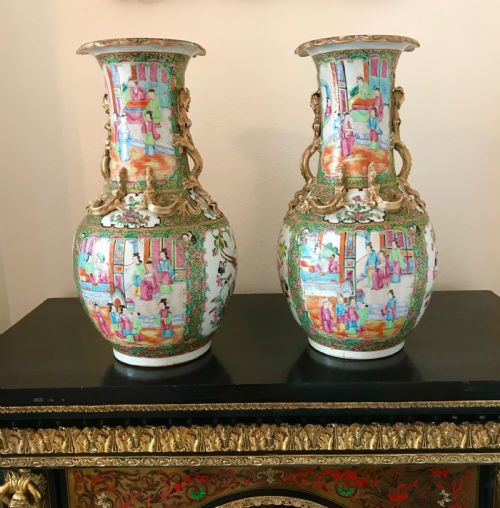


Antique Canton Porcelain Urns
Antique canton porcelain urns bring vibrant Qing Dynasty palette work and intricate hand-painted storytelling directly into a room.
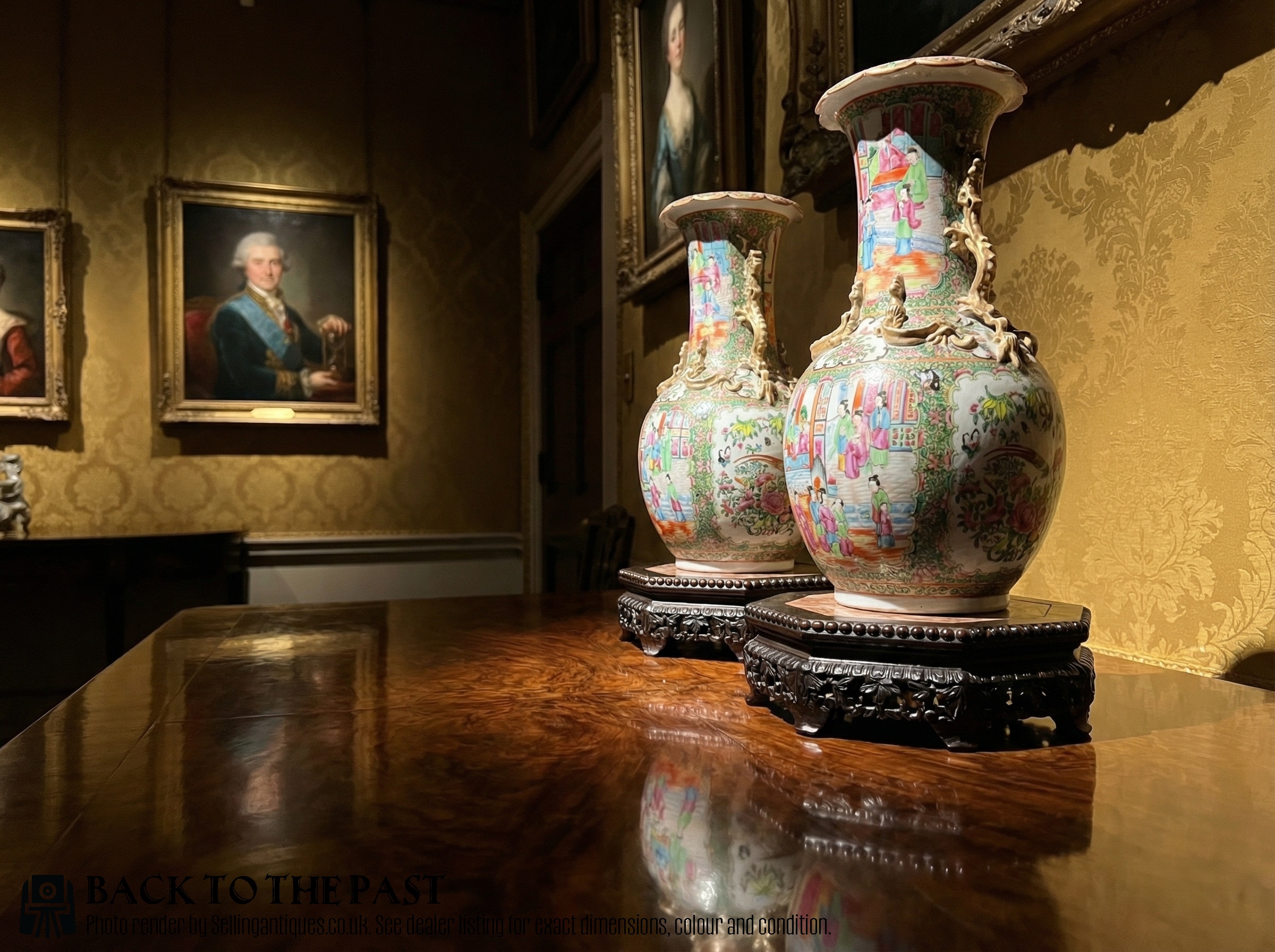
Antique Canton Porcelain Urns
Antique canton porcelain urns encompass Chinese export vessels from the nineteenth century, including pieces assigned to the Victorian era and specific dates such as 1870, 1880, 1900, and the Daoguang period. Buyers searching this phrase encounter significant decorative vases, moon flasks, lidded vessels, and variations adapted into table lamps with gilt bronze or brass mounts.
The objects displayed here primarily represent the Rose Medallion and Famille Rose traditions originating from Chinese export workshops. Forms range from monumental floor-standing pieces to matched pairs designed for display on stands, reflecting the aesthetic demands of Western markets during the late nineteenth century.
How they were made
Makers shaped these vessels from high-fired porcelain before applying polychrome enamel glazes, often incorporating gold leaf or gilt details to highlight intricate panel scenes. Many examples show the integration of metalwork mounts in gilt bronze and brass, particularly those converted into lamps during later periods.
The surface decoration relies on hand-painted techniques that combine floral motifs, figures, and birds within compartmentalised cartouches. Artisans utilised durable glaze formulas characteristic of Qing Dynasty export production to achieve the dense, colourful aesthetic seen across these items.
Antique Canton Porcelain Urns Retail Price Guide 2026
Typical asking prices for canton porcelain urns among the pieces listed under this phrase on Sellingantiques today, from the lower quarter to the upper quarter. They describe what is for sale here now, not the wider market.
Several towering floor vases stand large enough to double as unexpected indoor umbrella stands.
What varies in quality
Quality in these ceramics rests on the crispness and complexity of the hand-painted enamel work within the panels. Superior examples demonstrate finely delineated figures and rich, well-preserved gilding that remains intact across the surface.
The physical scale and structural ambition of the vessel also distinguish the pieces, with large pairs, monumental floor vases, and original lidded formats occupying the upper tier. Furthermore, the integration of quality metal mounts, such as gilt bronze, influences the overall character of the finished object.
The Antique Canton Porcelain Urns Glossary
- Canton
- A major port in southern China from where vast quantities of export porcelain were shipped to Western markets during the Qing Dynasty. The term specifically identifies wares decorated locally in the port's workshops.
- Famille Rose
- A major palette of Chinese ceramic glazes introduced in the eighteenth century, dominated by opaque pink or rose enamel derived from colloidal gold. This palette forms the visual foundation for nineteenth-century export production.
- Rose Medallion
- A distinct pattern style featuring alternating panels of figures, birds, and flowers arranged around a central medallion. It represents the most recognisable export aesthetic found on nineteenth-century pieces.
- Moon Flask
- A flattened, circular ceramic vessel with a narrow neck and small loop handles, often mounted on a fitted base. These forms were produced for both domestic and export markets.
- Gilt Bronze
- An ornamental metal alloy treated with a gold coating, frequently utilised for bases, handles, and mounts on export porcelain pieces. It adds structural weight and decorative contrast to the ceramic body.
Antique Canton Porcelain Urns: Frequently Asked Questions
Are these vases originals from the nineteenth century?
The pieces listed originate from the nineteenth century, encompassing periods such as the Daoguang reign and Victorian production dates.
They reflect authentic Chinese export manufacturing traditions intended for international markets during that era.
How do I care for antique canton porcelain?
Clean the porcelain gently with a soft, dry cloth to remove dust without disturbing the delicate enamel surfaces or gilding.
Avoid using chemical cleaners or submerging mounted pieces in water, particularly those with metal elements or lamp fittings.
Why are some listed as lamps?
Many nineteenth-century vases were subsequently adapted into table lamps by adding electrical fittings and secure metal mounts.
This conversion allowed period decorative objects to serve functional lighting roles in domestic interiors.
What is the difference between Canton and Rose Medallion?
Canton is the broader geographical and stylistic term for porcelain decorated in the southern port workshops.
Rose Medallion is a specific subset of that Canton tradition, characterised by its repeating compartmentalised panels of figures and flowers.