


Gilt Metal Casket
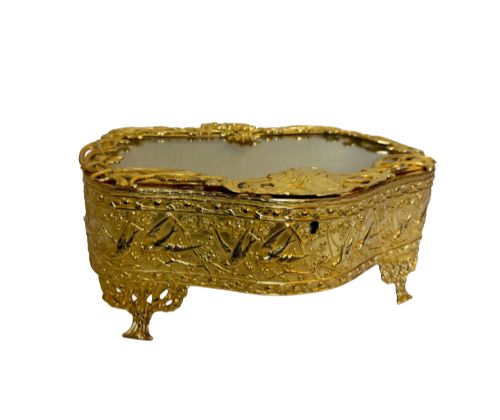
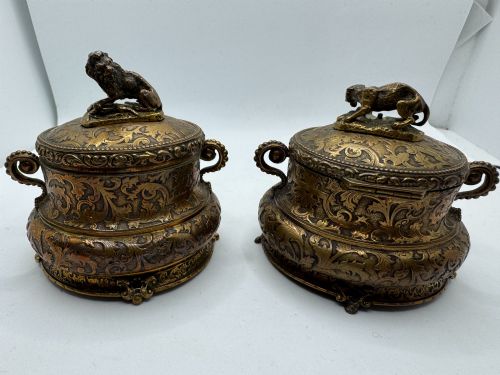
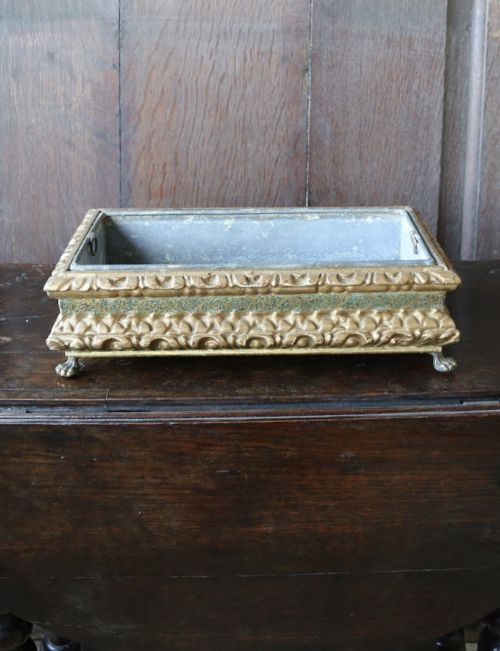
These gilt metal caskets are small, decorative strongboxes meant for jewellery, trinkets and dressing table treasures.
Gilt Metal Casket
A gilt metal casket is primarily a receptacle for jewellery, trinkets and small personal treasures, designed to sit upon a dressing table or side cabinet. When exploring this selection, buyers encounter pieces configured as decorative boxes, trinket boxes and dedicated jewellery caskets originating from various European centres.
The objects seen here most frequently date from the nineteenth century, encompassing French Napoleon III and Second Empire examples alongside Victorian productions. Makers and manufacturers of the period utilised these vessels to store precious items securely while adding a decorative focal point to domestic interiors.
How they were made
Construction relies heavily on base metals such as brass, copper and bronze, subjected to gilding techniques including ormolu and electro-forming to achieve a golden surface finish. Artisans assembled structural frames using cast and chased elements, often incorporating glass panels or bevelled glass into the walls and lids.
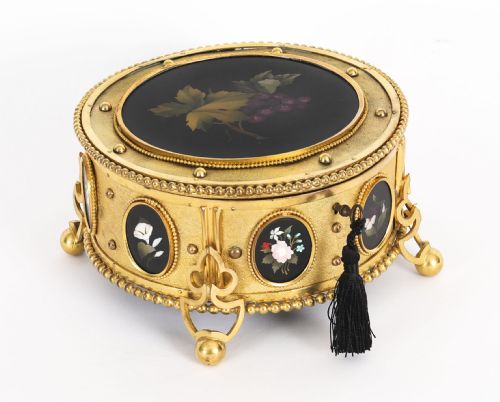
Many specimens integrate decorative insets of pietra dura, marble, porcelain plaques such as Limoges miniatures, or carved wood. The integration of these disparate materials required precise fitting and joining by nineteenth-century metalworkers and lapidaries.
Materials recorded across these listings include ormolu, brass, bevelled glass, pietra dura, marble and mother-of-pearl.
What varies in quality
The refinement of the casting and chasing separates standard production from finer workshop output, particularly in the crispness of floral, foliate or figural relief work. Heavy, solid mounts and well-finished hinges demonstrate a higher standard of manufacture than lighter, pressed-metal alternatives.
The inclusion of specialised decorative panels, such as genuine pietra dura mosaics, hand-painted Limoges porcelain or bevelled glass panes, elevates a piece. The integration and preservation of these delicate secondary materials dictate the overall standing of an individual casket.
The Gilt Metal Casket Glossary
- Ormolu
- A gilded bronze or brass mount applied to decorative objects and furniture. The technique involves coating the base metal with a mercury-gold amalgam and heating it to drive off the mercury, leaving a durable golden layer.
- Pietra dura
- An artistic technique using cut and fitted polished coloured stones to create pictorial or geometric insets. Artisans marble and jasper to produce intricate floral or ornamental designs on box lids.
- Bevelled glass
- Plate glass with its edges cut and polished to an angled bevel. This treatment catches the light and adds depth to the transparent panels used in casket walls.
- Napoleon III style
- A nineteenth-century French design movement drawing heavily on Louis XIV, XV and XVI revivals. It combines opulent materials, rich gilding and eclectic decorative influences.
- Electro-form
- A manufacturing process using electrodeposition to replicate forms or coat objects in metal. This technique allowed nineteenth-century makers to produce intricate metal casings efficiently.
Gilt Metal Casket: Frequently Asked Questions
What were gilt metal caskets used for?
These caskets served primarily as receptacles for precious jewellery, calling card cases, and delicate personal trinkets on dressing tables. Wealthy owners kept them in boudoirs and bedrooms to store items of daily wear.
Over time, they evolved into purely decorative objects designed to display fine craftsmanship and complement the surrounding interior furnishing style.
How do I date a gilt metal casket?
Dating relies on examining the prevailing style, manufacturing techniques, and materials characteristic of specific periods like the nineteenth century or Art Nouveau era. Stylistic clues such as Rococo revival scrolls or clean modernist lines point towards particular decades.
Signatures, registry marks, or retailer stamps found on the interior or base also provide firm chronological indicators for the piece.
Are glass panels fragile?
The bevelled glass and plain glass panels incorporated into many nineteenth-century caskets require careful handling to prevent chipping or cracking. The metal frames provide structural support, but the glass inserts remain vulnerable to sharp impacts.
Owners should place these boxes on stable surfaces away from high-traffic areas where accidental knocks might occur.
How should I clean my casket?
Dusting gently with a soft, dry cloth is usually sufficient for maintaining the metal surfaces and glass panels. Avoid using harsh commercial metal polishes, as they can strip the delicate gilt layer or ormolu finish.
Special care must be taken around inset panels like pietra dura or porcelain to prevent moisture or cleaning agents from damaging the adhesive or stone.