


Gilded Brass Trinket Box
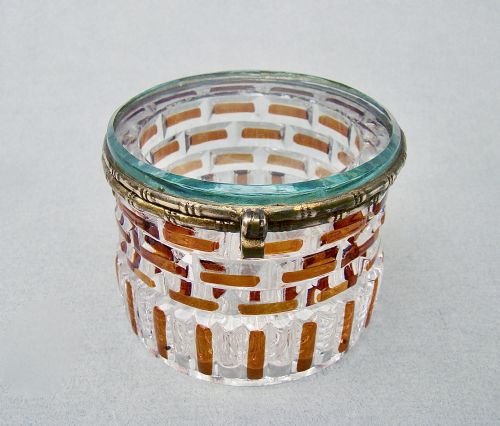
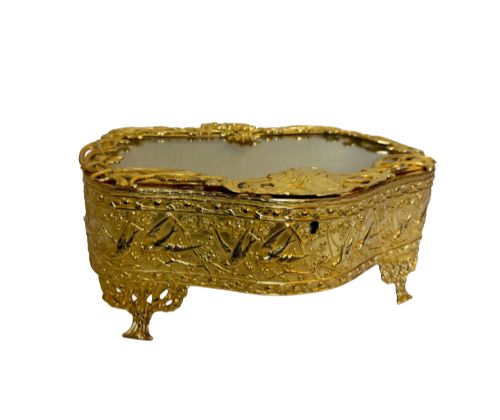
These small containers, known as a gilded brass trinket box, hold rings, pins and keepsakes on a dressing table.
Gilded Brass Trinket Box
A gilded brass trinket box brings together polished metalwork and small compartments designed for personal valuables. When you search for a gilded brass trinket box, you encounter pieces that range from small pill containers to large caskets.
The selections span several centuries, showing forms like jewellery caskets, desk accessories and dedicated jewellery boxes. Victorian and late nineteenth-century examples appear frequently alongside earlier Georgian items.
French workshops and Italian makers contribute distinct decorative traditions to these containers. Materials shift between cast metal frames, glass panels, porcelain plaques and lined interiors.
How they were made
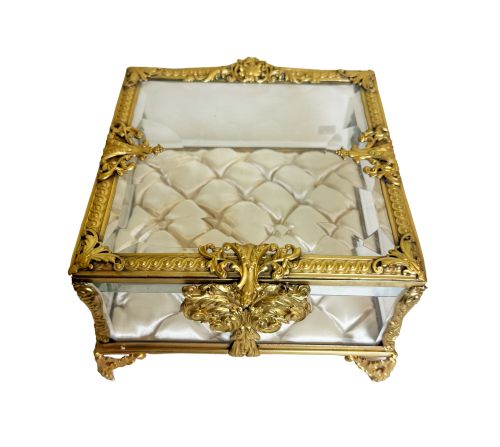
Makers formed the structural frames using cast bronze, copper, and brass before applying surface gilding. Glass panels, lead crystal, and porcelain inserts fit securely within these metal mounts.
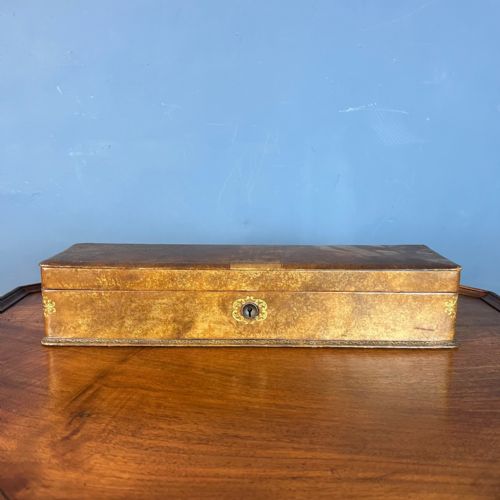
Interiors often feature fitted linings made from silk or leather, sometimes paired with hand-tooled exterior surfaces. Specialised techniques such as electro-forming allowed artisans to shape complex metal caskets during the later nineteenth century.
The documented periods range from the Georgian era through the late nineteenth-century French Belle Epoque and Art Nouveau movements.
What varies in quality
The crispness of the cast ornamentation and the thickness of the original surface gilding dictate the visual weight of the piece. Heavier bronze and brass foundations retain sharper details in the scrollwork and floral motifs.
The integration between the glass or porcelain panels and the surrounding metal frame determines the overall structural integrity. Superior examples maintain tight joints and well-fitted hinges that allow the lid to rest evenly.
The Gilded Brass Trinket Box Glossary
- Gilt bronze
- Metal alloy cast and finished with a thin layer of gold applied to the surface. It provides a warm metallic sheen that resists tarnishing.
- Lead crystal
- Heavy, high-clarity glass containing metal oxide to increase brilliance and weight. It appears in transparent panels fitted into metal caskets.
- Electro-form
- A manufacturing process using electrical deposition to grow metal onto a form. This technique created detailed hollow vessels in the nineteenth century.
- Penwork
- Decorative surface technique using fine ink drawings on wood or bone before sealing with varnish. It decorates Georgian desk boxes.
- Rococo Revival
- Nineteenth-century design style drawing on eighteenth-century asymmetrical curves, scrolls, and natural forms. It defines many French decorative boxes.
Gilded Brass Trinket Box: Frequently Asked Questions
What went inside a trinket box?
These vessels held small personal items such as rings, brooches, pins and occasionally folded notes or small coins.
They sat upon dressing tables, writing desks and parlour cabinets for daily access.
How do I date a metal box?
Dating relies on the manufacturing techniques, the alloy composition and the prevailing artistic style of the period. Cast bronze frames with hand-chased details often point to nineteenth-century French workshops.
Simpler brass constructions and geometric decoration typically align with later Victorian production methods.
Are these boxes fragile?
While the metal frames provide sturdy support, variants incorporating glass panels or porcelain plaques require careful handling. Silk linings and delicate hinges benefit from gentle placement away from direct heat sources.
Routine dusting with a soft, dry cloth preserves both the metal gilding and the delicate interior fabrics.
Where were these caskets made?
Production centres concentrated in France, Italy and Britain during the eighteenth and nineteenth centuries. French makers specialised in decorative cast bronze and glass caskets.
Italian workshops contributed porcelain elements, while British makers produced an array of wooden and leather boxes.