


Victorian Gilt Metal Casket
A victorian gilt metal casket brings nineteenth-century glamour to a dressing table, combining heavy cast metals with velvet linings for small treasures.
Victorian Gilt Metal Casket
A victorian gilt metal casket is a small, decorative container designed for trinkets or jewellery during the nineteenth century. These pieces reflect the elaborate tastes of the period, drawing on French Napoleon III, Rococo Revival, and Gothic Revival styles.
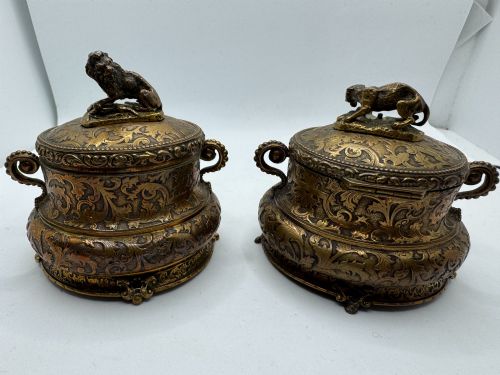
Buyers will most frequently encounter brass, ormolu, and gilt bronze examples on this page, often housing velvet or silk interiors. Forms range from simple rectangular boxes to domed shapes and pairs with dog finials.
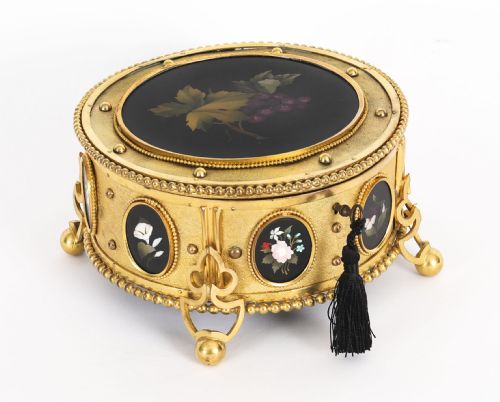
Origins span British workshops alongside French and Italian makers, demonstrating the international scope of nineteenth-century decorative arts. Many incorporate inset panels such as pietra dura, Limoges miniatures, or bevelled glass.
How they were made
Maker's workshops cast metals including brass, bronze, and copper electro-form to create the robust structural shells of these boxes. Gilt finishes were applied through mercury gilding or electroplating, achieving the characteristic golden shine.
Decorative panels of marble, slate, and hardstone pietra dura were meticulously cut and inlaid into the metal frames. Artisans also integrated bevelled glass panes and hand-painted elements like Limoges miniatures into the lids and sides.
Materials across this selection include ormolu, pietra dura, marble, slate, and bevelled glass.
What varies in quality
The sophistication of the metal casting largely determines the quality of a piece, separating sharp, deeply chased relief work from softer, summary moulding. Heavier bronze and ormolu mounts indicate superior craftsmanship compared to lighter brass alternatives.
The integration of specialised decorative panels, such as genuine pietra dura work or fine hand-painted porcelain miniatures, elevates the tier of the piece. The survival of original bevelled glass, heavy hinges, and intact silk or velvet linings also distinguishes finer examples.
The Victorian Gilt Metal Casket Glossary
- Ormolu
- Gilded bronze, usually produced by applying a mercury-gold amalgam to cast bronze before heating. This French technique yields a deep, warm golden lustre characteristic of nineteenth-century luxury goods.
- Pietra Dura
- An artistic technique of inlaying cut and fitted polished coloured stones to form images or geometric patterns. Italian workshops frequently utilised this method for decorative box lids.
- Electro-form
- A manufacturing process where metal is deposited onto a mould via an electrolytic bath. This technique allowed makers to create intricate gilded copper caskets with precise relief details.
- Limoges Miniature
- A small, detailed hand-painted enamel plaque produced in the French city of Limoges. These colourful miniature portraits were often inset into the lids of nineteenth-century jewellery boxes.
- Dog Finial
- A small sculptural ornament shaped like a dog, positioned on top of a lid to serve as a handle. Pairs of caskets sometimes feature these figural details.
Victorian Gilt Metal Casket: Frequently Asked Questions
What were gilt metal caskets used for?
These containers served primarily on dressing tables and boudoirs to hold rings, brooches, and small valuable trinkets. They protected personal items inside fitted silk or velvet compartments.
Wealthy nineteenth-century owners also displayed them in parlours as decorative art objects rather than purely functional storage pieces.
How do I identify French pieces?
French caskets often display characteristic Napoleon III or Rococo Revival styling, featuring heavy ormolu mounts and cast bronze frames. Look for fine chasing and high-relief decorative motifs.
Some examples incorporate specific elements like Limoges miniatures or carry maker marks from Paris workshops on the metal framing.
Are these boxes made of solid gold?
No, they are constructed from base metals such as brass, copper, bronze, or cast white metal which have been gilded. A thin layer of gold or brass wash creates the external golden appearance.
Heavier pieces utilise gilt bronze or ormolu, while lighter boxes often employ gilded brass or electro-formed copper.
How should I clean the metal?
Gilt surfaces require very gentle dusting with a soft, dry cloth to prevent damage to the delicate gold layer. Avoid standard metal polishes, as abrasive compounds will strip away the historic gilding.
Professional conservation is recommended for tarnished ormolu to preserve the original nineteenth-century finish safely.
What periods do these pieces date from?
The inventory consists largely of nineteenth-century examples spanning the Victorian era and continental equivalents. Specific dates range from the early decades around eighteen-hundred through to the late eighteen-nineties.
Stylistic shifts move from classic revival forms to Art Nouveau designs by the end of the century.