



Gold Brass Jewellery Box
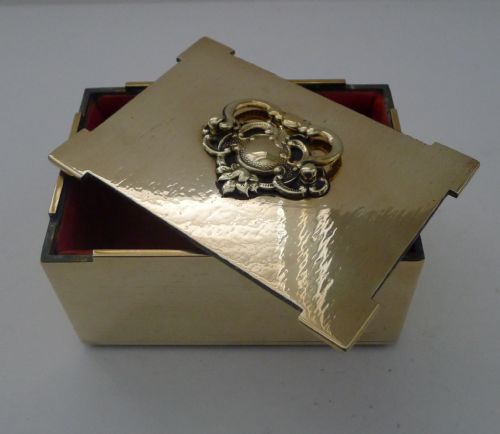
A gold brass jewellery box brings heavy metal frames and glass panels together to hold trinkets, drawing on Victorian and Art Nouveau designs.
Gold Brass Jewellery Box
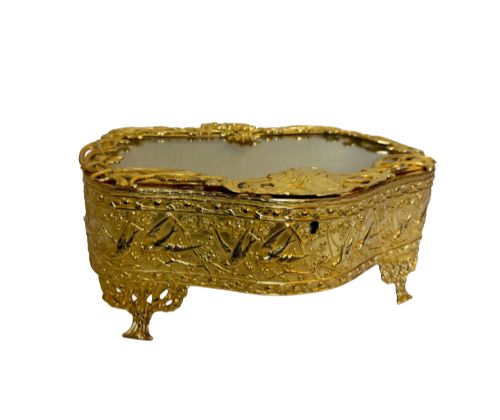
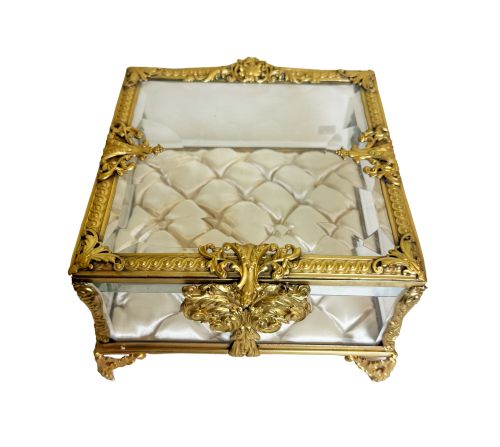
A gold brass jewellery box typically appears as a glass-walled casket bound in gilt bronze, brass, or ormolu, designed to display small treasures on a dressing table. These pieces emerge from the nineteenth and early twentieth centuries, spanning Victorian, Art Nouveau, and Napoleon III tastes.
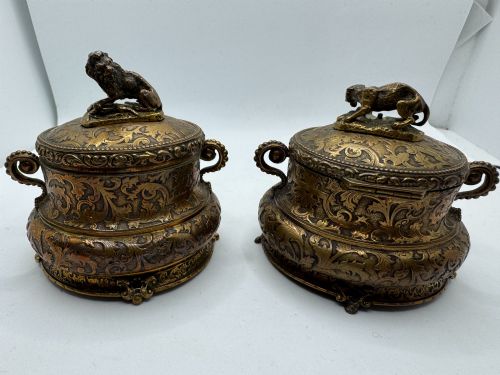
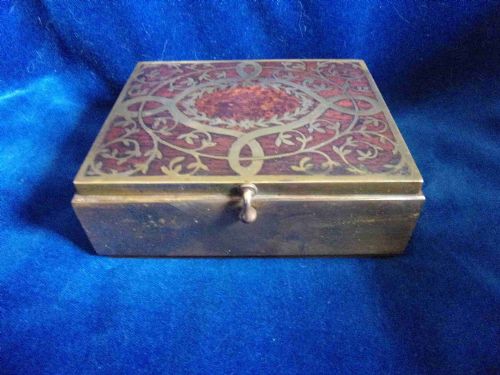
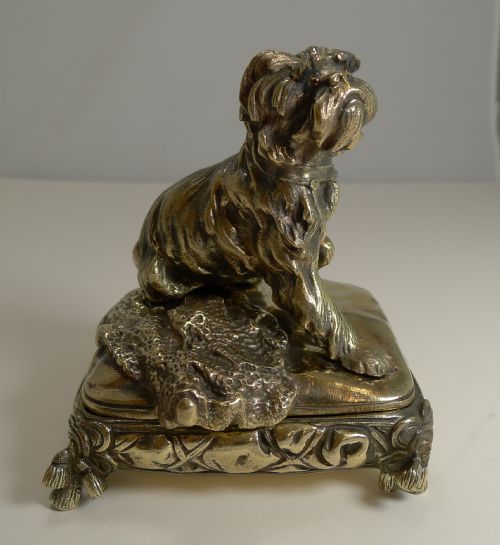
The selection here ranges from French cast metal caskets and English bronze dog boxes to Japanese lacquer cabinets and German Jugendstil inlaid woodwork. Buyers encounter heavy glass panels paired with silk or velvet linings intended to cushion rings and pins.
Materials and construction
Makers built these caskets using cast brass, gilt bronze, and ormolu frames that held thick bevelled glass panels in place. Metalwork often involved casting and electro-forming techniques to create gilded copper surfaces with intricate relief decoration.
Interiors rely on textile inserts such as silk and velvet to line the base and compartments. Hinges and catches are integrated into the metal structure, while selected items incorporate inlaid wooden bodies or Japanese lacquer work.
Materials across these listings include brass, glass, gilt metal, silk, ormolu, bevelled glass, and velvet.
Distinctions in quality
Quality rests in the crispness of the metal casting and the thickness of the glass panels. Finer examples show deep relief work on the brass or bronze mounts rather than shallow stamping.
The condition of internal fabric linings and the original gilding on the metal components define the appeal of each casket. Heavier gauge metal and bevelled glass indicate superior production standards.
ERHARD AND SOHNE
The Gold Brass Jewellery Box Glossary
- Ormolu
- Gilded bronze applied to ornamental objects, popular in French decorative arts. It provides a rich gold-coloured finish to metal frames.
- Bevelled glass
- Glass panes with cut and polished edges angled towards the margin. This technique adds depth and catches the light on glass-sided caskets.
- Gilt metal
- Base metal treated with a thin layer of gold or gold-coloured wash. It offers the appearance of solid gold without the weight.
- Jugendstil
- The German manifestation of Art Nouveau, prominent around nineteen hundred. It is characterised by stylised organic motifs and fluid lines.
- Casket
- A small decorative box designed for valuables or jewellery. These containers often feature hinged lids and secure latches.
Gold Brass Jewellery Box: Frequently Asked Questions
What periods do these boxes come from?
The available pieces originate mainly from the nineteenth century up to the early twentieth century, encompassing Victorian, Art Nouveau, and Meiji periods.
Craftsmen across France, England, Germany, and Japan produced these varied designs.
How were these caskets used?
Owners placed them on dressing tables and desks to store rings, brooches, and small personal trinkets.
Glass-sided versions allowed the contents to be displayed while kept secure under a hinged lid.
What metals are commonly used?
Makers utilised brass, gilt bronze, ormolu, and gilded copper to form the structural frames and decorative mounts.
These metals were frequently cast and chased to achieve detailed surface patterns.
How do I care for velvet linings?
Keep the interior textiles dry and away from direct sunlight to preserve the original silk and velvet fabric.
Dust the glass panels gently with a soft cloth without using harsh chemical cleaners.