




Ornate Brass Trinket Box
An ornate brass trinket box holds personal keepsakes with decorative weight, bringing historic metalwork and tactile charm to a dressing table.
Ornate Brass Trinket Box
An ornate brass trinket box spans varied forms like jewellery caskets, keepsake cases and decorative boxes from the nineteenth century. These objects function as small containers for precious personal items, often styled with revival influences such as Gothic Revival, French Renaissance Revival and Rococo Revival.
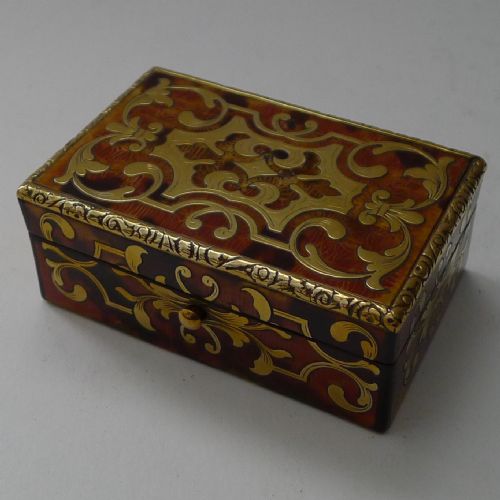
The versions most likely to meet a buyer on this page include nineteenth-century French and Victorian pieces fashioned in brass, ormolu, gilt-metal and bronze. Makers frequently combined the primary metal body with wood, marble, tortoiseshell or glass panels to create intricate lidded containers.
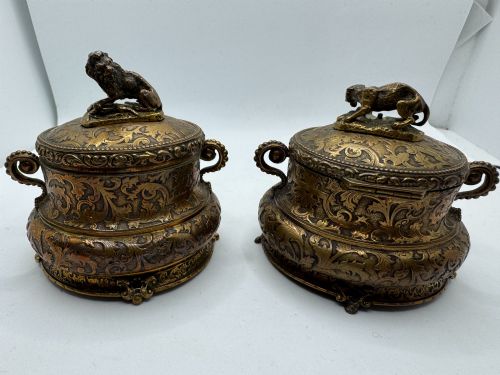
Origins stretch across French, Scottish and Indian workshops, reflecting diverse regional decorative traditions of the eighteen-hundreds. Buyers encounter everything from small French boulle workboxes to large bronze caskets featuring cast ornamentation and dog finials.
How they were made
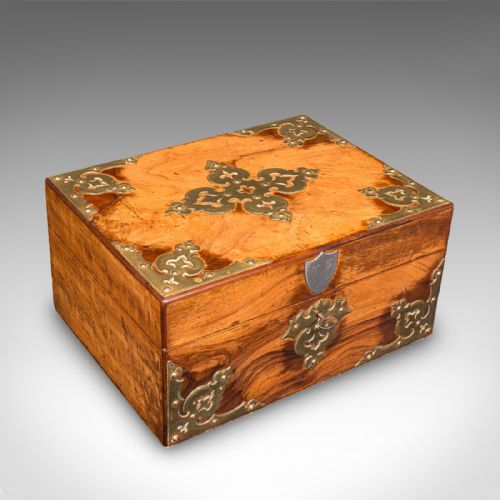
Artisans constructed these boxes using cast and sheet brass, gilt-metal, ormolu and bronze, often mounting them onto wooden carcases of walnut or sandalwood. Metal components were cast, chased and gilded or silvered to achieve surface brilliance.
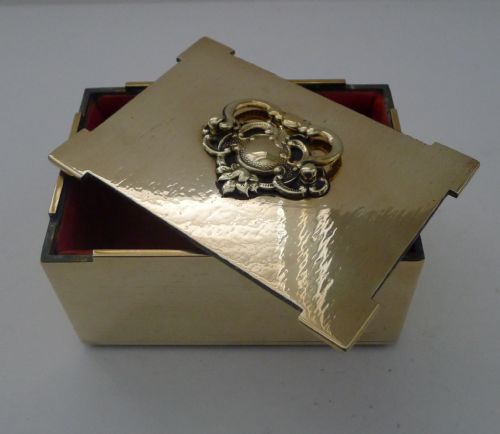
Many examples incorporate mixed media, combining cast brass mounts with tortoiseshell, marble bases or inlaid wood. Interior compartments frequently feature lined velvet or silk pads tailored for storing jewellery and personal diaries.
Listings feature nineteenth-century pieces spanning the Victorian period, eighteen-hundreds, and early nineteen-hundreds in brass, ormolu, bronze, walnut and tortoiseshell.
What varies in quality
Quality separates through the crispness of the metal casting and the depth of hand-chasing on the brass or ormolu mounts. Finer boxes display sharply defined relief decoration rather than soft, smoothed edges from worn moulds.
The choice of secondary materials marks another distinction, where solid walnut, genuine tortoiseshell or heavy marble bases elevate a piece above standard brass-plated wooden boxes. Superior internal fittings and secure, original hinges indicate higher workshop standards.
The Ornate Brass Trinket Box Glossary
- Ormolu
- Gilded bronze used as a decorative mount on furniture and decorative boxes. The technique involves applying a mercury and gold amalgam to bronze before heating.
- Boulle
- An marquetry process using tortoiseshell and brass inlay developed in France. It appears on nineteenth-century boxes imitating earlier seventeenth-century cabinetwork.
- Gothic Revival
- An architectural and decorative style drawing on medieval forms. Boxes in this taste employ pointed arches, heavy hinges and ecclesiastical motifs.
- Finial
- A decorative ornament fixed to the top of a lid or corner. On these caskets, finials often take the form of cast figures, animals or floral knobs.
- Casket
- A small decorative box or chest designed for holding jewels or valuables. These pieces typically feature secure lids and heavier metal construction than standard boxes.
Ornate Brass Trinket Box: Frequently Asked Questions
What is an ornate brass trinket box used for?
These boxes served historically to house precious personal possessions, including rings, brooches, keepsakes and personal diaries. Owners kept them on dressing tables or writing desks for secure daily access.
Today, they continue to function as stylish containers for modern jewellery while adding historic character to interior spaces.
How do I date a nineteenth-century brass box?
Dating relies on observing construction methods, material combinations and stylistic revival influences recorded in the piece. Victorian and nineteenth-century examples often bear registration marks, specific cast ornamentation or distinct French patination.
Comparing the locking mechanisms, interior linings and hinge types provides further clues to the manufacturing decade.
Are French and English boxes different?
French boxes from the nineteenth century frequently showcase elaborate ormolu mounts, boulle work, or cast brass frames combined with marble or glass. English and Scottish versions more commonly utilise solid walnut, oak or sandalwood paired with brass strapwork and Gothic revival details.
Both origins reflect the distinct aesthetic preferences of their respective regional workshops during the eighteen-hundreds.
How should I care for antique brass and ormolu?
Maintenance requires gentle dusting with a soft, dry cloth to protect the historic surface patination and delicate gilding. Avoid using abrasive metal polishes that can strip away original fire-gilding or silvering.
Keeping the boxes away from direct sunlight and excessive moisture preserves both the metal exterior and any internal silk or velvet linings.