


Rococo Trinket Box
A rococo trinket box brings swirling scrolls and asymmetrical charm to a dressing table, holding small treasures with eighteenth-century flair.
Rococo Trinket Box
A rococo trinket box takes many forms across the inventory, appearing as jewellery caskets, patch boxes, pill containers, and snuff boxes. These small containers span the eighteenth, nineteenth, and early twentieth centuries, reflecting enduring revivals of playful ornamentation.
Makers utilised porcelain, enamel, solid silver, gilt metal, and copper to fashion these vessels. Pieces often emerge from French, German, Austrian, and English workshops, displaying styles from Georgian through to Victorian Rococo Revival.
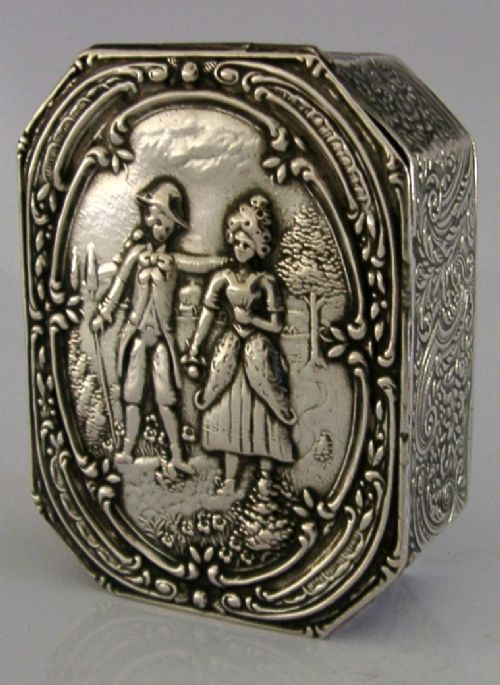
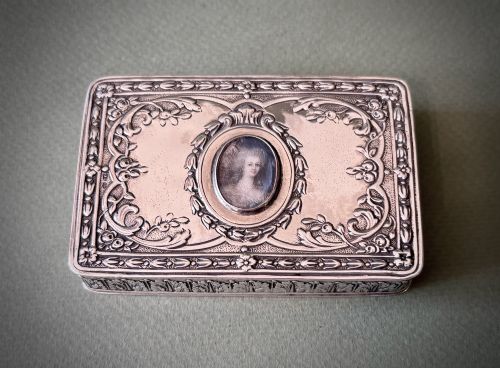
The version most commonly met on this page is the nineteenth-century silver or porcelain box, frequently decorated with hand-painted scenes or embossed with scrollwork. Buyers find both intimate snuff boxes and larger dressing table caskets designed for daily use.
Materials and construction
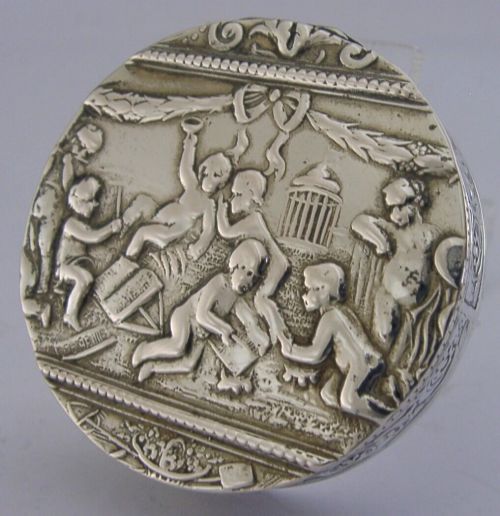
Silversmiths hammered, cast, and chased solid sterling silver or silver-gilt to build heavy table boxes and small snuff containers. Artisans applied repoussé techniques to raise elaborate rococo motifs, cherub scenes, and boar head designs from the metal surface.
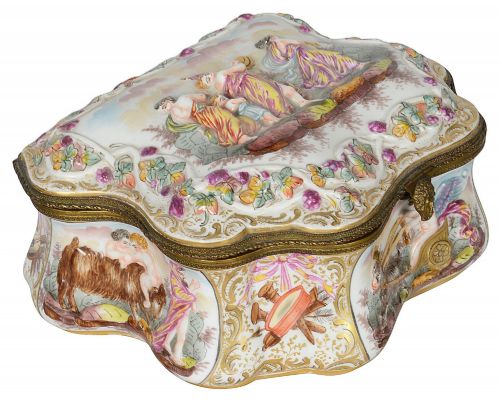
Porcelain boxes relied on delicate ceramic bodies shaped in moulds, then hand-painted with detailed figures in parklands and floral arrangements. Enamel workers fused powdered glass to copper or metal bases, often creating vibrant cobalt blue or white surfaces with raised gold detailing.
Materials documented across the inventory include solid silver, sterling silver, porcelain, enamel, gilt metal, copper, and brass.
Qualities that distinguish the pieces
The distinction between standard containers and finer works rests in the crispness of the chasing and the precision of the hand-painted brushwork. Superior silver boxes exhibit deep, detailed relief work where every scroll and facial feature remains sharp and well-defined.
Porcelain and enamel pieces separate themselves through the delicacy of their miniature paintings and the intact condition of the glazed surfaces. Workshop origins also influence distinction, with documented factory pieces or named silversmiths commanding closer attention from collectors.
William Comyns·David Pettifer·Sevres·Meissen
The Rococo Trinket Box Glossary
- Rococo Revival
- A nineteenth-century artistic movement that revived the ornate, asymmetrical scrolls and natural motifs of the mid-eighteenth-century French court. This style defines the heavy scrollwork and floral cartouches seen on many boxes.
- Repoussé
- A metalworking technique where an artisan hammers the reverse of a sheet to form raised designs in relief on the front. Silversmiths used this method to create dimensional cherubs and flora.
- Silver-gilt
- Sterling silver or standard silver coated with a thin layer of gold on the interior or exterior surfaces. This treatment provided a rich golden lustre and protected the silver from tarnishing.
- Patch box
- A small container originally used to hold tiny decorative fabric patches worn on the face during the eighteenth century. These boxes frequently feature enamelled lids and mirrored interiors.
- Bonbonniere
- A small ornamental box specifically created to contain sweets or bonbons. These luxury items often used porcelain or enamel mounted in metal frames.
Rococo Trinket Box: Frequently Asked Questions
What were small rococo boxes used for?
These small vessels originally served practical social functions such as holding tobacco snuff, medicinal pills, or cosmetic patches. Wealthy owners kept them on desks, dressing tables, or carried them in pockets.
Over time, their purpose shifted towards vanity items, holding rings, brooches, and small keepsakes. Today, buyers use them primarily as decorative dressing table accessories.
How can I tell an eighteenth-century box from a revival piece?
Eighteenth-century originals display specific manufacturing traits, weight distribution, and hand-cut hallmarks that differ from later methods. South Staffordshire enamel boxes and early Meissen pieces carry distinct paste compositions and glazing techniques.
Nineteenth-century revival pieces often use heavier cast mounts and machine-assisted finishing alongside period styles. Examining the hinges, inner linings, and wear patterns helps clarify the actual period of manufacture.
How do I care for antique silver and enamel boxes?
Silver boxes require gentle cleaning with a soft cloth to preserve raised chased details without stripping patination. Avoid abrasive polishes that wear away thin silver-gilt layers or damage delicate hinges.
Enamel and porcelain surfaces need protection from drops and harsh chemicals, as the glass paste and painted details remain vulnerable to impact. Storing them away from direct sunlight keeps the hand-painted colours vibrant.
Are porcelain jewellery caskets fragile?
Porcelain jewellery caskets possess delicate ceramic bodies and mounted ormolu hinges that require careful handling during daily use. The glazed panels and hand-painted details can chip if bumped against hard surfaces.
Despite this fragility, they survived centuries by being kept on stationary dressing tables rather than carried about. Opening lids gently prevents stress on the bronze or brass mounts securing the porcelain plates.