


Bronze Jewellery Box
A bronze jewellery box brings together metalwork and miniature craftsmanship, giving small treasures a sturdy vessel derived from nineteenth-century European ateliers.
Bronze Jewellery Box
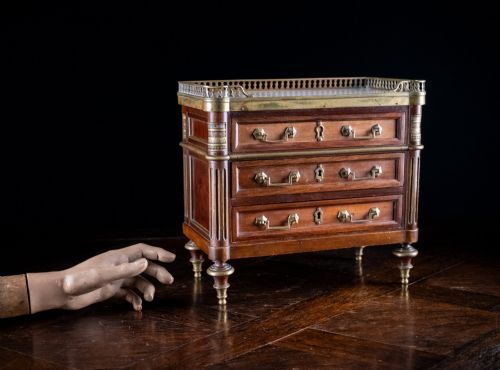
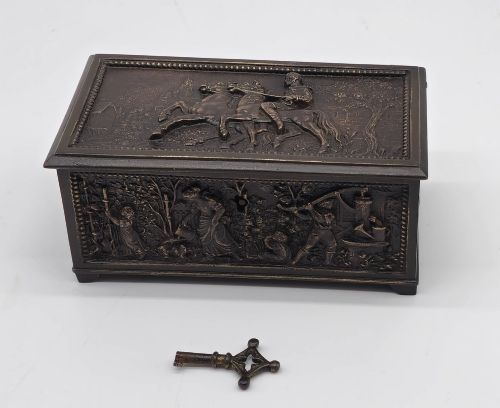
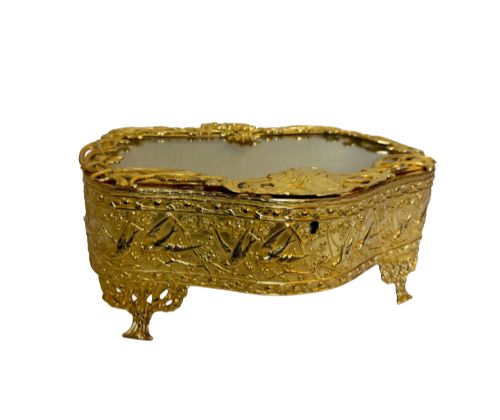
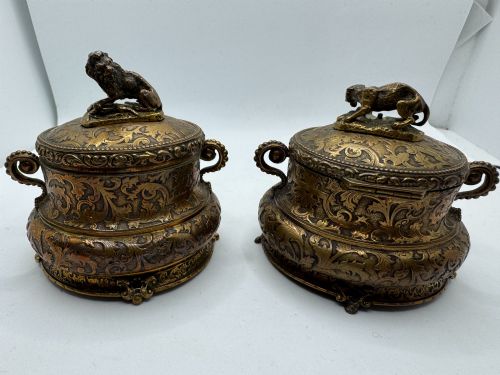
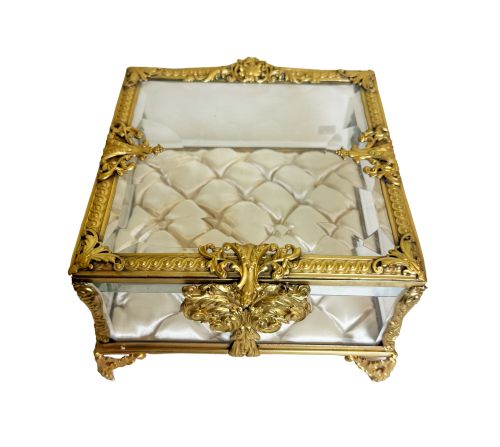
A bronze jewellery box encompasses everything from heavy cast metal coffers to small lidded caskets designed for dressing tables. You will encounter these pieces styled across Victorian, Art Nouveau, and French nineteenth-century periods, often taking the form of rectangular caskets or miniature display tables.
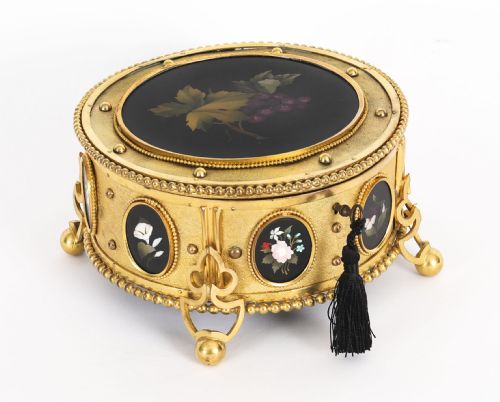
The materials paired with the metal define the common forms on this page. Many examples combine cast bronze or ormolu mounts with glass panels, porcelain plaques, or inlaid stone surfaces.
Originating largely from French, Austrian, and English workshops, these boxes served as domestic storage for personal trinkets and keepsakes during the nineteenth and early twentieth centuries.
Materials and construction methods
Foundry work relies on casting bronze, brass, or ormolu, which involves pouring molten metal into moulds to create detailed relief decoration and structural frames. Artisans then chased the metal surfaces by hand to sharpen the cast details and apply fire gilding or silvering.
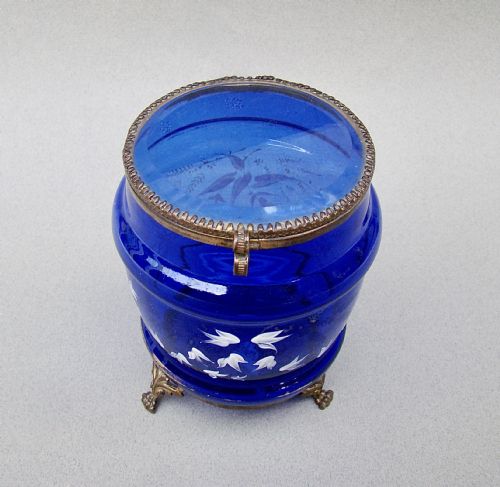
Glazed and inset panels require precise carpentry and stonework. Glass elements like Baccarat or Bristol blue panes, alongside porcelain inserts such as Sevres plaques and hand-painted Limoges miniatures, are fitted directly into the metal armature.
Miniature coaches and dog finials watch over domestic trinkets inside surprisingly elaborate nineteenth-century metal carriages.
Distinguishing quality in metalwork
The clarity of the cast relief and the depth of the hand-chasing determine the artistic merit of the metal frame. Crisp details in floral motifs, figures, or architectural elements separate superior pieces from softer, commercially cast alternatives.
Material integration also dictates standard. Superior examples combine heavy fire-gilded bronze with sound crystal, hand-painted porcelain, or pietra dura panels that fit flush within the structural mount.
S Theeman·BELINDA GENTLE
The Bronze Jewellery Box Glossary
- Ormolu
- Gilt bronze produced by applying a mercury and gold amalgam to a bronze base and heating it to vaporise the mercury. This technique creates a durable, luminous golden finish characteristic of French decorative arts.
- Champlevé
- An enamelling technique where troughs are dug into a metal surface and filled with vitreous enamel powder before firing. The resulting design shows vibrant colour framed by thin metal lines.
- Bijouterie table
- A glass-topped display table designed specifically for showcasing small valuable objects and jewellery. These pieces frequently utilise ormolu mounts and rosewood or mahogany frames.
- Pietra dura
- An artistic technique using cut and fitted polished coloured stones to create pictorial designs. It appears on Italian and French caskets as inlaid tabletop or lid panels.
- Casket
- A small decorative box or chest intended for holding valuables. In antique metalwork, this term denotes a lidded container mounted with decorative hinges and locks.
Bronze Jewellery Box: Frequently Asked Questions
What were bronze jewellery boxes used for?
These boxes stored precious rings, lockets, and small keepsakes on nineteenth-century dressing tables and sideboards. They also functioned as decorative display pieces in formal drawing rooms.
Wealthy households utilised smaller caskets for travel or daily adornment, while larger vitrine tables showcased curated collections of curiosities.
How do I date an antique bronze jewellery box?
Dating relies on identifying stylistic markers like Victorian proportions, Art Nouveau organic curves, or Napoleonic ormolu mounts. Secondary materials like Sevres porcelain or Bristol blue glass help narrow the decade.
Construction methods also provide clues, as machine-stamped components generally indicate later production compared to hand-chased cast bronze.
How do I clean and care for ormolu?
Maintenance requires only a soft, dry cloth to remove dust from crevices and glass panels. Avoid commercial metal polishes, as abrasive compounds strip away thin historical gilding.
Keep these boxes away from direct moisture and humid environments to protect internal velvet linings and prevent metal oxidation.
What is the difference between ormolu and brass?
Ormolu is a gilded bronze alloy treated with a gold-and-mercury finish, yielding a deep, warm hue. Brass is a brighter alloy of copper and zinc used more commonly for structural frames or secondary hardware.
Cast bronze objects tend to feel heavier and show finer chased detail than standard stamped brass wares.