

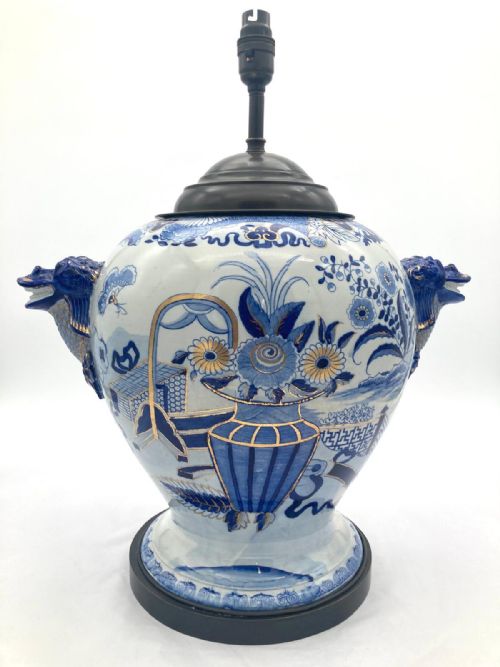
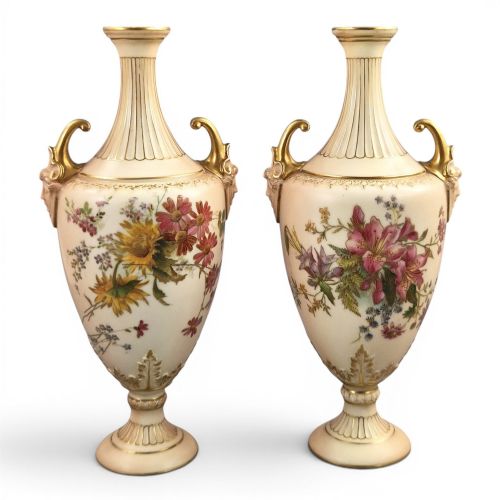
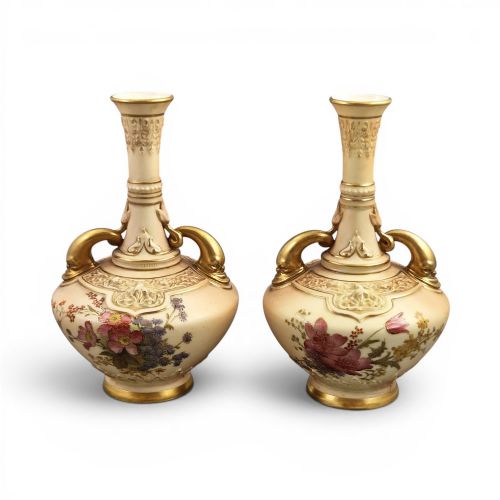


Gilt Handled Vase
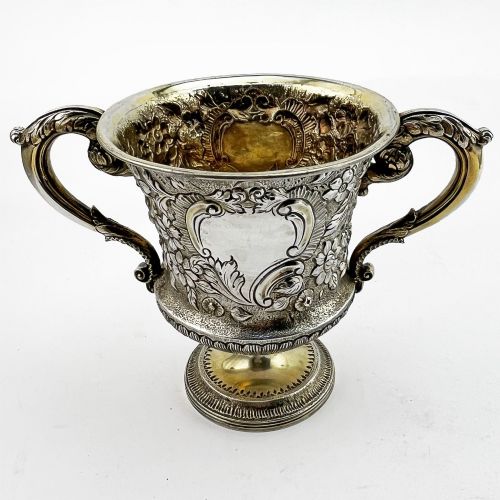
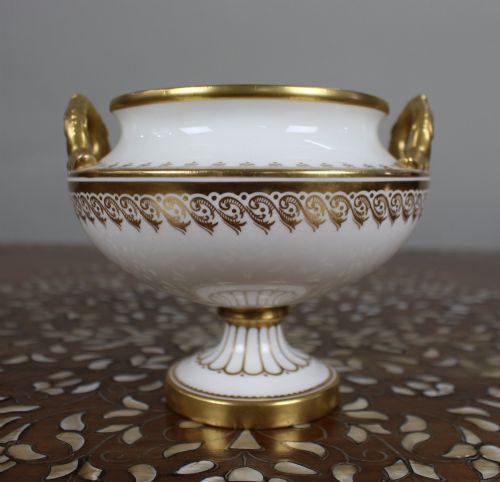
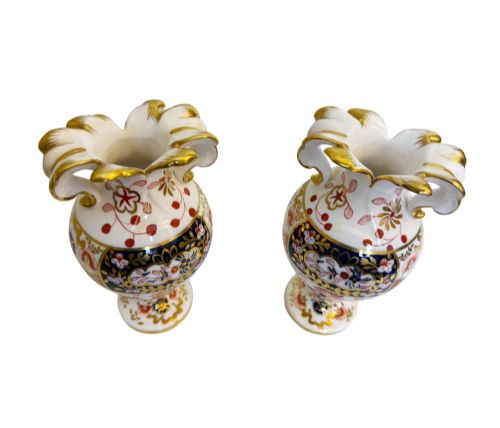
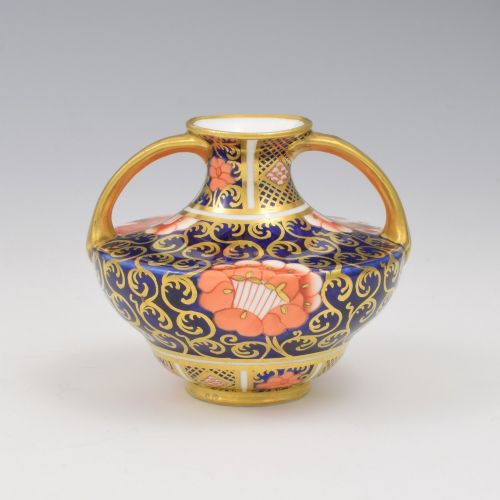
These gilt handled vase examples combine ceramic forms with metallic detailing, offering a decorative display for any interior space.
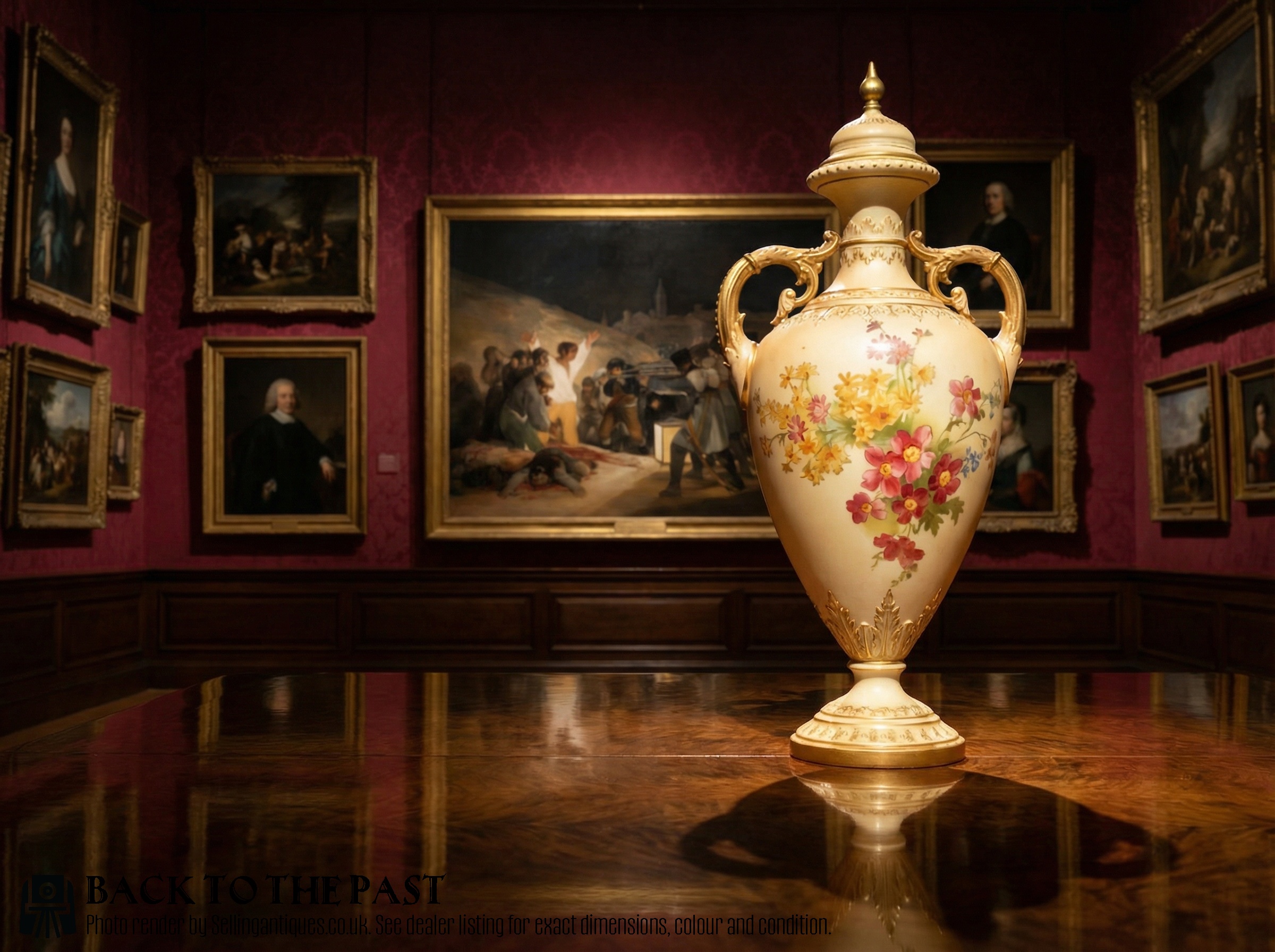
Gilt Handled Vase
A gilt handled vase brings together ceramic bodies and metallic mountings or painted gilding, appearing across several distinct periods. The selection on this page centres heavily on nineteenth-century production, alongside Edwardian and early twentieth-century examples.
Buyers encounter numerous forms, ranging from twin-handled porcelain urns and campana cups to ewers and cabinet vases. English factories like Royal Worcester and Spode dominate the ceramic offerings, supplemented by continental porcelain, ironstone, and Japanese Satsuma wares.
Vessels span various decorative traditions, including Neoclassical urns, Chinese Export pieces, and intricate Art Nouveau designs. Many pieces serve a purely ornamental function, while others double as table lamps or covered potpourri containers.
Materials and Techniques
Makers utilised fine porcelain, earthenware, and ironstone as the primary structural bodies for these vessels, shaping them via moulding or throwing. Artisans applied gold leaf, liquid gilding, or fire gilding to handles, rims, and surface motifs to create metallic contrast.
Decoration relied on hand-painting, enamel work, and transfer printing to render floral scenes, birds, and figurative subjects. Certain French and English pieces incorporated champleve enamel or gilt bronze mounts, combining metalworking with ceramic arts.
Listings feature porcelain, ironstone, and earthenware bodies adorned with gold leaf, enamel, and gilt bronze elements.
Craftsmanship and Execution
Quality rests upon the precision of the hand-painted artistry and the crispness of the moulded or applied handles. Superior items display meticulous detail in floral panels, bird studies, and figural scenes executed by named artists.
The durability and richness of the gilding further separate standard production from superior examples, as does the integrity of any metal mounts or enamel work. Well-preserved surfaces retain their original burnished highlights without excessive rubbing.
Royal Worcester·Spode·Coalport·Chamberlain Worcester·Royal Crown Derby·Kinkozan·Hicks and Meigh·Minton·Royal Doulton
The Gilt Handled Vase Glossary
- Campana
- A bell-shaped vessel form commonly utilised for classical urns and trophy cups. This shape draws directly from ancient Roman pottery models.
- Champleve
- An enamelling technique where troughs are carved into a metal surface and filled with vitreous paste before firing. This method creates vibrant coloured patterns bordered by thin metal lines.
- Ironstone
- A dense, durable type of earthenware patented in the nineteenth century to imitate porcelain. It provides a sturdy body for large decorative vessels and jugs.
- Gilding
- The application of gold leaf or gold dust to the surface of ceramic or metal objects. It accentuates handles, rims, and painted scenes with a reflective finish.
- Satsuma
- A type of Japanese earthenware featuring a crackle-glaze ivory body decorated with polychrome enamels and gold. These wares gained immense popularity in the West during the Meiji period.
Gilt Handled Vase: Frequently Asked Questions
What is a gilt handled vase used for?
These vessels served primarily as decorative garniture, mantelpiece ornaments, or formal cabinet pieces rather than functional flower holders. Wealthy households displayed them in reception rooms to showcase refined taste and artistic patronage.
Over time, some larger examples were later converted into table lamps or utilised as covered potpourri jars. Their ornate handles and painted surfaces make them striking focal points in traditional interiors.
How do I identify the period of a piece?
Factory backstamps, registration marks, and painter signatures provide the most reliable clues for dating ceramic bodies. Stylistic indicators, such as Neoclassical shapes or Victorian enamel colours, also help narrow down the decade of manufacture.
Examining the wear on the gilding and the composition of the ceramic paste offers further context. Comparing pieces to documented factory patterns confirms their historical era.
Are all handles made of metal?
Handles on these vessels are typically formed from the same ceramic material as the body and painted with gold leaf or enamel. However, certain decorative pieces incorporate cast gilt bronze, brass, or carved bamboo elements instead.
The method of handle attachment depends on the workshop and the intended style of the vessel. Ceramic handles were shaped during the initial moulding process, while metal mounts were secured mechanically.
How should I care for gilded porcelain?
Gilded surfaces require gentle handling and should be dusted dry with a soft, clean cloth to prevent abrasion. Avoid chemical cleaners, abrasive sponges, or immersion in water, which can degrade fragile enamel and gold leaf.
Keep pieces out of direct sunlight to prevent fading in hand-painted ceramic panels. Stable indoor humidity levels protect both the ceramic body and any attached metal mounts.