
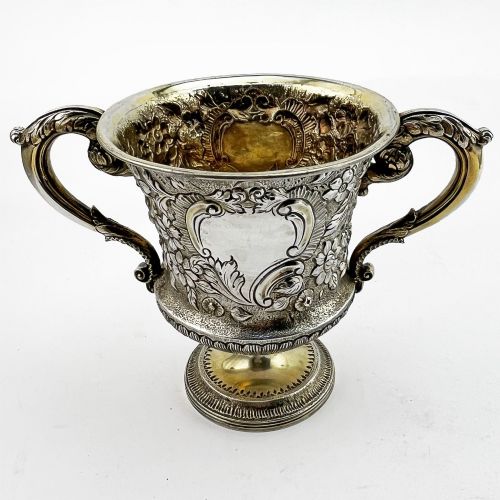
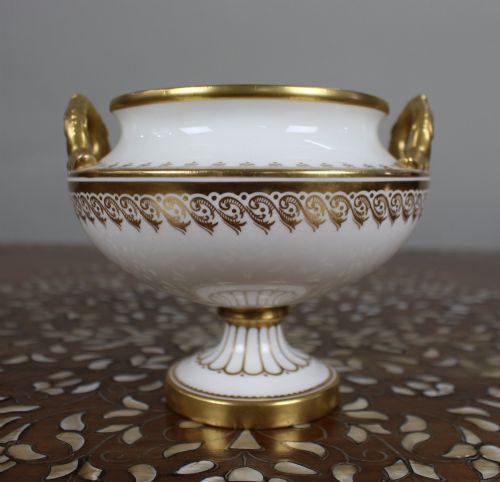
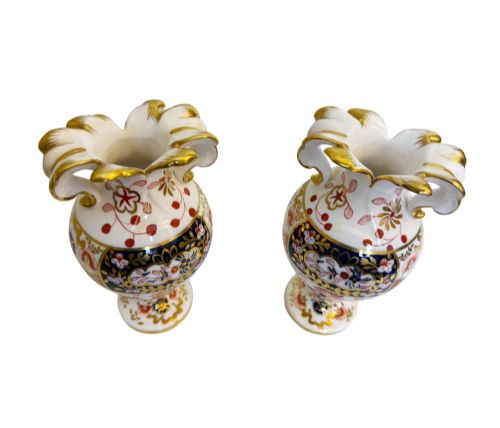
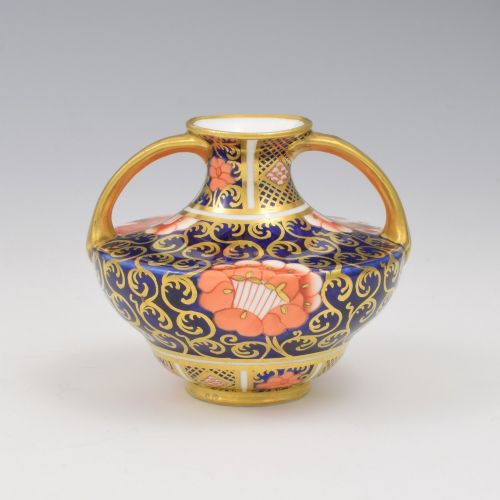



Gilt Handle Vase
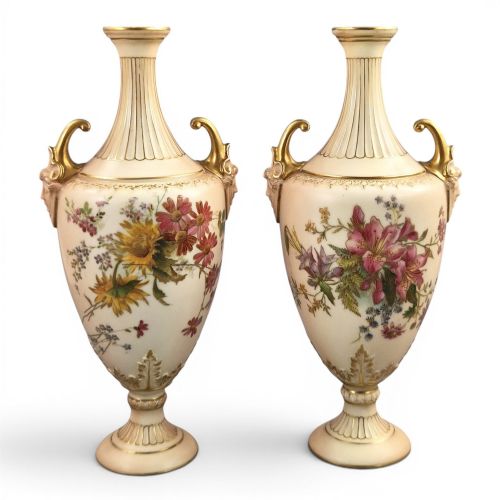
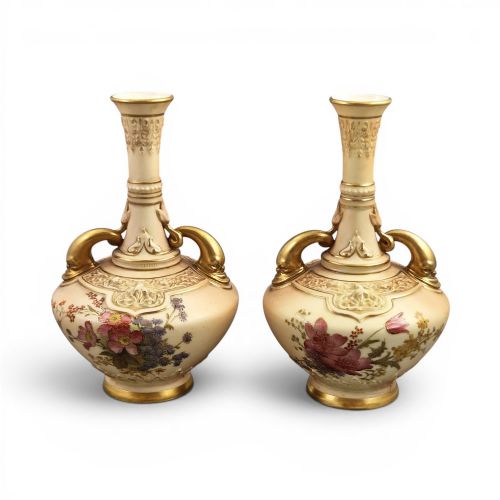
These gilt handle vase examples bring together porcelain, earthenware, and gilt bronze crafted across the nineteenth and early twentieth centuries.
Gilt Handle Vase
A gilt handle vase search encompasses decorative vessels featuring applied metallic mounts, painted handles, or integral metallic grips. These objects span English, European, and Asian manufactories working in porcelain, ironstone, and earthenware.
The domestic output on this page draws heavily from English porcelain and ironstone factories of the nineteenth century, alongside Japanese Satsuma wares and French decorative pieces. Twin-handled forms, urns, and ewers dominate the selections across Victorian and Edwardian production dates.
Materials and technique
The material base relies upon hard and soft-paste porcelain, earthenware, and ironstone, shaped into campana urns, pilgrim flasks, and ovoid bodies. Surface enrichment incorporates hand-painted floral panels, transfer printing, raised white enamel, and champleve metalwork.
Gilding is applied using gold leaf or liquid gold preparations, sometimes combined with bronze mounts or cast metal handles fixed to ceramic bodies. Kiln firing fixed the painted reserves and enamel highlights before final gilding operations.
The listings combine nineteenth-century English porcelain, Japanese Satsuma earthenware, and French decorative glass across several distinct periods.
Assessing quality
Quality rests upon the crispness of the hand-painted decoration, the precision of the gilding, and the harmony of the handle design with the vessel body. Factory execution by named artists elevates a piece above standard factory output.
The integrity of the metal mounts, the retention of the original gold leaf, and the fineness of ceramic potting distinguish superior examples from standard decorative wares.
Spode·Chamberlain Worcester·Royal Crown Derby·Hicks and Meigh·Royal Worcester·Minton·Royal Doulton·Samson Paris·Kinkozan·Adams·Coalport·Mason·Capodimonte Doccia·Sevres
The Gilt Handle Vase Glossary
- Gilt bronze
- An alloy of copper and zinc treated with a gold coating or mercury gilding. This technique provides metallic mounts and handles on nineteenth-century decorative pieces.
- Ironstone
- A heavy durable ceramic body patented in the nineteenth century. It bridges the gap between earthenware and porcelain.
- Champleve
- An enamelling technique where troughs are carved into metal and filled with vitreous paste before firing. It appears on French nineteenth-century decorative vessels.
- Satsuma
- A type of Japanese earthenware featuring a crackle-glaze ivory body with polychrome and gilt decoration. It was widely produced during the Meiji period.
Gilt Handle Vase: Frequently Asked Questions
What is a gilt handle vase?
A gilt handle vase is a decorative ceramic or glass vessel featuring metallic gold ornamentation applied to its grip areas. These pieces range from classical urns to cabinet vases.
Makers utilised porcelain, ironstone, and glass as bases, adding gold leaf or painted gilding to accentuate the side handles and structural forms.
How do I date these vases?
Dating relies upon factory backstamps, registration marks, and stylistic indicators such as Victorian or Edwardian floral motifs. Hand-painted signatures can also point to specific active years for individual artists.
Material composition and manufacturing techniques further narrow the era of production, particularly when comparing nineteenth-century European porcelain to Meiji period Japanese earthenware.
Were these vases used for flowers?
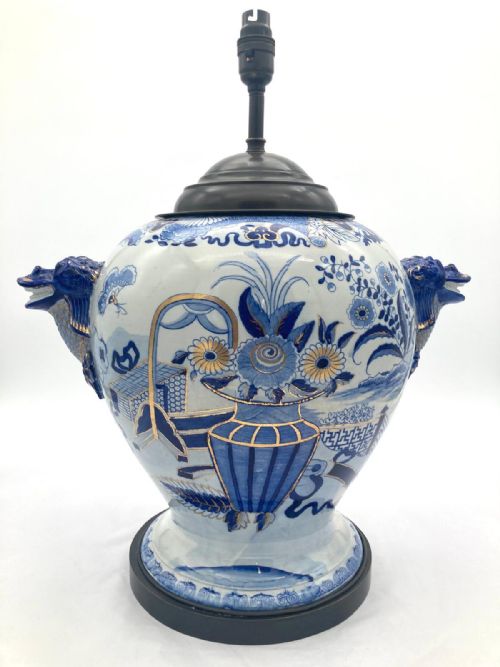
Many forms served as decorative cabinet pieces rather than functional flower holders, particularly delicate miniature versions and painted porcelain urns. Larger ironstone or porcelain examples were sometimes adapted into lamps or utilised for pot pourri.
Ewers and handled cups often fulfilled ornamental roles within nineteenth-century domestic interiors rather than serving practical dining functions.
How do I care for antique gilding?
Antique gilding requires gentle treatment with dry, soft cloths to remove dust without abrasive contact. Moisture and chemical cleaners can lift delicate gold leaf or damage raised enamel work.
Placement away from direct sunlight and fluctuating humidity helps preserve the fragile surface decoration on both ceramic bodies and metallic handles.