
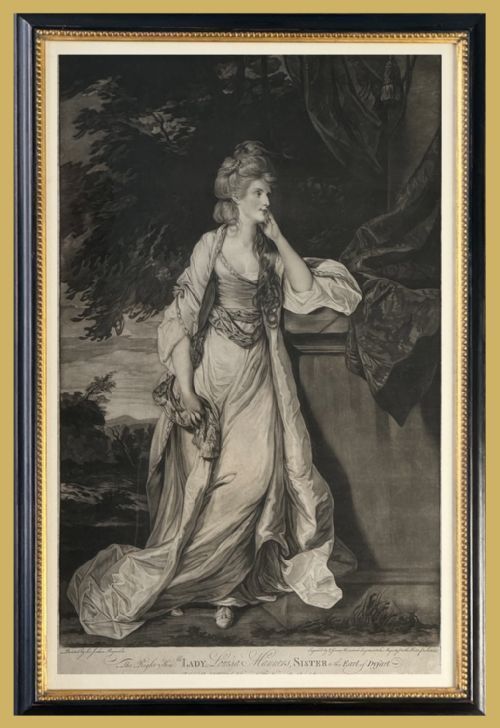
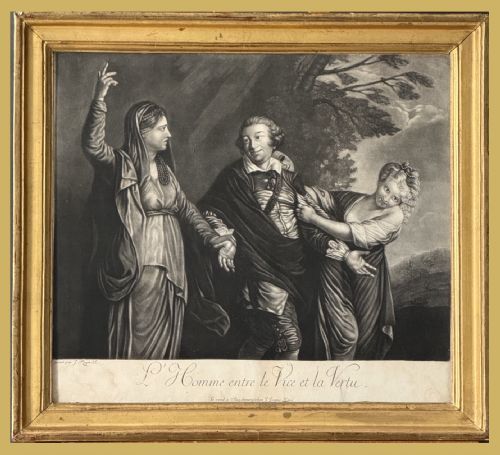
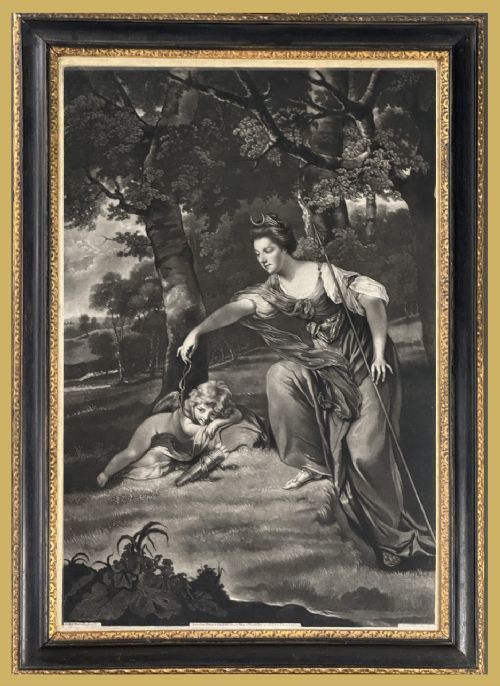
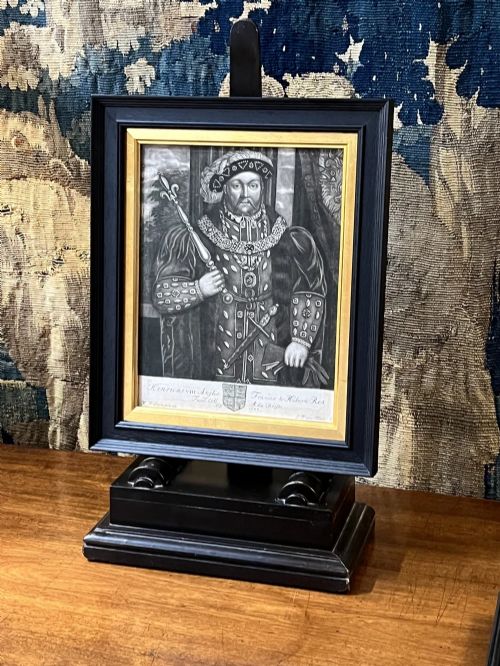
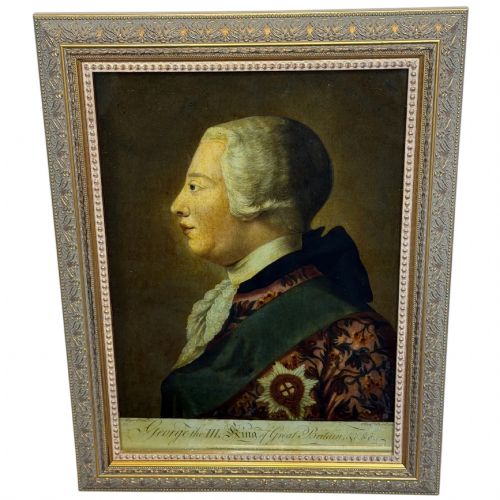
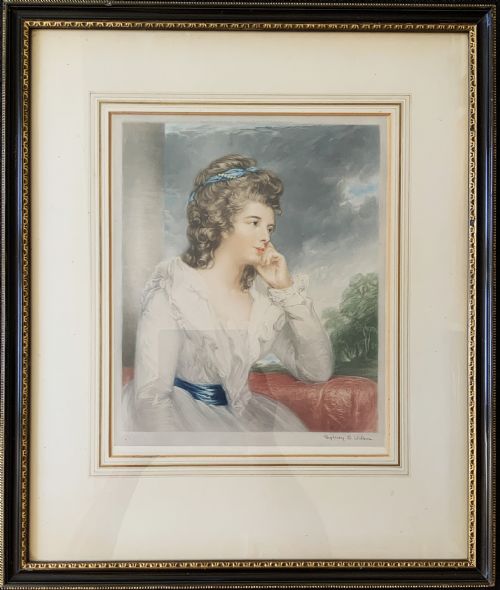
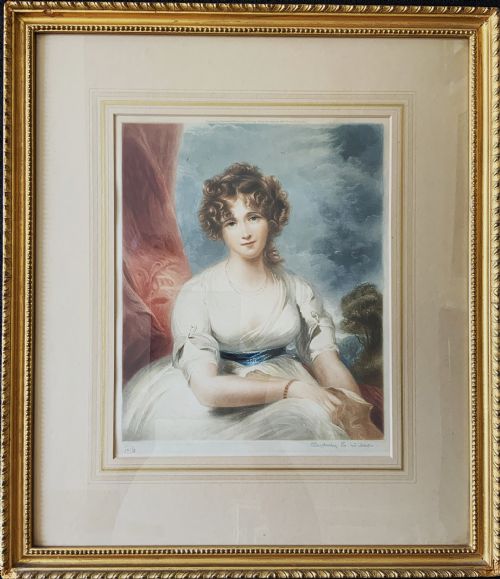

Gilt Framed Mezzotint Print
A gilt framed mezzotint print brings tonal depth and historical character to a wall through velvety darks and luminous highlights.
Gilt Framed Mezzotint Print
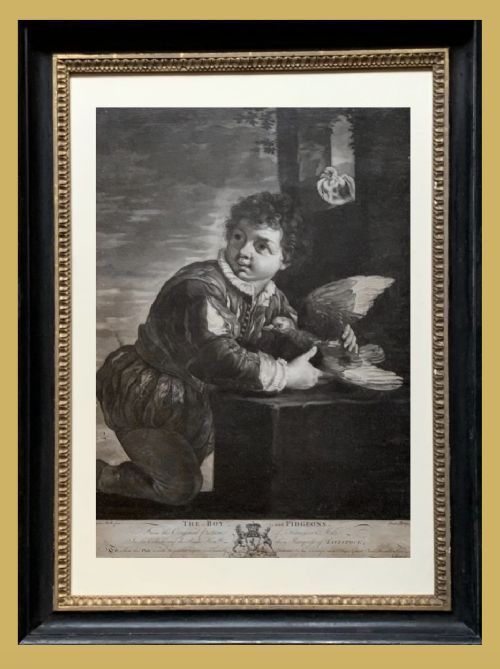
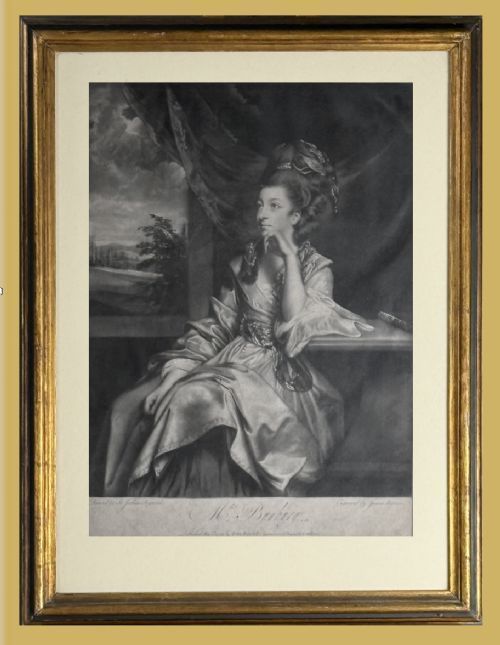
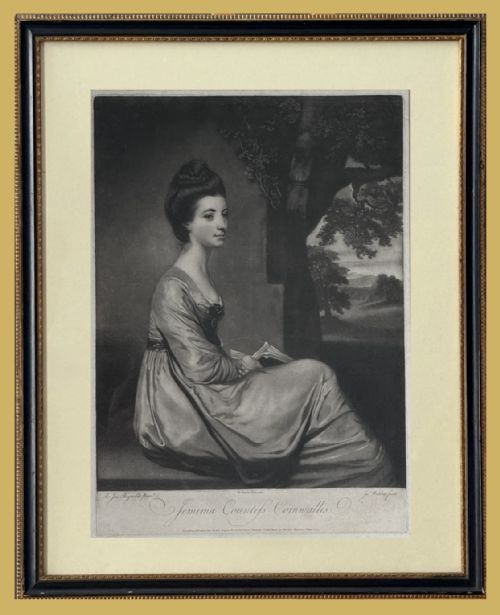
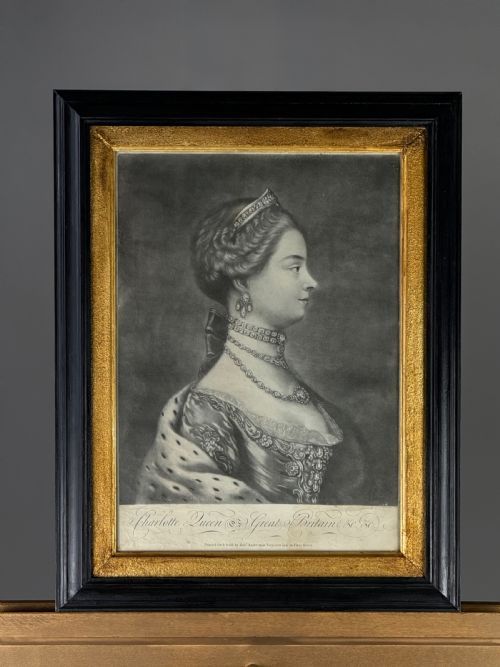
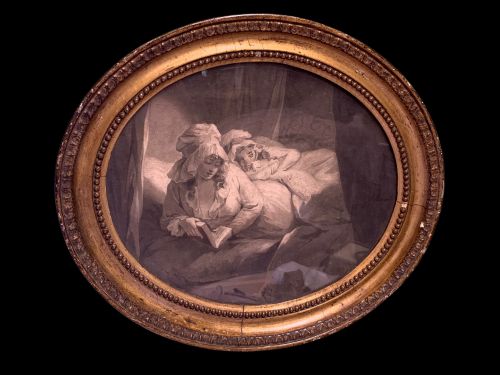
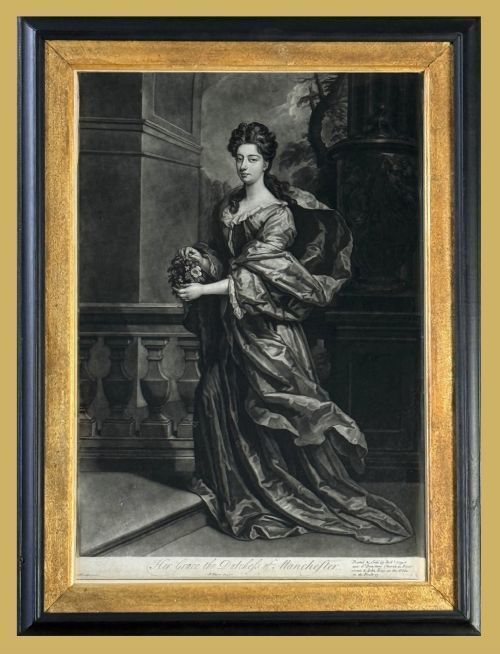
A gilt framed mezzotint print is a tonal intaglio print capturing rich gradients, predominantly found in portraiture and figural subjects from the eighteenth and nineteenth centuries. These works frequently depict notable historical figures, royals, and aristocratic ladies after prominent artists.
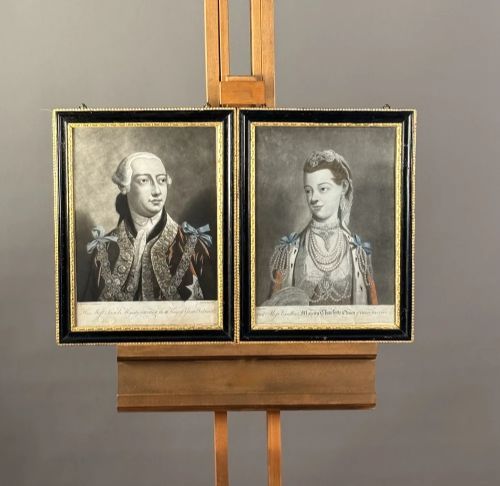
Most examples encountered on this page stem from the Georgian and Regency eras, with occasional Victorian, Edwardian, and early twentieth century productions. They appear as individual plates, pairs, or sets housed within period timber mouldings touched with gold leaf.
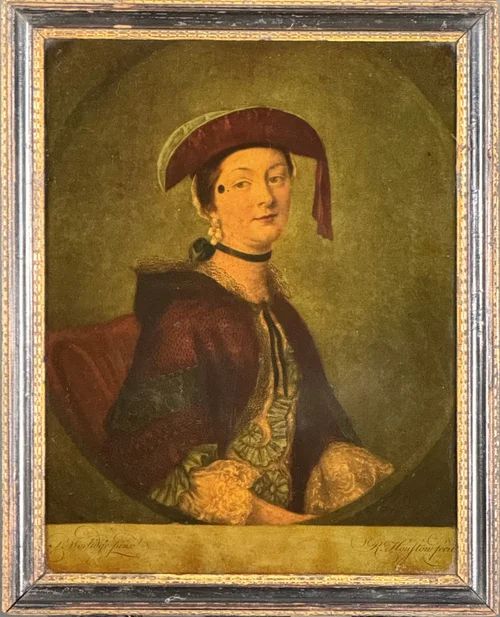
Makers and engravers represented include established figures such as James Watson, Richard Purcell, and John Faber, translating painted works into inked plates. Reverse glass variants and crystoleum interpretations also populate the selection.
Materials and Technique
The technique relies on roughening a copper plate with a rocker to create a burr that holds ink for solid black backgrounds, then scraping and burnishing areas to produce lighter tones. This process allows for subtle gradations of shadow and light without relying purely on line work.
Several plates capture eighteenth-century subjects feeding pigs or training birds, proving that historical aristocrats shared domestic space with very busy animals.
Distinctions in Quality
Quality rests upon the crispness of the impression and the depth of the plate's burr, which determines the richness of the velvety darks. Early impressions pulled before the copper plate wore down exhibit far greater tonal nuance than later restrikes.
The integrity of the surrounding gilt wood frame also influences the overall standard, particularly when the moulding and original gilding remain unaltered by later restorations.
John Boydell·James Watson·Charles Spooner·Valentine Green·John Faber·Richard Purcell·Sydney Wilson·Edward Stodart
The Gilt Framed Mezzotint Print Glossary
- Mezzotint
- An intaglio printmaking process where the copper plate is roughened entirely and then scraped to create tones rather than lines. This method produces soft, velvety shadows and smooth gradients.
- Reverse glass print
- An image painted or transferred directly onto the underside of a glass panel for display. It creates a glossy surface sheen characteristic of Georgian decorative arts.
- Crystoleum
- A Victorian method of applying a paper print to glass, clearing the paper, and hand-colouring the reverse before sealing. This technique yielded a translucent, three-dimensional painted effect.
- Artist proof
- A trial proof printed before the main edition is run, often signed by the printmaker or engraver. These early pulls are prized for their exceptional detail.
- Gilt wood
- Timber framing finished with a thin layer of gold leaf or metallic gilt compound. It provides the reflective border typical of period framing.
Gilt Framed Mezzotint Print: Frequently Asked Questions
What is a mezzotint print?
A mezzotint is an engraved copper plate print created by roughening the surface to hold ink for deep shadows, then scraping areas smooth for highlights. This method achieves rich, painterly tones rather than sharp linear outlines.
Printers developed this technique in the seventeenth century specifically to reproduce oil paintings with accurate tonal gradation and atmospheric depth.
How do I date an old print?
Dating relies on the paper characteristics, the style of the engraved lettering, and the construction methods of the accompanying wooden frame. Eighteenth-century examples often feature laid paper and hand-carved mouldings.
Costume details and the sitter's identity also provide reliable chronological markers when cross-referenced with the active dates of the publisher and engraver.
How were these framed originally?
Period frames for these works typically consist of timber mouldings finished in gold leaf or gilt wood, sometimes featuring Hogarth profiles. Glazing protects the delicate paper surface from atmospheric moisture and dust.
Original frames often show minor age-related wear to the gilding, which helps confirm their period authenticity alongside the print itself.
What is a reverse glass print?
A reverse glass print involves adhering and transferring the printed image face-down onto a glass plate, then painting the reverse by hand. This technique produces a distinct glossy finish unique to Georgian decorative pieces.
These items require careful handling because the delicate pigments and adhesive layers rest entirely protected behind the fragile glass panel.