

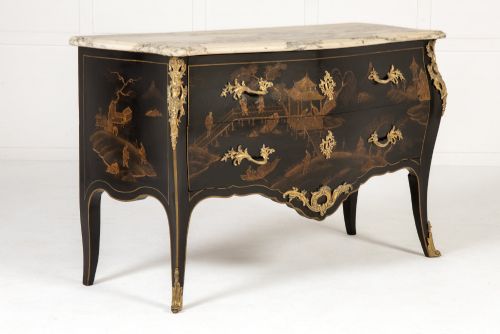


Gilt Bronze Sideboard
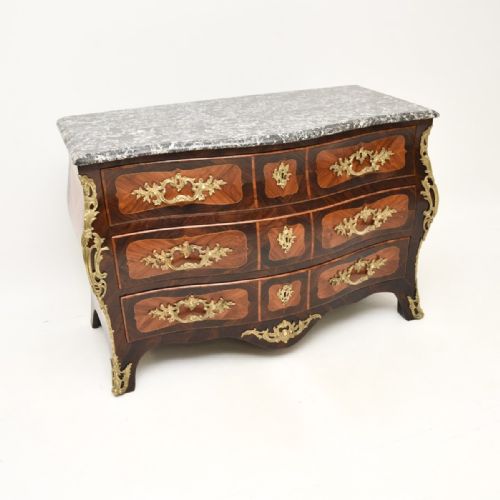
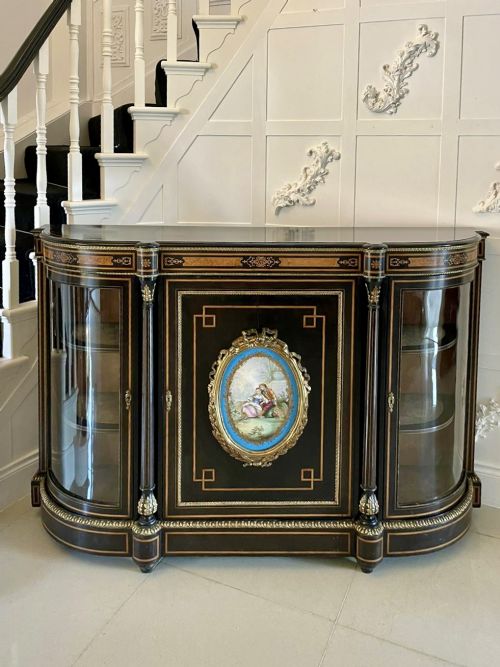
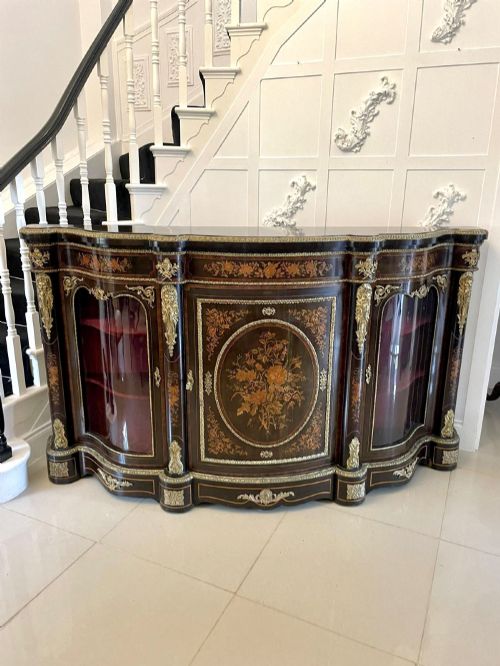
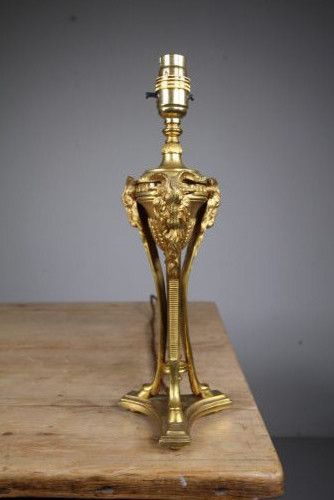
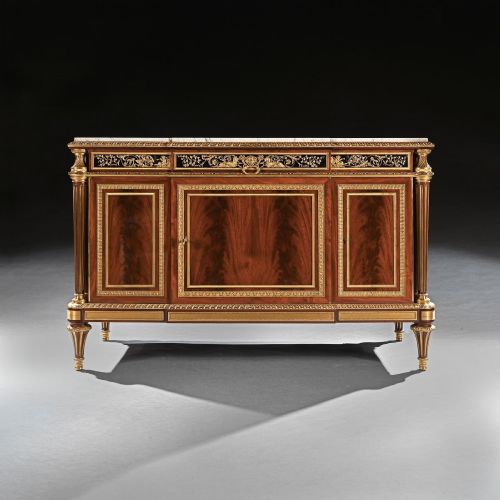
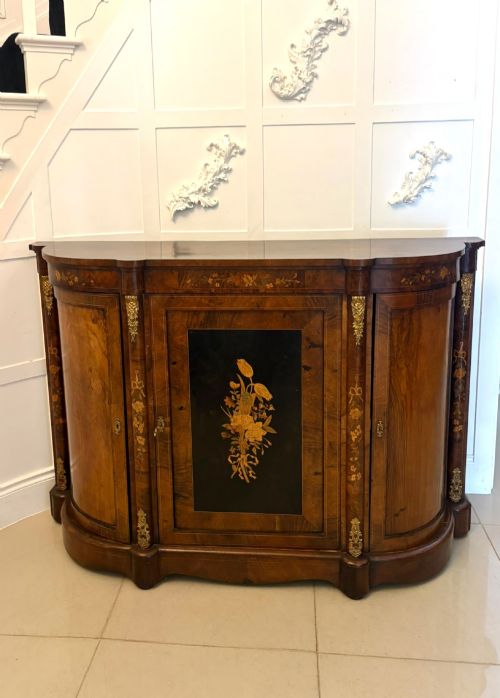
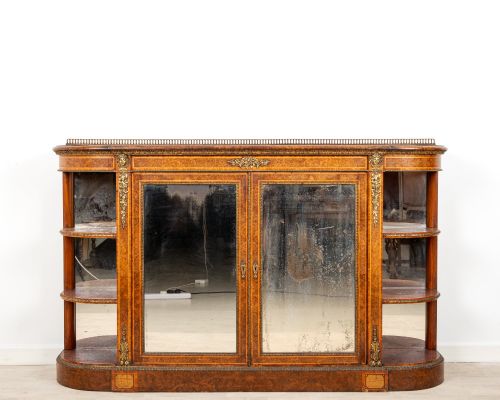
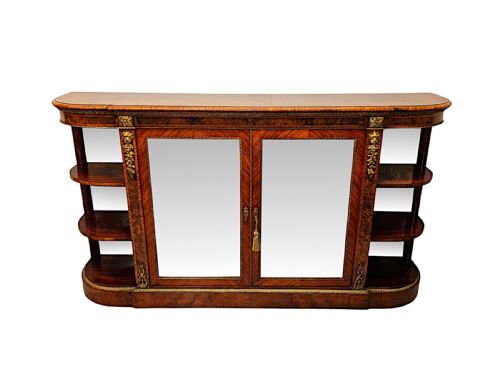
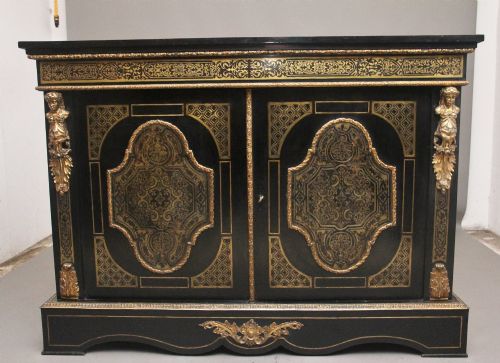
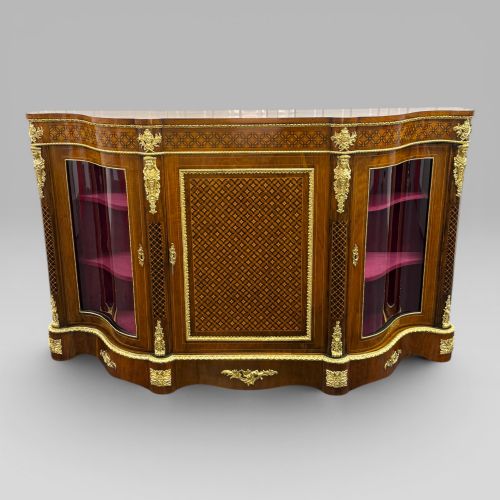
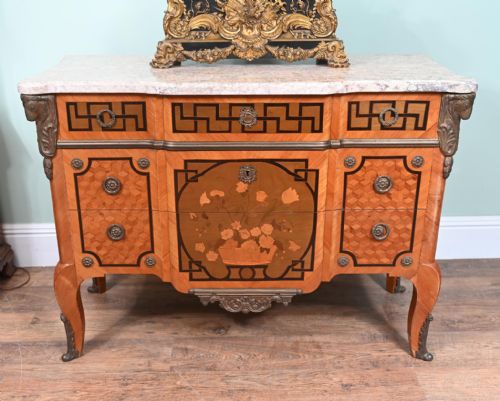
These pieces of gilt bronze sideboard encompass grand nineteenth-century credenzas, commodes, and side cabinets mounted with ormolu.
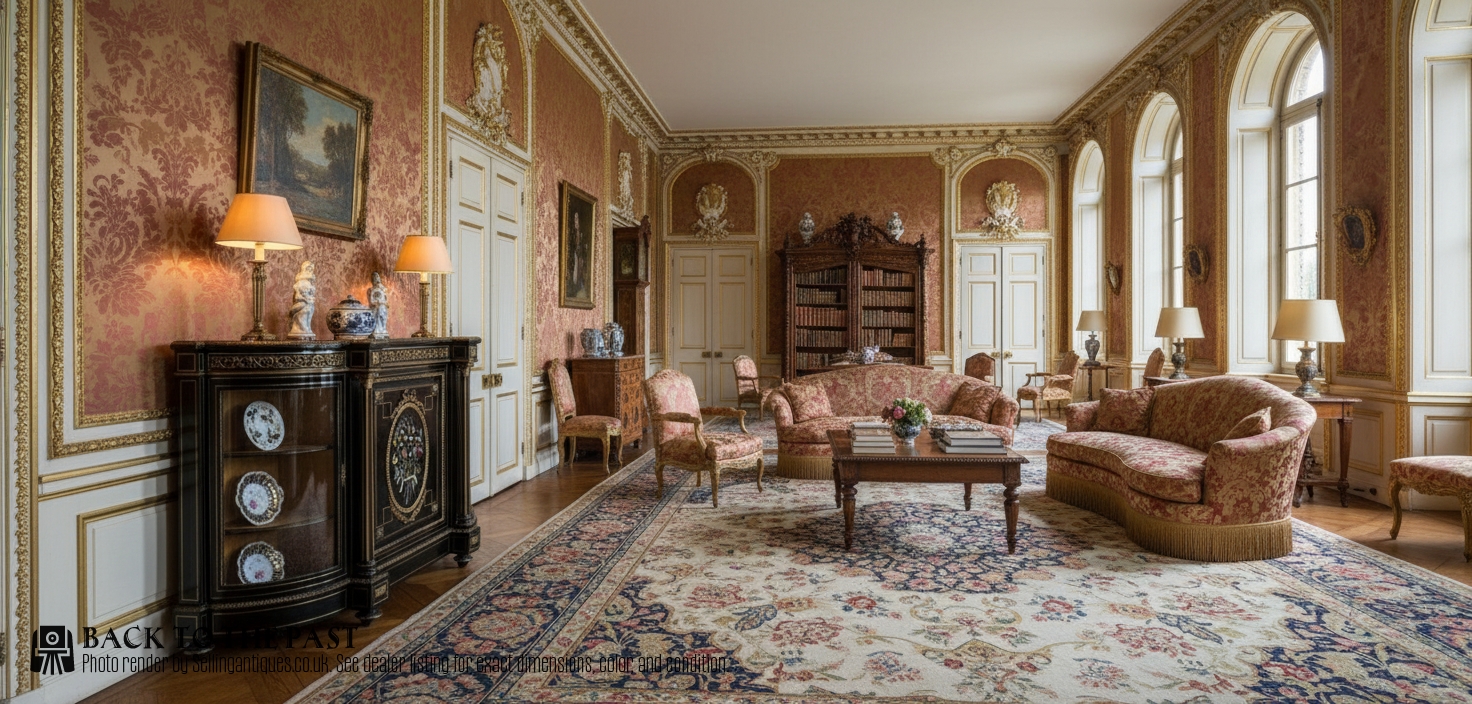
Gilt Bronze Sideboard
A gilt bronze sideboard search leads you to credenzas, commodes, and side cabinets primarily dating from the nineteenth century. These forms draw on French styles like Louis XV, Louis XVI, and Napoleon III, alongside Victorian British craftsmanship.
Most items you encounter combine heavy timber carcases with decorative metal mounts and stone surfaces. The selection ranges from serpentine-shaped credenzas to marble-topped commodes and ebonised display cabinets.
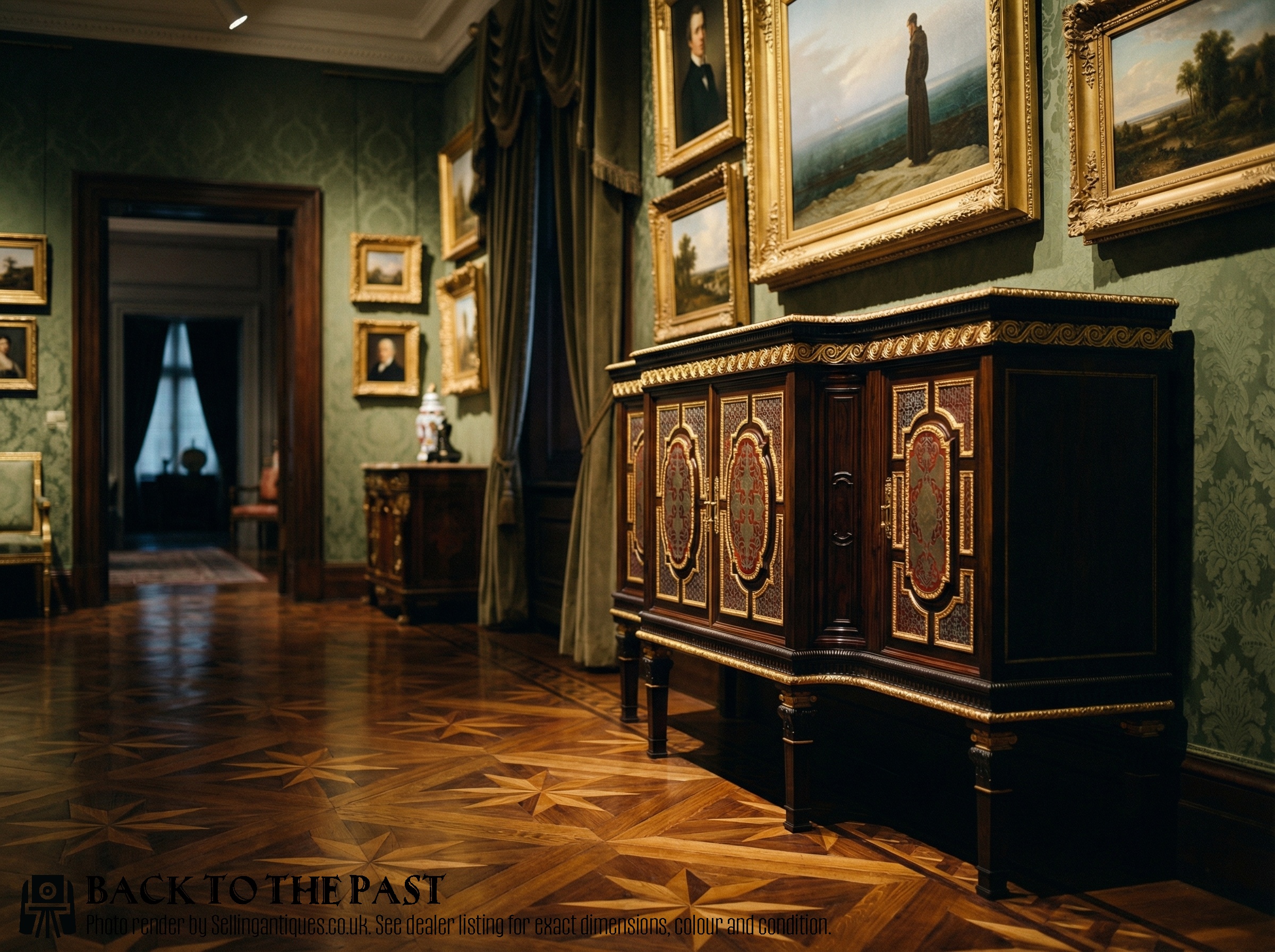
What varies in quality
The refinement of the gilt bronze or ormolu mounts dictates the upper tier of the range, showing sharp chiselling and deep fire-gilding rather than flat, dull surfaces. Finer examples also display precise marquetry work and cabinet-making attributed to known makers.
Selection of timber veneer grain, such as figured burr walnut or matched kingwood, separates standard production items from exhibition-quality pieces designed for formal reception rooms.
Materials recorded across the inventory include ormolu, marble, glass, kingwood, walnut, burr walnut, brass, and gilt bronze.
Jacques Bircklé·Henry Dasson·Gillows·Maison Gagneau·Joseph Zwiener·Jean-Henri Riesener·Paul Sormani·Jacques Adnet
The Gilt Bronze Sideboard Glossary
- Ormolu
- Gilded bronze used for decorative mounts on furniture and clocks. The technique involves applying a mercury and gold amalgam to a bronze base and heating it.
- Marquetry
- The art of applying pieces of veneer to a structure to form decorative patterns. Craftsmen use varied wood types to create floral or geometric designs.
- Credenza
- A low cabinet or sideboard designed for display and storage, often featuring glass doors and elaborate mounts. It became popular in Victorian drawing rooms.
- Boulle
- A type of marquetry inlay using brass and tortoiseshell developed in France. It appears frequently on ebonised nineteenth-century cabinets.
- Commode
- A low chest of drawers, typically standing on legs and featuring a stone top. Eighteenth and nineteenth-century examples often display serpentine shapes.
Gilt Bronze Sideboard: Frequently Asked Questions
What is a gilt bronze sideboard?
A gilt bronze sideboard refers to large nineteenth-century storage furniture incorporating bronze or ormolu mounts. These include credenzas, commodes, and side cabinets.
They combine timber carcases with marble tops and decorative metalwork, reflecting historical French and Victorian design influences.
How were these sideboards used?
These cabinets served to display porcelain, silver, and decorative objects in formal dining rooms and drawing rooms. Lower cupboards provided functional storage for household items.
Mirrored doors and glass panels helped reflect light and showcase collections within nineteenth-century interiors.
How do I identify the period?
Period identification relies on timber choices, mounting styles, and construction techniques. Nineteenth-century pieces frequently emulate earlier French reigns such as Louis XV and Louis XVI.
Maker stamps, specific wood veneers like burr walnut, and ormolu casting quality assist in dating individual pieces accurately.
Where should I place a credenza?
Credenzas suit principal reception rooms, dining spaces, or large hallways where their decorative fronts remain visible. Their shallow depth allows them to sit against walls without blocking walkways.
Keep them away from direct sunlight and strong heat sources to protect wood veneers and polished marble surfaces.