


Gilt Bronze Putto
A gilt bronze putto brings winged classical charm to domestic interiors through nineteenth-century French lighting, clocks, and decorative mounts.
Gilt Bronze Putto
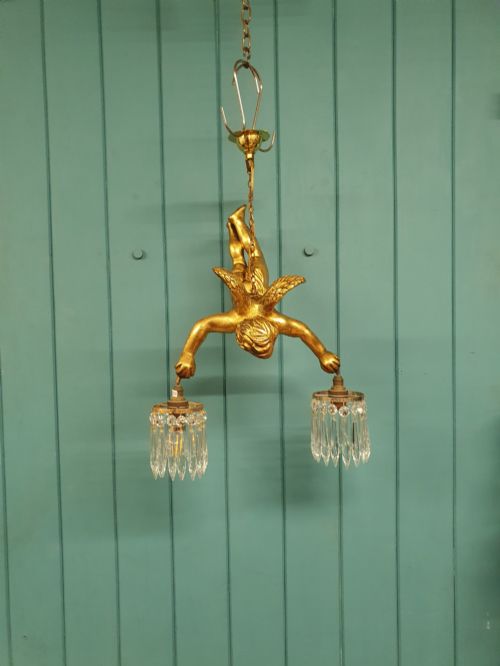
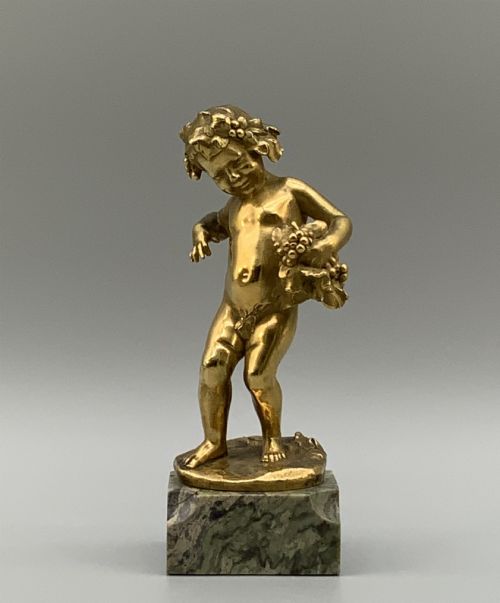
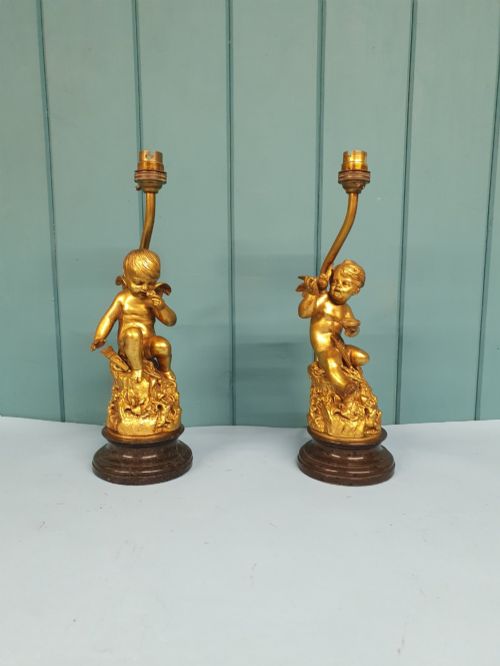
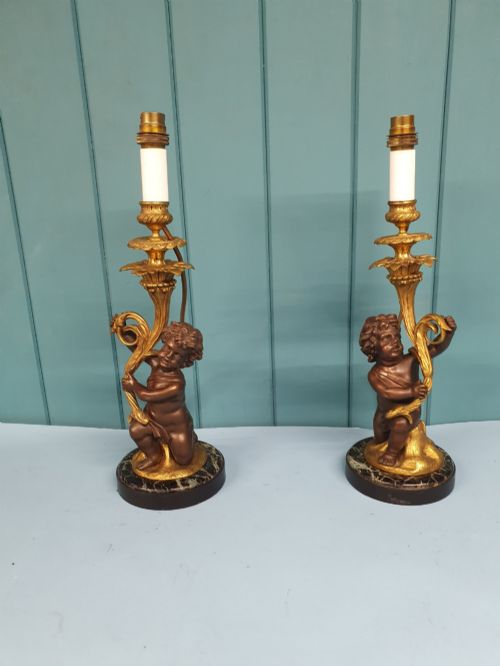
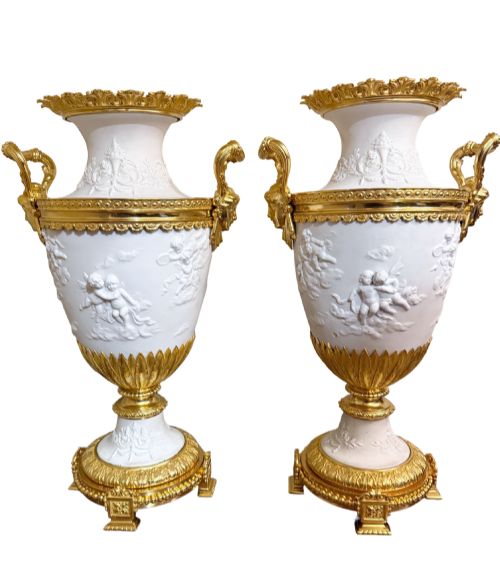
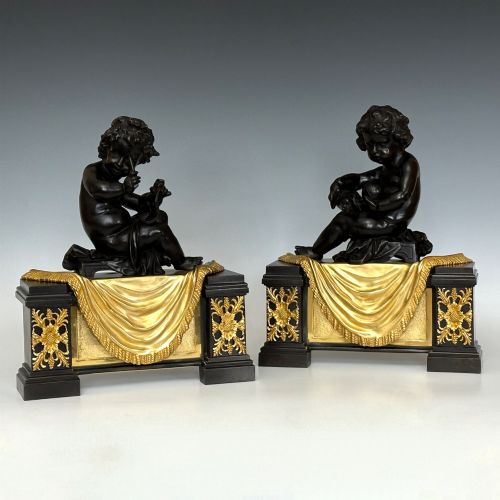
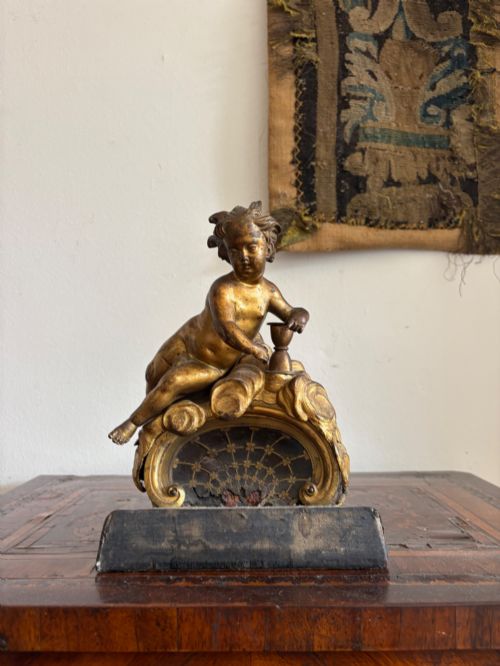
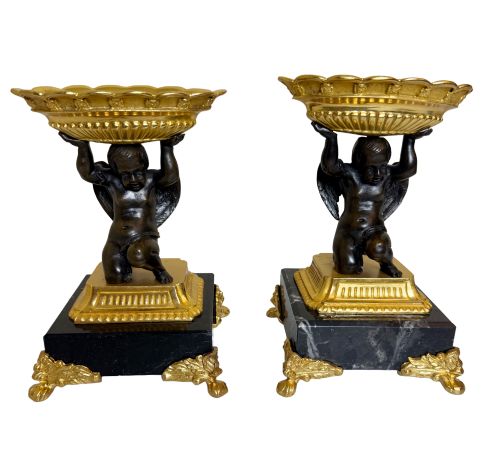
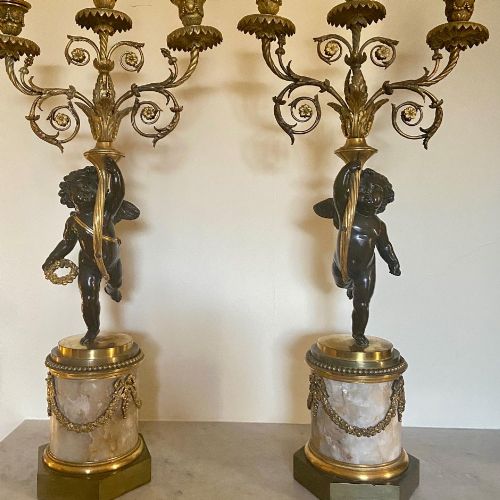
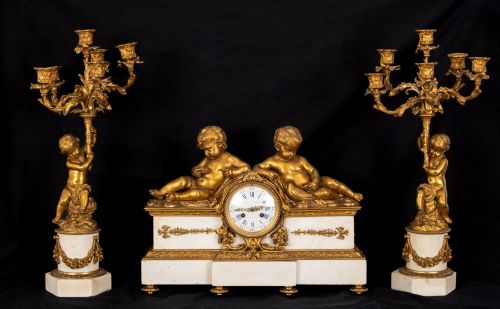
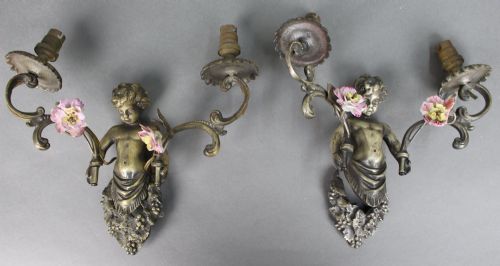
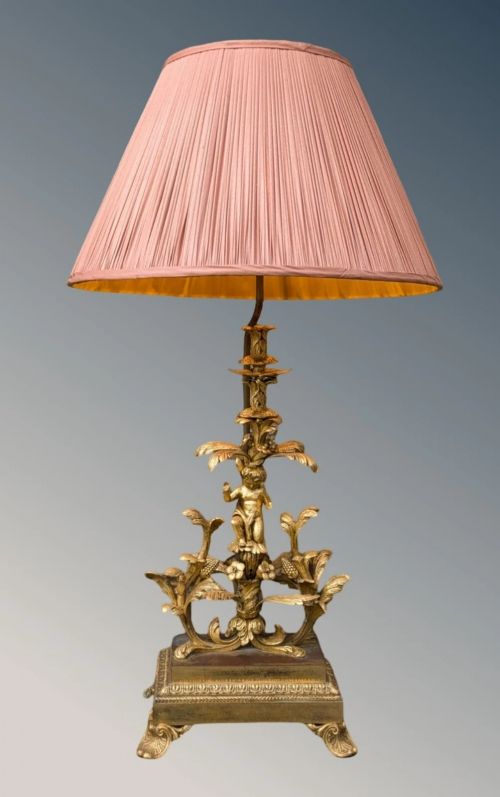
When you examine a gilt bronze putto on this page, you are looking at nineteenth-century decorative metalwork originating predominantly from French workshops and embracing Rococo Revival, Empire, and Neoclassical styles. The selection spans domestic functional objects such as mantel clocks, candelabra, candlesticks, table lamps, wall sconces, and fireplace chenets where winged figures support arms or frame dials.
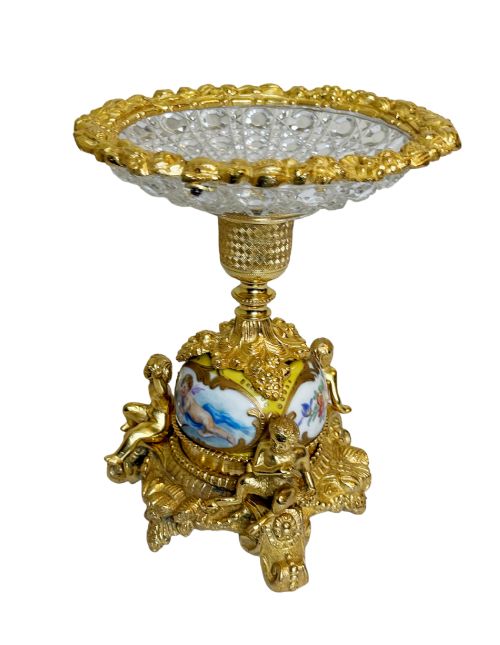
The pieces draw on nineteenth-century manufacturing periods including the Victorian era, 1800, 1860, 1870, 1880, 1890, 1900, and 1910. Figures appear singly as sculptures and finials, or paired on marble bases holding branch lights and crystal centrepieces.
Materials and Technique
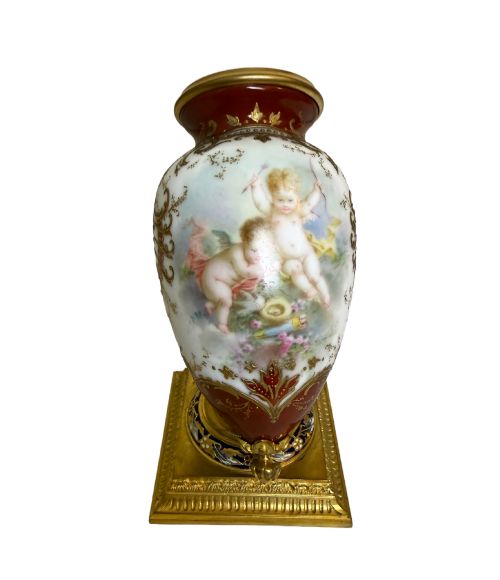
Manufacture relies on cast bronze and brass subjected to mercury gilding or ormolu application, complemented by patinated dark bronze surfaces on the figures themselves. Founders combined these metals with white marble plinths, Sevres porcelain panels, cut glass crystal drops, and hand-painted clock dials.
Assembly involved chased and cast components screwed or pegged together, often integrating older decorative mounts into later nineteenth-century lighting conversions and clock garnitures.
Infant Bacchus figures occasionally hold musical triangles instead of wine cups.
Standards of Execution
Quality rests upon the crispness of the chasing in the metalwork and the depth of the mercury gilding compared to later electroplated finishes. Superior examples show expressive modelling in the figures and tight joints where marble bases meet cast bronze mounts.
Lesser items display softer surface details, mismatched components from later conversions, or worn gilding revealing the base brass beneath.
Charles Louis Malric·Susse Freres·Francois Redmond·Le Roy·Leon Message·Jollet et Cie
The Gilt Bronze Putto Glossary
- Ormolu
- Gilded bronze produced by applying a mercury and gold amalgam to a bronze base and heating it. This technique creates a durable matte and burnished gold finish characteristic of nineteenth-century French works.
- Putto
- A plump, often winged child figure derived from classical art. These figures appear frequently as cherubs supporting clock garnitures or holding candle branches.
- Chenet
- An andiron or firedog placed at the hearth. Pairs often feature cast putto figures atop decorated bronze feet.
- Garniture
- A set of matching decorative objects designed for display together, typically comprising a central mantel clock flanked by matching candelabra or vases.
- Tazza
- A shallow cup or shallow bowl raised on a stem and foot. These vessels frequently incorporate marble and gilt bronze mounts.
Gilt Bronze Putto: Frequently Asked Questions
What is a putto?
A putto is a chubby infant figure, frequently winged, originating in classical sculpture and Renaissance art. In nineteenth-century decorative objects, they appear supporting clock cases, holding candelabra branches, or standing as independent bronze figures.
These cherubic figures brought playful classical mythology into nineteenth-century domestic interiors across France and Britain.
How do I tell ormolu from brass?
Ormolu is mercury-gilded bronze that exhibits a deep, warm golden hue with varied matte and bright burnished areas. Modern brass or lesser lacquered metal tends to show a uniform yellow or brassy metallic tone without the soft lustre of period fire gilding.
Close inspection under magnification often reveals the underlying bronze casting beneath worn gilt sections.
Were these clocks made in pairs?
Clocks were produced as single centrepieces, frequently accompanied by matching candelabra or vases to form a garniture set on a mantelpiece. The side pieces mirrored the styling and materials of the central clock.
Individual clocks often stood alone on desks, brackets, or side tables.
How should I clean gilt bronze?
Dusting with a soft dry brush is the safest method for preserving historic mercury gilding and delicate patinated surfaces. Moisture and commercial metal cleaners strip away remaining gold leaf and damage the underlying bronze.
Professional conservation is recommended for pieces requiring deeper cleaning.