


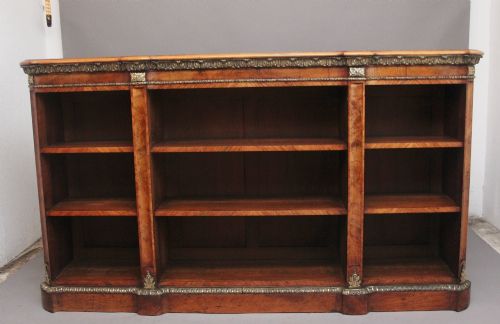
Antique Furniture Mount
An antique furniture mount is a decorative or functional metal fitting that accents chests, desks and tables from the eighteenth and nineteenth centuries.
Antique Furniture Mount
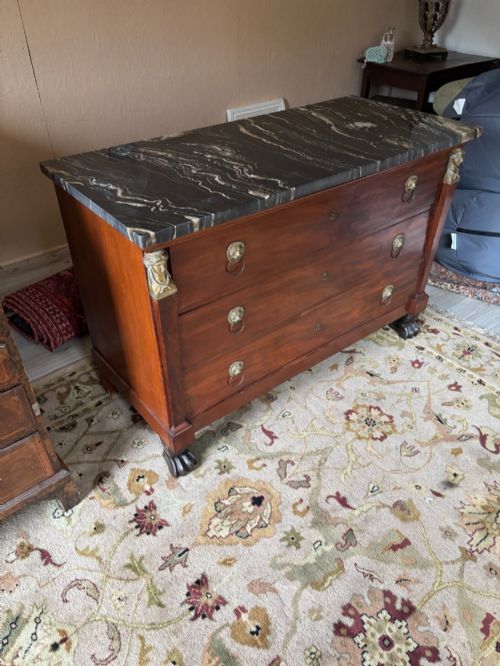
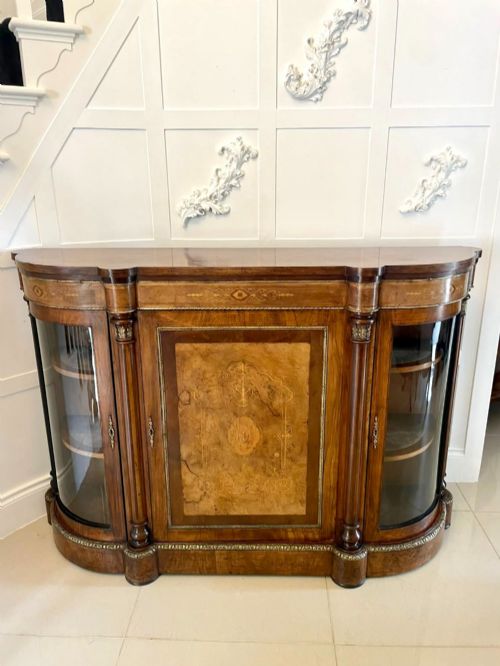
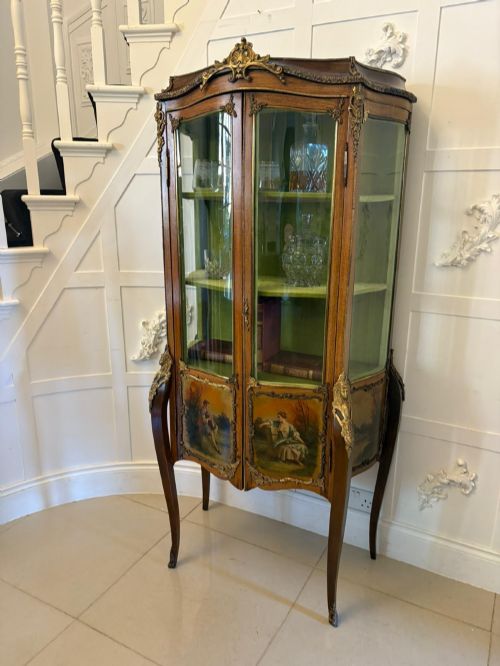
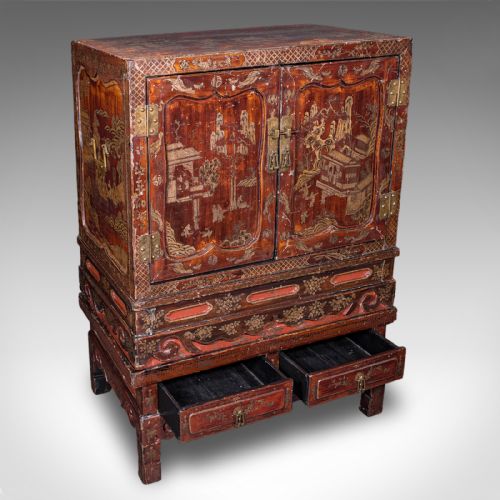
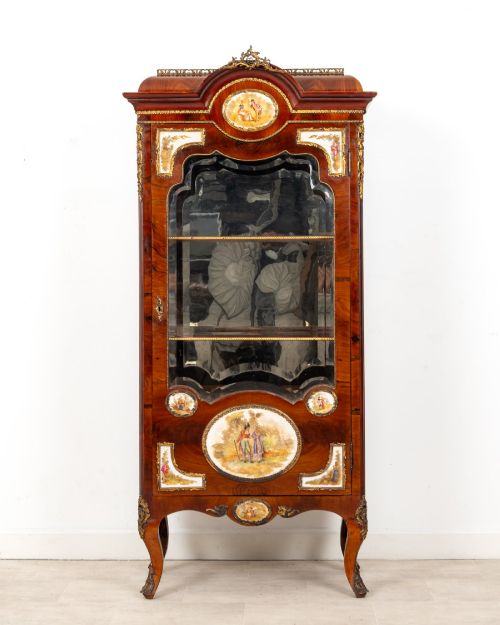
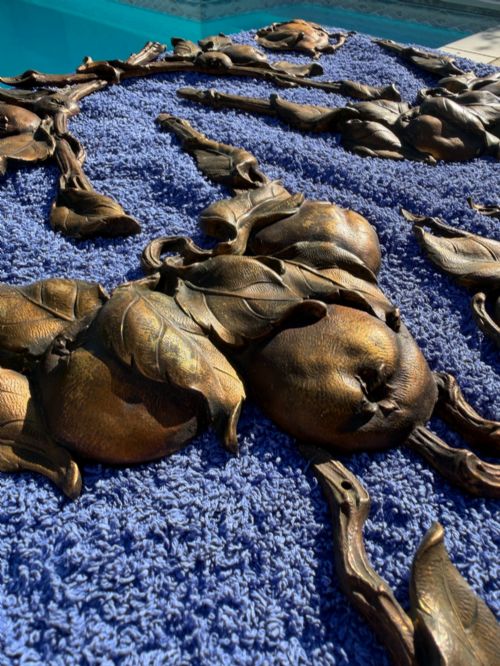
An antique furniture mount comprises decorative metal ornaments, handles, escutcheons and finials originally applied to wooden cabinet work to enhance its architectural form. Pieces on this page appear on a range of furniture types, from nineteenth-century French kingwood and walnut desks to commodes and display cabinets.
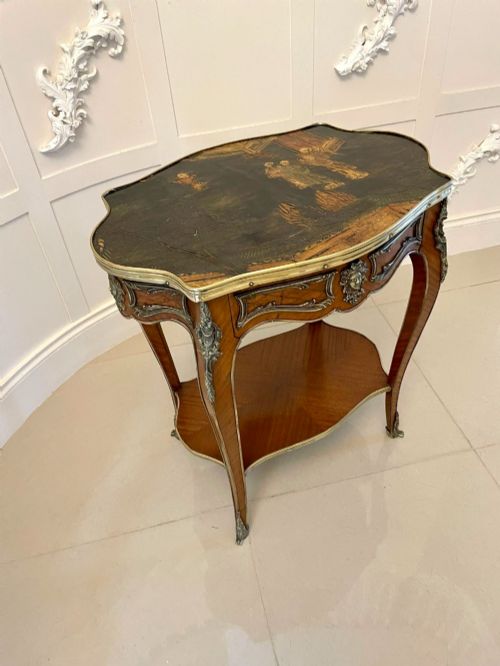
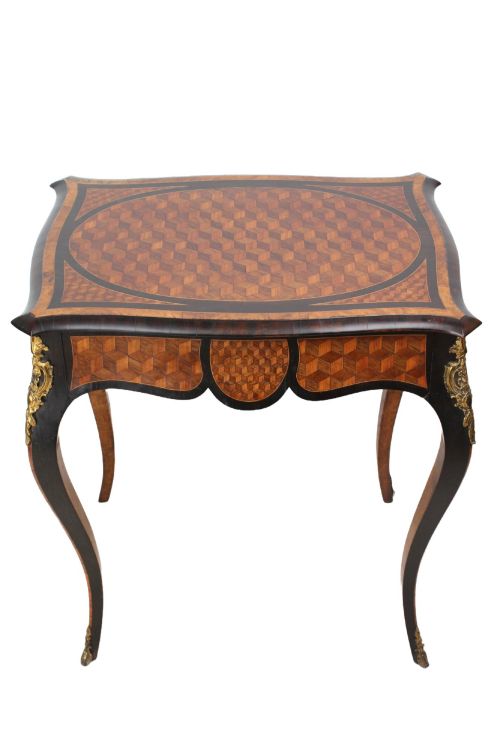
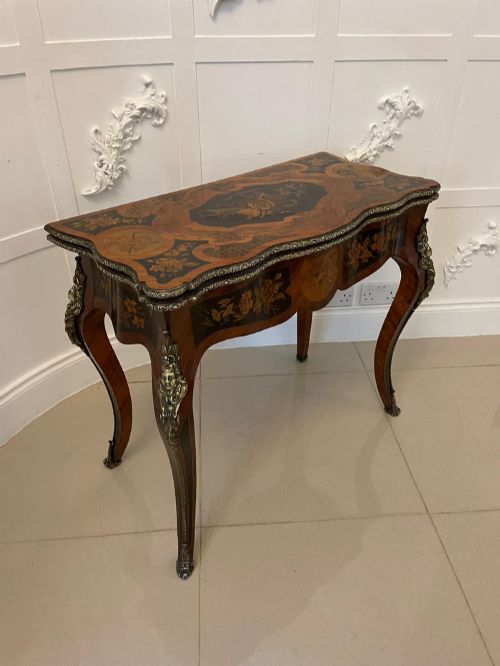
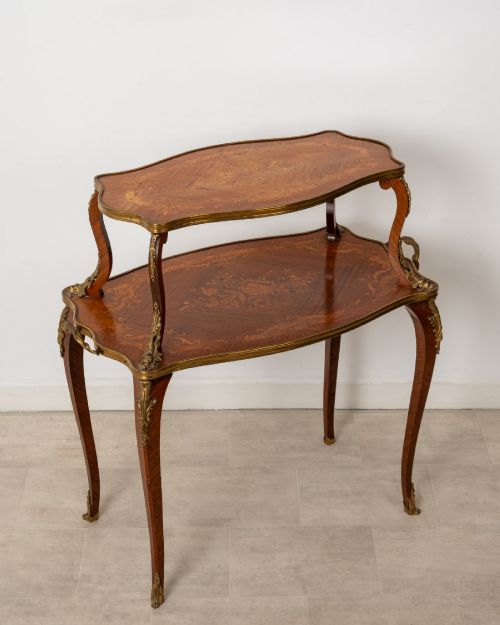
Buyers encounter individual cast metal ornaments sold separately alongside mounts integrated into larger revivalist pieces, such as Louis XV and Louis XVI style tables. The metalwork functions both to protect vulnerable corners and edges and to provide the primary ornamental contrast against dark timber.
The selection reflects European cabinet making traditions, particularly French workshops where gilt bronze and ormolu mounts defined the aesthetic of freestanding tables and chests. These hardware elements transform plain surfaces into decorative focal points through classical motifs and floral scrolls.
Materials and construction methods
Makers utilised bronze, brass and copper alloys, often employing the mercury gilding process to impart a rich golden lustre to ormolu components. The metal was cast from carved moulds and subsequently chased by hand to sharpen fine details in foliage, drapery and figural subjects.
Cabinet makers secured these metal elements to mahogany, walnut and kingwood carcases using threaded pins, screws or through-tenons keyed into the timber backing. The integration required precise mortising so that mounts sat flush against veneered surfaces without straining the underlying wood.
Some nineteenth-century French putto finials spent their mornings guarding the contents of a locked writing drawer before witnessing centuries of spilled ink.
Determinants of quality
Quality rests upon the crispness of the metal chasing and the depth of the original gilding, where hand-tooled surfaces reveal sharper relief than secondary casts. Superior mounts display precise articulation in hair, feathers and acanthus leaves without the softening that indicates worn production moulds.
The relationship between the metalwork and the surrounding timber indicates the standard of workshop execution. High-grade mounts follow the exact contours of the wood beneath, aligning seamlessly with marquetry panels and parquetry borders rather than appearing as generic additions.
Poix Blin·JAS Shoolbred·Gabriel Viardot·Johnstone and Jeanes·Maison Millet·Joseph-Emmanuel Zwiener·H. J. Hatfield and Sons·Henry Dasson
The Antique Furniture Mount Glossary
- Ormolu
- Gilt bronze applied to furniture mounts and decorative objects. The technique involves fusing an amalgam of gold and mercury to a bronze base through heat.
- Chasing
- The hand-tooling of metal surfaces with punches and hammers after casting. This process refines textures and deepens shadows on bronze mounts.
- Escutcheon
- A protective metal plate surrounding a keyhole. It prevents the timber from splitting during repeated use.
- Finial
- A decorative terminal ornament placed at the apex of a pediment, corner or foot. These elements provide a visual anchor for furniture silhouettes.
- Applique
- A flat-backed metal ornament applied directly to a cabinet door, drawer front or panel. It functions purely as visual enrichment without mechanical purpose.
Antique Furniture Mount: Frequently Asked Questions
What metals are used in antique furniture mounts?
Makers primarily used brass, bronze and gilt bronze, often referred to as ormolu when mercury-gilded. These metals were selected for their malleability during casting and their durability in daily use.
Subordinate pieces utilised simpler brass sheeting or cast iron for structural brackets, while high-status furniture relied exclusively on chased bronze to achieve intricate relief work.
How do I clean antique ormolu mounts safely?
Cleaning requires only a soft, dry brush to remove dust from recessed areas of the chasing. Moisture and chemical polishes strip the historic gold layer from ormolu surfaces.
Conservation experts advise against using commercial brass cleaners on fire-gilded metal because abrasive compounds permanently erode the thin layer of gold.
Are furniture mounts marked with maker stamps?
Foundry stamps or maker signatures appear occasionally on the reverse side of large bronze mounts or cast into the bronze near a corner edge. These marks require removing the mount from the timber to inspect.
Most commercial mounts remained unsigned, as they were produced in specialised foundries and supplied to cabinet making workshops across Paris and London.
How can I tell if a mount is period or a later replacement?
Period mounts show natural wear patterns consistent with age, including microscopic scratches and undisturbed patination in recessed areas. The method of attachment, such as hand-cut threaded pins, supports the date of the underlying furniture.
Modern replacements often feature uniform machine-made screw threads and lack the crisp hand-chased detailing found on eighteenth and nineteenth-century castings.