
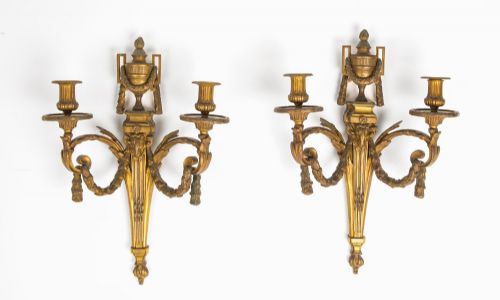


Decorative Bronze Appliques
These decorative bronze appliques bring French style and architectural detail to interiors, ranging from lighting fixtures to furniture mounts.
Decorative Bronze Appliques
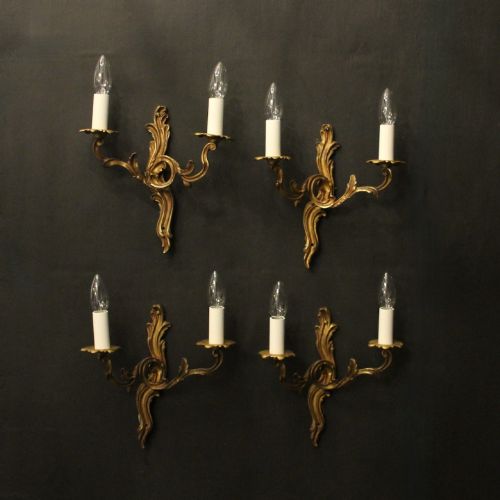
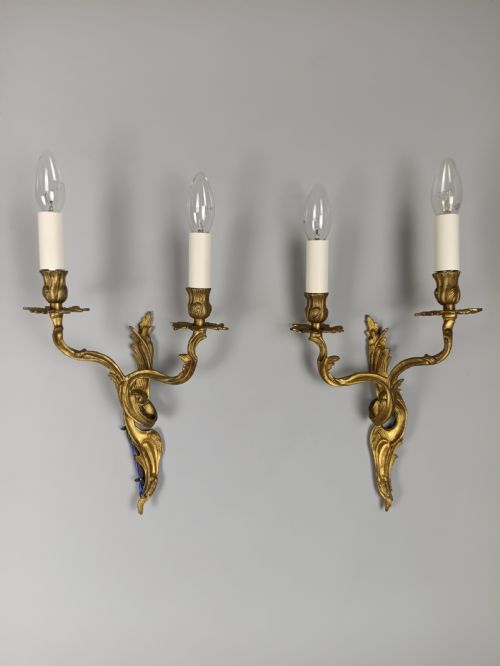
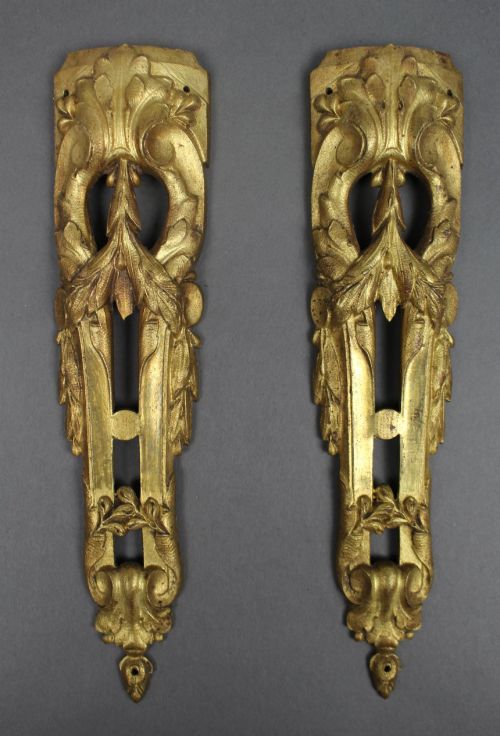
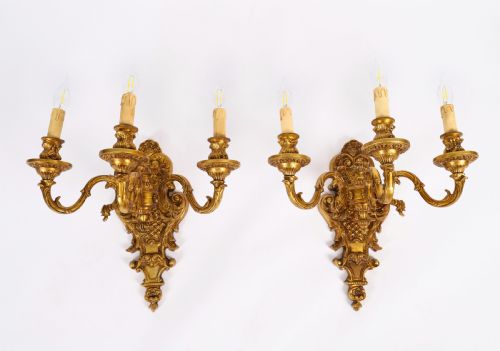
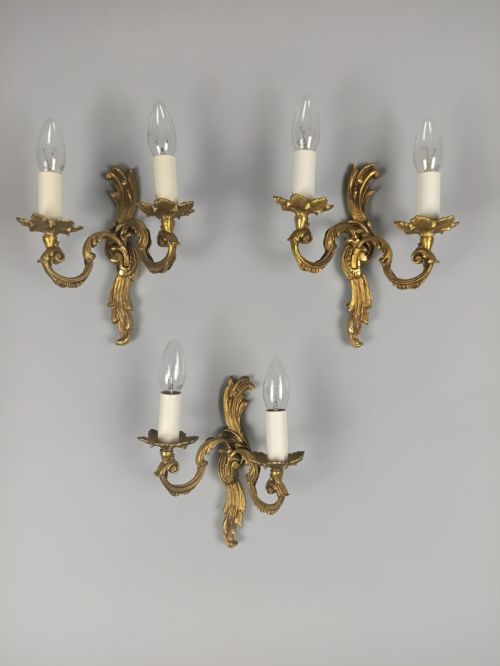
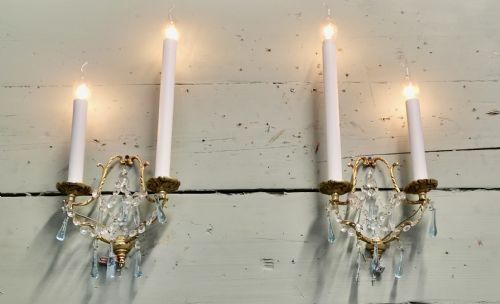
Decorative bronze appliques encompass wall lights, wall sconces, furniture mounts, and architectural ornaments originating predominantly from French workshops. Buyers seeking these pieces encounter items designed both for illumination, such as twin-arm wall lights, and for surface adornment like furniture mounts.
The selection ranges across periods from the late 18th century through the 19th century and into the early 20th century, capturing styles such as French Rococo, Louis XVI, and Art Nouveau. Wall lights dominate the selection, often found in matched pairs or larger sets.
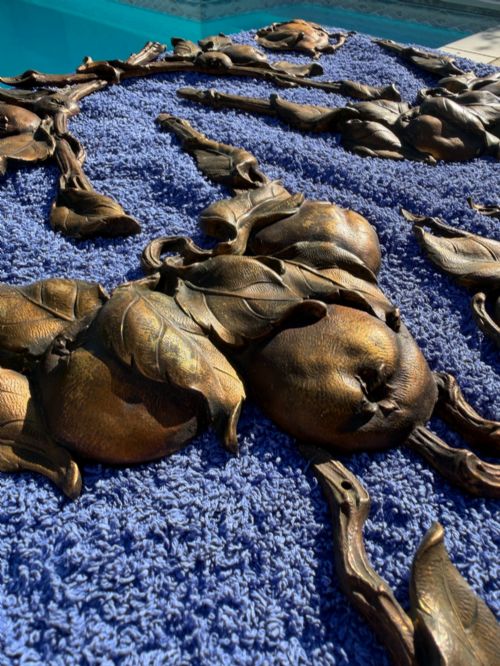
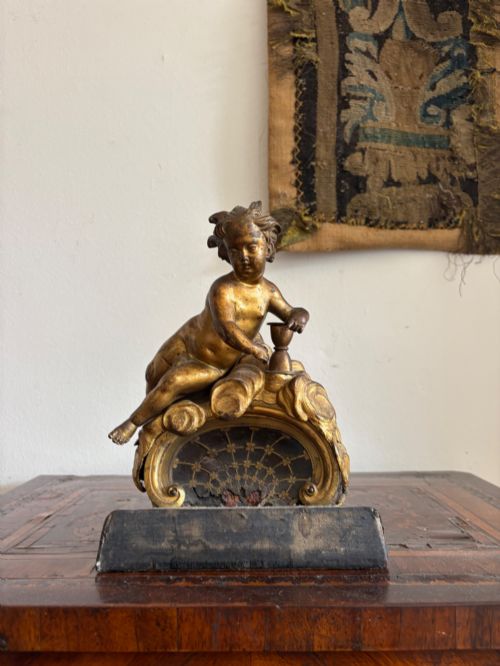
Forms include putto finials, ram's head masks, and sea serpents alongside multi-arm wall sconces and chandeliers. Each piece reflects historical European decorative schemes adapted for domestic interiors.
How decorative bronze appliques were made
Items are cast from bronze, brass, or mixed metals using traditional foundry methods. Metal components receive surface treatments including gilding and ormolu to achieve a bright, reflective finish.
Detailing is achieved through chasing and moulding, producing sculptural elements like masks, scrollwork, and figurative finials. Assembly typically involves joining cast branches, backplates, and mounts with threaded fixings.
Sea serpents occasionally join the cherubs and scrolls, proving that even formal French decor had room for mythical beasts.
What varies in quality
Quality rests in the crispness of the cast and the depth of the chased detail, which determines how cleanly animal motifs, human figures, and acanthus leaves are rendered. Finer examples retain sharp relief and precise edges across every decorative element.
The application and preservation of the gilt bronze or ormolu surface finish differentiate grades of work. Superior pieces display even, rich gold tones that adhere closely to the underlying metal without obscuring delicate surface textures.
Poix Blin·Maison Baguès·Liberty
The Decorative Bronze Appliques Glossary
- Ormolu
- Gilt bronze produced by applying a finely ground mercury-gold amalgam to a bronze object and heating it to vaporise the mercury. This technique creates a durable, golden surface finish characteristic of fine French decorative metalwork.
- Applique
- An ornamental object applied to a wall, furniture piece, or architectural surface rather than standing independently. In this context, the term covers both lighting fixings and decorative mounts.
- Finial
- A decorative ornament that terminates the top or end of an object, such as a furniture mount or a lighting fixture. They frequently take figurative forms like putti or stylized urns.
- Sconce
- A wall-mounted lighting fixture designed to hold candles or electric bulbs, often featuring multiple arms and decorative backplates. Many examples utilise reflective backplates to amplify light output.
- Rococo
- An 18th-century artistic style characterised by asymmetry, scrollwork, and naturalistic motifs such as shells and C-scrolls. Revival pieces from the 19th century frequently replicate these flowing, organic contours.
Decorative Bronze Appliques: Frequently Asked Questions
What is the difference between an applique and a wall sconce?
An applique is a broad category of applied ornament that includes both non-lighting mounts and wall-fixed pieces, whereas a wall sconce specifically refers to a lighting fixture attached to a wall.
Many wall lights in this category function as both, serving as decorative bronze appliques while supporting candle arms or electric fittings.
How are antique bronze wall lights mounted?
Most antique wall lights utilise a central backplate pierced with screw holes designed to secure the fixture directly to wall studs or masonry plugs. Wiring typically runs through the wall cavity behind this backplate.
Professional installation is recommended for older metal fixtures to ensure secure weight distribution and safe electrical connection.
How do I identify Louis XVI style appliques?
Louis XVI style appliques feature neoclassical elements such as symmetry, straight lines, urns, swags, and classical motifs like ram's head masks. This aesthetic contrasts sharply with the earlier curved asymmetry of Rococo designs.
Construction details and mounting hardware often help corroborate the period of manufacture.
What is ormolu?
Ormolu refers to gilded bronze, specifically created through an amalgamation process using gold and mercury during the 18th and 19th centuries. The technique produces a warm, distinct golden lustre that resists tarnishing.
Modern replacements often use electroplating, which lacks the particular depth and weight of historical ormolu surfaces.
Can antique appliques be wired for electricity?
Many antique wall lights and sconces have been adapted for modern electrical wiring while retaining their original brass or bronze sockets and candle tubes. Conduit and internal channels can usually accommodate modern cabling without altering the exterior appearance.
Qualified electricians can inspect older wiring paths to ensure compliance with current safety standards.