

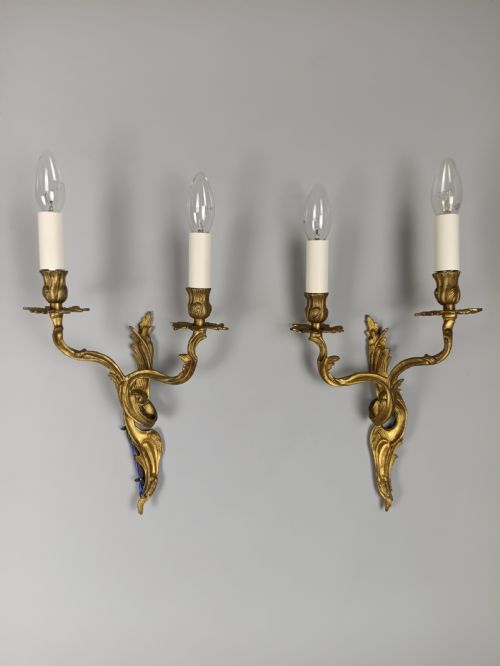
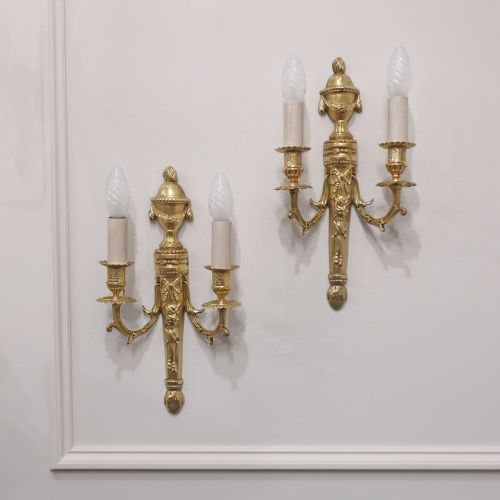
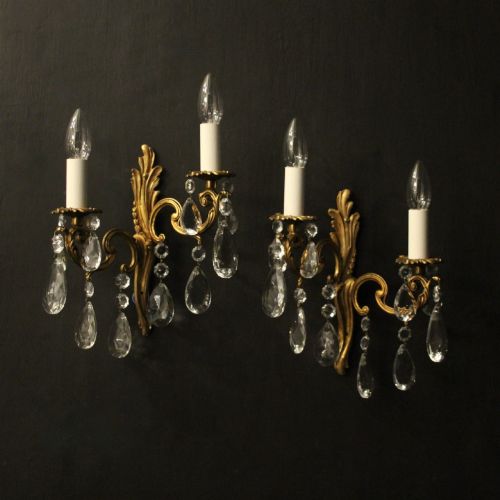
Brass Double Wall Sconce
A brass double wall sconce brings warm reflected light to a room, cast in bronze, brass or gilt metal.
Brass Double Wall Sconce
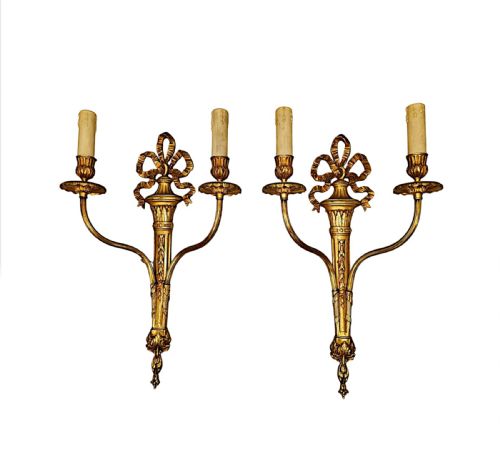
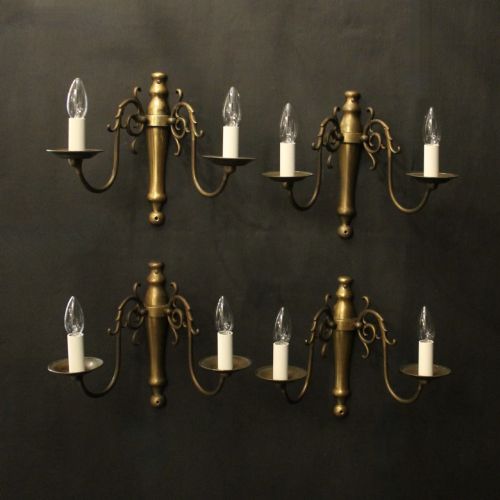
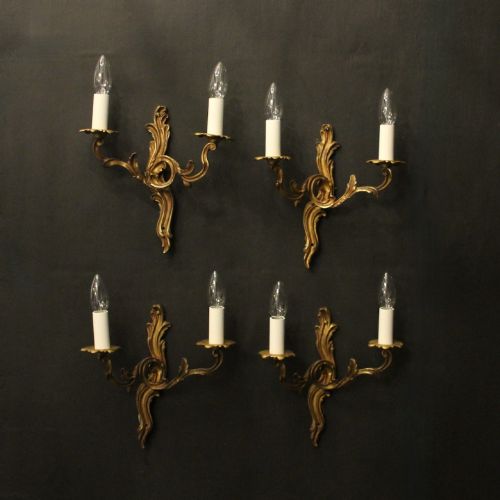
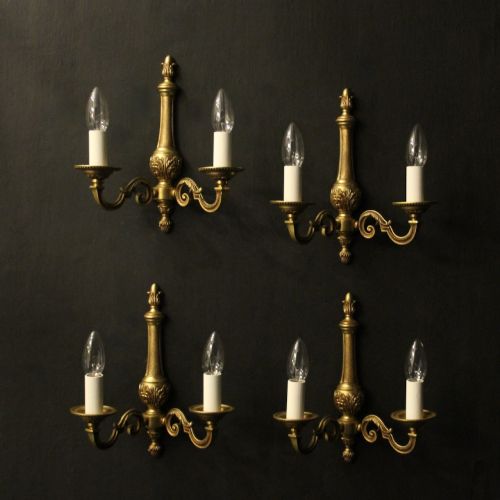
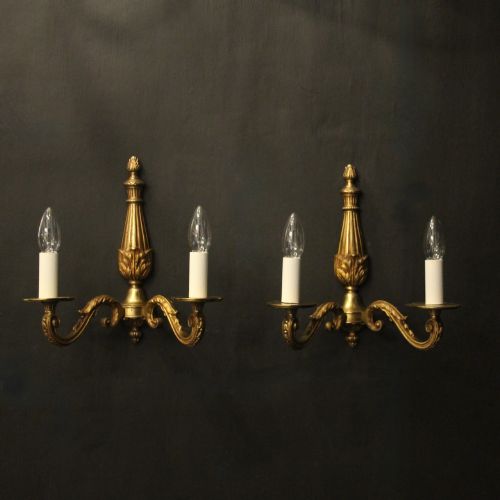
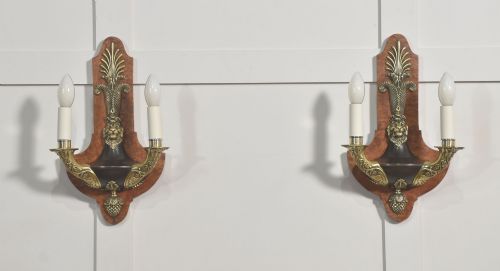
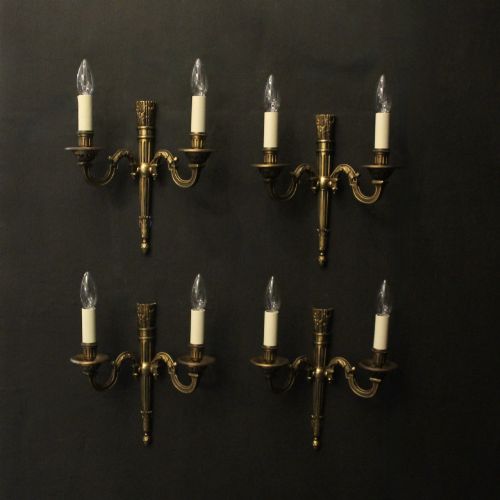
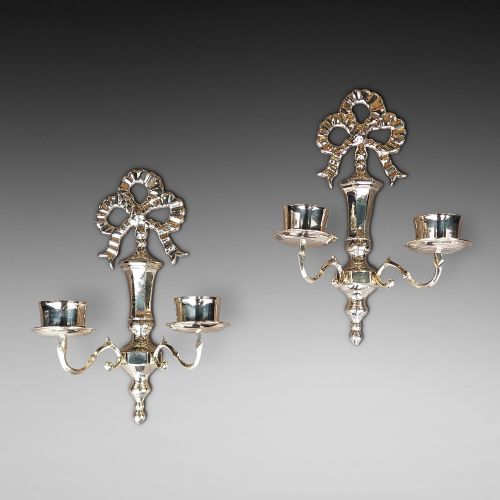
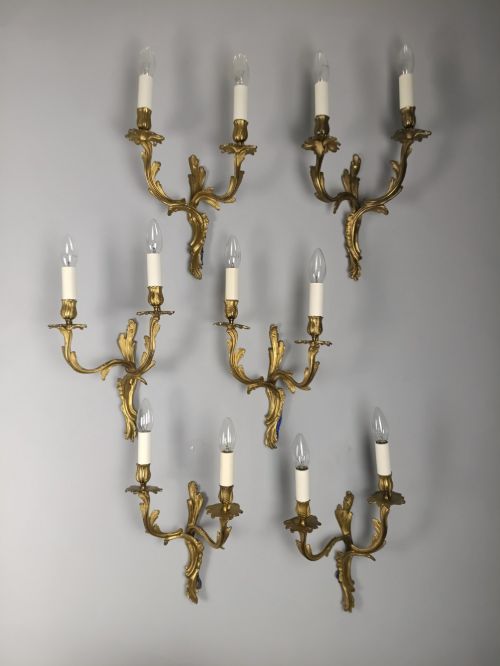
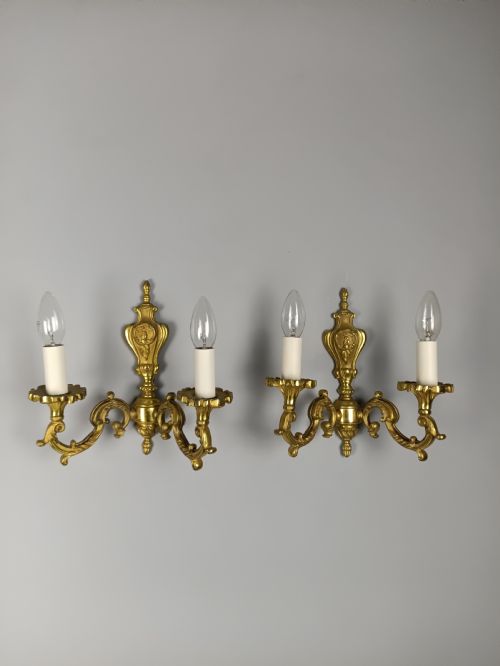
A brass double wall sconce spans periods from the nineteenth century through the 1930s, taking the form of twin-arm wall lights, girandole mirrors and candle sconces. French examples dominate the selection, often rendered in twin-arm configurations influenced by Rococo, Empire and Neoclassical styles.
English pieces appear alongside French designs, using brass, bronze and gilt metal in sets of two, three, four or six. Makers and designers such as Casier and F. & C. Osler contribute to the range of styles, which also encompasses Adam Revival and Edwardian variants.
Materials and Construction
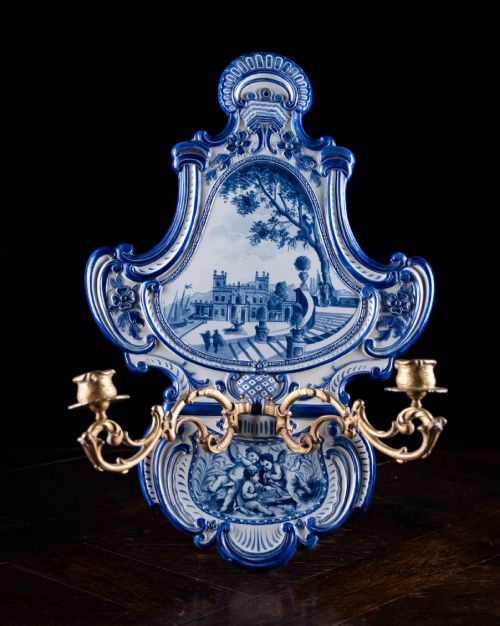
Metalworking techniques unite the selection, employing cast brass, bronze, ormolu and gilded bronze to form twin-branch arms and backplates. Surface finishing relies on gilding, silverplating and natural patination over metal substrates.
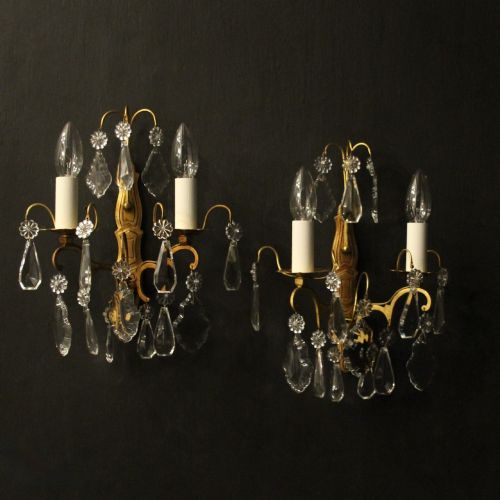
Details incorporate cast ribbons, crystal elements, burr walnut accents and Delft ceramic inserts such as those by Villeroy & Boch. Fixtures accommodate either candle wiring or electric fittings depending on the period of manufacture.
Brass Double Wall Sconce Retail Price Guide 2026
Typical asking prices for brass double wall sconce among the pieces listed under this phrase on Sellingantiques today, from the lower quarter to the upper quarter. They describe what is for sale here now, not the wider market.
Materials recorded across the inventory include brass, bronze, gilt bronze, ormolu, silverplate, crystal and burr walnut.
Quality Variations
Quality rests in the crispness of the metal casting and the depth of the original gilding or bronze patina. Finer examples display sharp relief in Rococo scrollwork or Neoclassical motifs without softness in the chased details.
Construction integrity distinguishes standard production from superior output, seen in the solidity of the twin arms and the integration of decorative elements like crystal drops or burr walnut backplates.
Casier·F. & C. Osler·Villeroy & Boch
The Brass Double Wall Sconce Glossary
- Ormolu
- Gilded bronze, where a finely ground gold-mercury amalgam is applied to a bronze object before heating. This technique creates a durable, luminous golden finish characteristic of French decorative metalwork.
- Girandole
- A branched wall light or sconce that incorporates a mirror into the backplate. The reflective glass multiplies the illumination cast by the candles or lamps.
- Gilt Bronze
- Bronze metal that has received a thin layer of gold applied by leaf or chemical means. It provides the rich appearance of solid gold while utilising a strong base metal.
- Rococo Revival
- A nineteenth-century design style drawing on the asymmetrical scrolls, shell motifs and natural curves of the eighteenth-century French Rococo movement. It appears frequently in nineteenth-century wall lights.
- Empire Style
- A neoclassical design movement originating in France during the rule of Napoleon, marked by military trophies, classical motifs and symmetrical restraint. Pieces in this style utilise heavy cast bronze and clean architectural lines.
Brass Double Wall Sconce: Frequently Asked Questions
How do I wire an antique wall sconce for modern electricity?
Most twentieth-century fixtures adapt readily to contemporary electrical standards through a qualified electrician who can update internal wiring while preserving the original metal backplate.
Care should be taken to ensure the wall mount supports the weight of solid bronze or brass arms.
Where should I position twin-arm wall lights in a room?
Twin-arm sconces suit placement flanking a fireplace, mirror or doorway to create balanced ambient illumination at eye level.
Spacing them evenly along a hallway or dining room wall provides soft, indirect lighting without dominating the space.
How do I clean gilded brass without damaging the surface?
Dusting gently with a dry, soft cloth prevents the accumulation of grime on delicate gilt surfaces and chased bronze details.
Harsh chemical polishes must be avoided to protect the original gilding and historic patination.
How can I tell a nineteenth-century sconce from a 1930s reproduction?
Nineteenth-century pieces typically exhibit heavier casting, hand-chased surface details and heavier bronze composition compared to later twentieth-century production.
Fasteners, screw types and the composition of the metal give further clues to the manufacturing era.