



Gilt Bronze Mounted Jardiniere
These gilt bronze mounted jardiniere pieces bring nineteenth-century French plant stands and planters into modern rooms with heavy cast metal mounts.
Gilt Bronze Mounted Jardiniere
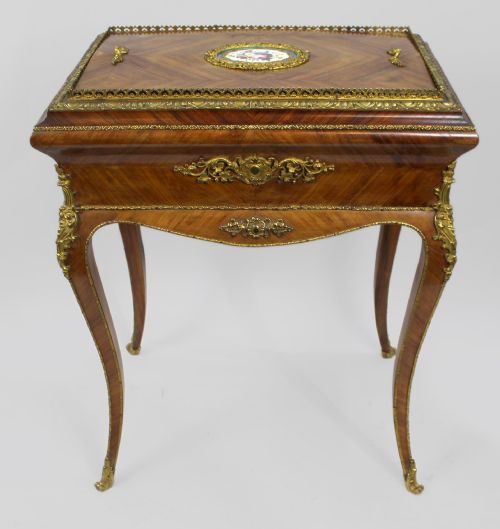
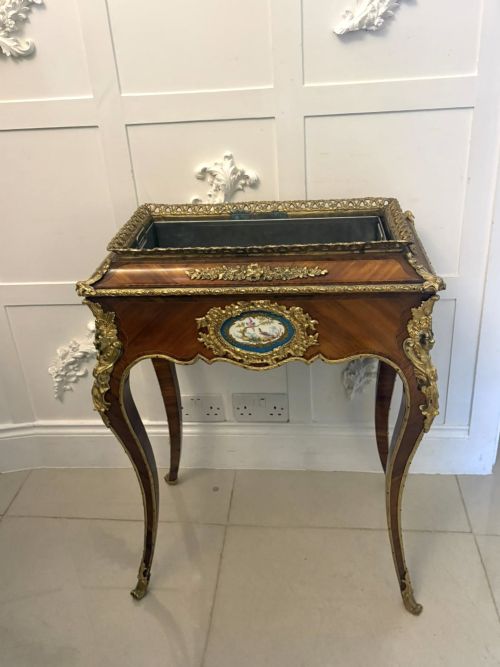
A gilt bronze mounted jardiniere serves as a decorative plant stand or planter, frequently taking the form of freestanding tables, pedestals, or vessels designed to hold flowers and foliage indoors. When you search for this phrase, you encounter nineteenth-century French examples rooted in Louis XV, Louis XVI, Napoleon III, and Empire Revival styles.
The pieces on this page lean heavily towards nineteenth-century production, spanning periods from eighteen-fifty through to nineteen-twenty. Common forms include kingwood and burr walnut planter tables, porcelain plaque vessels, and tall French stands intended to elevate plants within a reception room or salon.
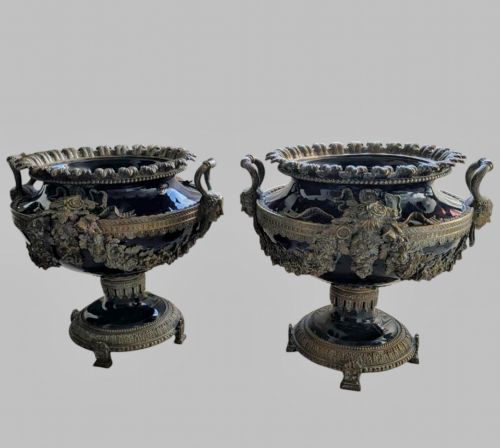
Beyond standard wooden planters, the category extends to include cloisonné enamel vessels, cut glass bowls with metal mounts, and ceramic jardinières paired with matching stands. French workshops dominate the selection, often incorporating marquetry inlay, ebonised wood, or olive wood carcasses beneath bright cast metal mounts.
How they were made
Cabinetmakers constructed the main bodies of these planters using dense timbers such as kingwood, burr walnut, mahogany, and ebonised wood, frequently applying intricate marquetry patterns across the surfaces. Metal mounts cast in ormolu or gilt bronze were then fixed to the corners, feet, and rims to accent the wood grain.
Many examples integrate ceramic elements, incorporating blue ceramic bodies, Sevres-type porcelain plaques, or Japanese style Samson Imari panels into the wooden or metal frames. Cut glass and cloisonné enamel also appear as primary vessel materials, held securely within decorative cast metal collars and stands.
Some nineteenth-century French plants enjoyed life in elaborate kingwood vessels fitted with porcelain plaques before anyone thought to water them.
What varies in quality
The refinement of the cast metal mounts dictates much of the visual success, with crisper chasing and heavier gilding separating superior pieces from simpler brass replacements. Well-defined floral and scroll motifs in the ormolu show a high level of foundry skill.
Timber selection and marquetry precision also drive the hierarchy, where carefully matched kingwood veneers or intricate inlay work elevate a plain planter table into a sophisticated piece of furniture. The integration of porcelain plaques or cloisonné enamel adds another layer of craftsmanship.
The Gilt Bronze Mounted Jardiniere Glossary
- Ormolu
- A gilded bronze technique used extensively for decorative mounts on nineteenth-century French furniture. The process involves applying a mercury and gold amalgam to cast bronze before heating.
- Kingwood
- A dense, richly figured tropical timber prized by French cabinetmakers for veneering luxury furniture. It displays deep brown and violet tones with distinct grain patterns.
- Jardiniere
- A decorative pot or stand designed to hold plants and flowers inside the home. Nineteenth-century versions often incorporate elaborate metal stands and porcelain bodies.
- Marquetry
- The art of applying small pieces of veneer to a structure to form decorative patterns and pictures. Makers utilise various coloured woods to achieve tonal depth.
- Cloisonne
- An ancient technique for decorating metalwork objects with colourful material held in place by thin metal strips. Pieces feature vibrant enamel cells across the surface.
Gilt Bronze Mounted Jardiniere: Frequently Asked Questions
What is a gilt bronze mounted jardiniere?
A gilt bronze mounted jardiniere is an ornamental plant holder or planter embellished with cast metal mounts, originating primarily from nineteenth-century French workshops.
These pieces combine wooden frames, ceramic bodies, or glass vessels with decorative ormolu mounts to create decorative plant stands for the home.
How were these planters used historically?
Historically, these stands and planters held potted plants and floral arrangements within grand nineteenth-century reception rooms and parlours. They functioned both as practical waterproof plant containers and as high-status furniture.
Many featured removable metal liners to protect the wood or ceramic bodies from water damage during daily watering.
How do I identify French revival styles?
French revival pieces incorporate stylistic markers from earlier periods, such as the curved cabriole legs and floral scrolls of Louis XV design or the geometric symmetry of Louis XVI pieces. Napoleon III examples often feature dark ebonised woods paired with bright gilt mounts.
Examining the timber veneers, mount casting quality, and overall proportions helps determine the specific revival period.
Can I use antique jardinières for real plants?
Many antique jardinières retain their original metal liners, which allows them to safely accommodate potted plants when paired with a protective saucer. Care must be taken to prevent standing water from coming into direct contact with antique wood or enamel.
Using a plastic insert inside the historical liner offers modern protection while keeping the display authentic.
What is the difference between a jardinière and a planter?
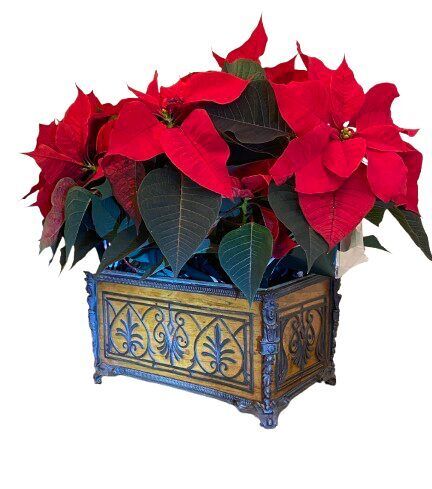
The terms are often used interchangeably, though a jardinière typically implies a more decorative, freestanding vessel or table intended for display. Planters can sometimes describe simpler wooden boxes designed strictly for botanical use.
Both categories within these listings rely heavily on gilt metal mounts and fine timber construction to elevate their decorative appeal.