




Porcelain Plaque Side Table
A porcelain plaque side table brings together glazed ceramic painting and fine cabinet woods to create a striking centrepiece.
Porcelain Plaque Side Table
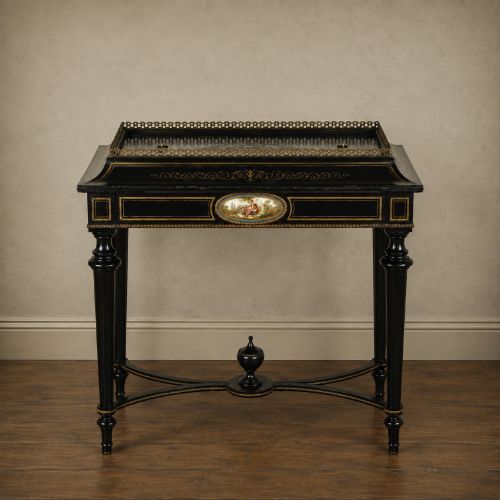
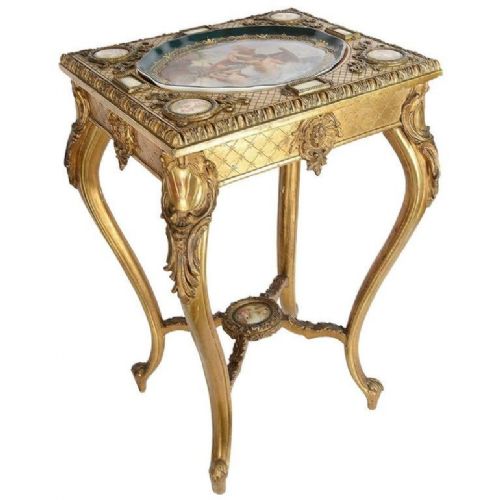
A porcelain plaque side table is an occasional or writing table featuring inset ceramic panels decorated with painted designs. These pieces largely draw on French cabinet-making traditions, particularly the Louis XV and Louis XVI revivals of the nineteenth century.
The selection here includes side tables, jardinière stands, and desk-top pieces incorporating hand-painted ceramic plaques. Most examples date from the nineteenth century, utilising decorative forms popularised during the Second Empire and Napoleon III periods.
Buyers will encounter various formats, from free-standing occasional tables to writing desks and jardinières. The ceramic inserts serve as focal points within the wooden framework, often surrounded by cast metal mounts.
How they were made
Cabinetmakers constructed the frames using hardwoods such as kingwood, rosewood, ebonised wood, burr walnut, and satinwood, frequently applying marquetry inlay or brass stringing. These timbers provided a stable foundation for the inset ceramic plaques and metal fittings.
The ceramic elements consist of fired porcelain panels, painted with floral or figural subjects, often designed to evoke earlier Sevres or Vienna factory output. Artisans secured these plaques within the wooden tops or friezes using cast or gilt metal mounts and ormolu framing.
Materials recorded across the inventory include porcelain, ormolu, kingwood, ebonised wood, brass, burr walnut, rosewood, and gilt metal.
What varies in quality
Quality rests primarily on the crispness of the cabinetwork and the skill of the porcelain painting. Finely rendered figural scenes and detailed floral work on the ceramic plaques indicate higher workshop standards.
The refinement of the surrounding ormolu mounts and the choice of cabinet timbers also set pieces apart. Dense veneers like kingwood and rosewood, paired with heavily chased gilt metal mounts, mark out the more ambitious examples.
The Porcelain Plaque Side Table Glossary
- Ormolu
- Gilded bronze or brass mounts applied to furniture. This technique adds metallic contrast to the wooden surfaces.
- Marquetry
- Fitted pieces of wood veneer forming decorative patterns on a surface. It appears across the tabletops and friezes.
- Jardinière
- A decorative stand or container intended for plants. Several examples integrate these stands with porcelain panels.
Porcelain Plaque Side Table: Frequently Asked Questions
What is a porcelain plaque side table?
A porcelain plaque side table is a small decorative piece of furniture featuring ceramic panels inset into the wooden top or frame. These tables typically date from the nineteenth century and reflect French revival styles.
They were designed as decorative occasional furniture for salons and drawing rooms rather than for heavy practical use. The ceramic panels act as the primary visual decoration.
Where were these tables made?
Many of these tables originate from nineteenth-century French workshops influenced by earlier court styles such as Louis XV and Louis XVI. Makers adopted traditional cabinet-making techniques alongside factory-produced ceramic plaques.
Some pieces reference specific ceramic traditions like Sevres or Vienna through their painted decoration and factory-style marks. The combination of local cabinet woods and imported or factory-made plaques defined much of this production.
How do I care for a porcelain plaque table?
Care involves protecting both the polished wooden veneer and the inset ceramic panels from excessive moisture and direct sunlight. Regular dusting with a soft, dry cloth helps preserve the finish.
Avoid using harsh chemical polishes on the ormolu mounts and wood. Gentle maintenance ensures the gilt metal and delicate painted surfaces remain stable.
Are these tables sturdy enough for daily use?
These tables function best as occasional furniture or display surfaces rather than robust utility items. The delicate nature of the inset ceramic plaques and gilt mounts requires gentle handling.
Placing them in low-traffic areas protects the marquetry and porcelain from accidental knocks. They serve primarily to display decorative objects or complement a formal interior.