
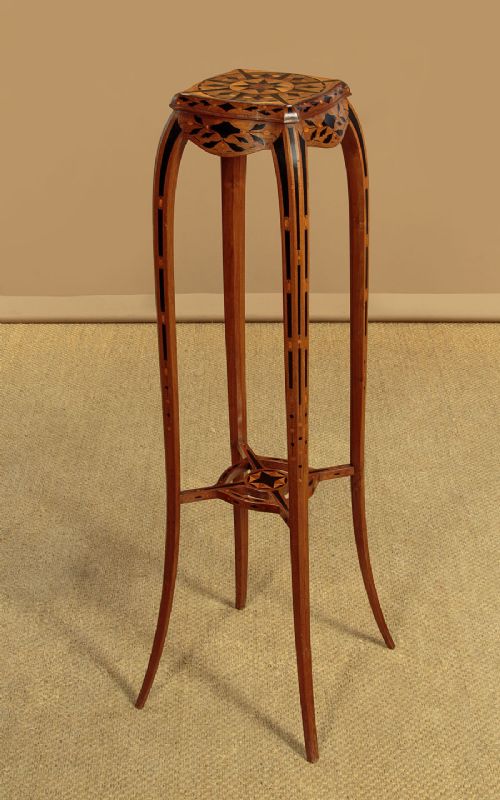


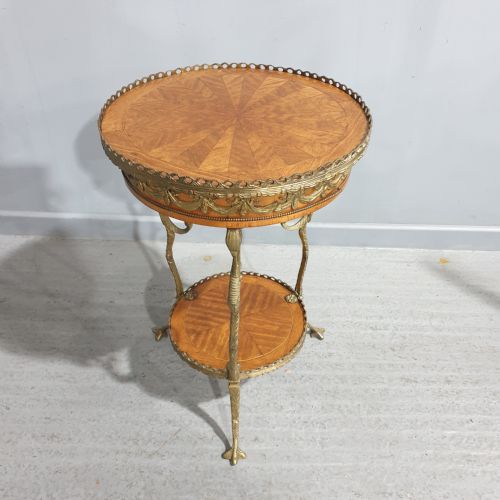


Parquetry Plant Stand
A parquetry plant stand brings geometric wood veneers and structural elegance into a room to hold greenery or display decorative objects.
Parquetry Plant Stand
A parquetry plant stand is typically encountered in various historical forms such as occasional tables, etageres, and specific jardinieres originating from the nineteenth century into the early twentieth century. These pieces serve practical domestic purposes while showcasing intricate geometric timber patterns across their surfaces.
The inventory on this page ranges from Victorian pieces to later Edwardian examples, drawing on French styles like Louis XV and Louis XVI alongside Moorish Revival designs. Buyers encounter circular side tables, multi-tiered etageres, and dedicated pedestals that reflect diverse European craftsmanship.
Makers utilised specific native and exotic timbers to construct these stands, frequently incorporating brass, ormolu, and porcelain elements to elevate the visual impact of the woodwork. Each form offers a distinct method for displaying plants or holding small ornaments within a domestic interior.
Materials and construction
Cabinetmakers constructed these pieces using solid timber carcases overlaid with fine parquetry veneer, walnut, kingwood, ebony, and mahogany. The geometric patterns require precise cutting and fitting of individual timber pieces to create stable, decorative tabletops and shelves.
Metal mounts in brass, ormolu, and gilt metal frequently accent the wooden structures, particularly on pieces influenced by French neoclassical and revival styles. Marble tops and porcelain plaques also appear as inset surfaces, adding weight and contrasting textures to the woodwork.
Some Victorian plant stands required strict furniture etiquette to ensure trailing ferns did not obscure the host's parlour conversation.
Assessing quality and execution
The precision of the veneer work largely determines the quality of a parquetry plant stand, with tighter joints and more complex geometric arrangements marking superior execution. The choice of timbers also dictates value, where rarer woods like kingwood and ebony indicate higher workshop ambition.
Integration of cast bronze or ormolu mounts reveals the maker's skill, as finely chased metalwork complements the underlying carpentry rather than appearing clumsy. The inclusion of secondary materials such as marble or porcelain plaques further separates standard production pieces from high workshop output.
Anton Seuffer·Donald Ross·François Linke
The Parquetry Plant Stand Glossary
- Parquetry veneer
- A mosaic of geometric wood pieces applied to a furniture carcase to create decorative patterns. It differs from marquetry by strictly employing angular or geometric motifs rather than pictorial scenes.
- Ormolu
- Gilded bronze mounts applied to furniture for decorative accent and edge protection. This technique was widely favored in French cabinetmaking during the eighteenth and nineteenth centuries.
- Etagere
- A piece of furniture consisting of open open shelves for displaying small objects or plants. These tiered stands maximise vertical display space in a room.
- Jardiniere
- A decorative receptacle designed to hold a plant or floral arrangement. In antique furniture, these often take the form of specialised tables with metal liners.
- Torchere
- A tall, slender stand originally designed to hold a candle or torch. Antique examples commonly function as plant stands or pedestals for sculptural objects.
Parquetry Plant Stand: Frequently Asked Questions
What is a parquetry plant stand used for?
These stands provide an elevated surface specifically designed to display potted plants, ferns, or decorative items within domestic interiors. Their compact footprints allow them to fit into corners or beside seating areas.
Beyond botanical use, many of these pieces function as general occasional tables or etageres for holding books and small ornaments. Their decorative timber surfaces ensure they remain visual focal points even without a plant on top.
How do I care for antique wood veneer?
Keep wooden stands away from direct sunlight and sudden temperature shifts to prevent the underlying veneers from drying out and lifting. Regular dusting with a soft cloth maintains the finish without risking moisture damage.
Apply a suitable wax polish periodically to nourish the timber and protect the parquetry surface from everyday wear. Avoid placing unprotected wet pots directly onto the wood to prevent water rings.
How do I distinguish French styles on these stands?
Pieces showing Louis XV influence typically feature curved cabriole legs and flowing asymmetrical lines, whereas Louis XVI styles emphasise straight tapered legs and neoclassical symmetry. Ormolu mounts on French-inspired pieces tend to follow these architectural rules.
Victorian interpretations often blend these classical elements with heavier timber proportions or distinct regional timber choices. Examining the leg shape and mount design usually clarifies the stylistic origin.
Are two tier etageres stable enough for heavy plants?
Most etageres and side tables from this period are structurally sound for normal decorative loads, but the lower shelf typically offers greater stability for heavier pots. Distributing weight evenly prevents undue stress on the joints.
Verify the condition of the leg joints and tier supports before placing heavy or precious items on the upper surfaces. Smaller specimens are better suited to lighter trailing plants.