
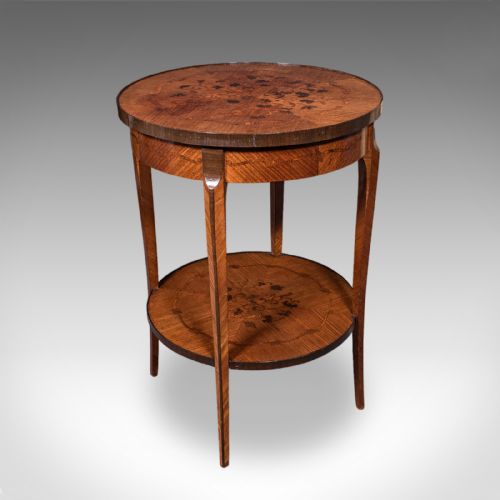


Kingwood Plant Stand
These kingwood plant stands combine exotic timbers with decorative mounts, offering an elevated surface designed to display indoor foliage and decorative pottery in reception rooms.
Kingwood Plant Stand
A kingwood plant stand functions primarily as a decorative stage for botanical displays, typically taking the form of a tall pedestal, a jardiniere table, or a multi-tiered occasional piece. When buyers search for a kingwood plant stand, they encounter examples originating from the nineteenth century, including Victorian and Edwardian periods.
The dominant aesthetic draws heavily from continental tastes, particularly Louis XV and Louis XVI revivals, alongside French and Dutch rococo influences. These forms range from slender torcheres and porcelain-inset pedestal stands to substantial marquetry planters fitted with metal liners.
How they were made
Cabinetmakers constructed these pieces using dense hardwoods like kingwood, walnut, and rosewood, frequently applied as fine veneers or geometric parquetry and marquetry patterns over secondary timbers. The timber surfaces receive meticulous polish to highlight the rich grain variations characteristic of exotic veneers.
Gilt metal and ormolu mounts provide structural framing and decorative enrichment, often secured alongside inset porcelain plaques or marble tops. These bronze and brass elements are cast and chased to define the scrolling foliage and classical motifs typical of revival styles.
Listings feature nineteenth-century pieces incorporating kingwood, ormolu, porcelain, and marble within Louis XVI and French rococo revival styles.
What varies in quality
The distinction between standard production and exceptional quality rests on the precision of the marquetry and the crispness of the bronze or ormolu mounts. Finer examples display deeply chased metalwork and complex timber veneers that fit seamlessly together without visible gaps.
Structural complexity also dictates worth, as seen in pieces integrating shaped marble tops, painted porcelain plaques, or specialised zinc liners for holding plants. The presence of identifiable cabinetmaking signatures elevates the standing of an individual piece considerably.
François Linke
The Kingwood Plant Stand Glossary
- Kingwood
- A dense, heavily figured Brazilian timber prized for its dark violet-brown tones and pale contrasting streaks. Cabinetmakers utilised it extensively for high-end decorative furniture throughout the eighteenth and nineteenth centuries.
- Ormolu
- Gilded bronze mounts applied to furniture for decorative and protective purposes. The technique involves treating bronze with an amalgam of gold and mercury before heating.
- Jardiniere
- A decorative container or stand designed to hold growing plants or floral arrangements. They frequently incorporate waterproof liners made of metal or porcelain to protect the surrounding woodwork.
- Parquetry
- Geometric wood-mosaic work used to create patterned surfaces on tabletops and pedestals. Craftsmen arrange small veneer blocks in repeating grids or cubes.
- Torchere
- A tall stand or pedestal originally intended to support a candlestick or light source. In later periods, these forms frequently serve to display urns or botanical specimens.
Kingwood Plant Stand: Frequently Asked Questions
What is a kingwood plant stand?
A kingwood plant stand is an ornate nineteenth-century furnishing designed to elevate potted plants, flowers, or decorative objects within a room. These pieces utilise exotic veneers and metal mounts to create an ornamental focal point.
They appear in various forms, including tall torcheres, multi-tiered tables, and dedicated jardiniere planters fitted with interior liners. The design invariably reflects continental revival aesthetics from the Victorian and Edwardian eras.
How do I date a plant stand?
Dating these pieces relies on examining the construction methods, timber choices, and stylistic revival motifs present in the work. Nineteenth-century examples often combine machine-prepared veneers with hand-chased ormolu mounts.
Reference to specific periods like the Victorian era or Louis XVI revival provides a broad chronological bracket. Hardware fixings and interior timber residues also offer clues to the exact decade of manufacture.
Where should I place one?
These stands suit reception rooms, drawing rooms, or hallways where their decorative timber and metal mounts can be fully appreciated. Placing them in corners or beside windows creates a traditional botanical display.
Care should be taken to protect antique wood surfaces from moisture when housing real plants. Utilising waterproof saucers inside the jardiniere liner prevents water damage to the underlying veneers.
Are porcelain plaques original?
Porcelain plaques set into furniture are frequently original to pieces inspired by Sevres porcelain factories and French revival styles. These painted inserts match the period of the surrounding ormolu and kingwood frame.
Close inspection of the reverse sides and mounting bezels helps determine whether plaques belong to the initial construction. Finer nineteenth-century examples integrate these ceramic panels as primary decorative elements.