



Gilt Bronze Display Pedestal
These gilt bronze display pedestal pieces raise a treasured object into the light, combining heavy stone columns with bright cast mounts.
Gilt Bronze Display Pedestal
When you search for a gilt bronze display pedestal, you encounter tall structural columns and stands designed to elevate sculptures, clocks, or vases within a room. The examples seen here belong largely to the nineteenth century, spanning periods from Edwardian times down to eighteen eighty.
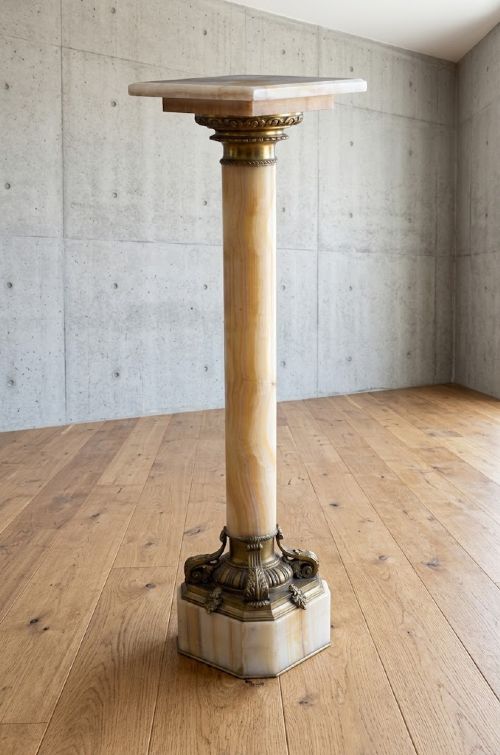
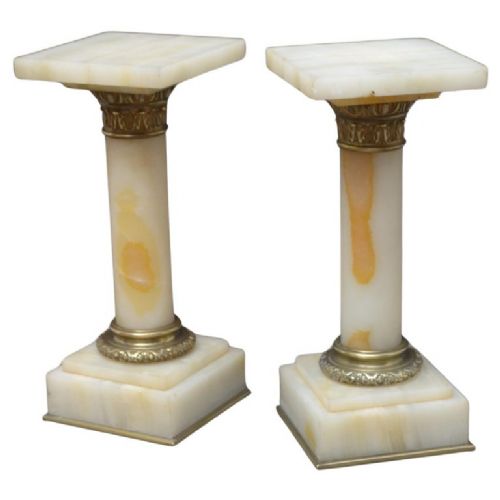
Most items combine a vertical shaft of striated onyx or dense marble with cast metal collars and feet. Forms range from slender torchere columns and rotating stands to wider jardiniere supports and low display pillars.
Originating predominantly from French workshops, these pieces draw heavily on classical and revival vocabularies. Neoclassical, Louis Quinze, and Rococo styling dictate the decorative language of the metal mounts and timber carcasses.
How they were made
The core structure typically relies on a turned column of natural onyx or polished marble, paired occasionally with timber foundations in kingwood, walnut, mahogany, or burr elm. Artisans turned these heavy stones on lathes and built stable internal frameworks to support the significant downward weight.
Decorative metal elements are cast in bronze or brass and then heavily gilded or finished as ormolu. These mounts include intricate collars, acanthus-leaf capitals, and claw feet, which were secured firmly to the stone and wood bodies with threaded bolts or pins.
Cabinetmakers also applied delicate parquetry veneers and painted Vernis Martin panels to the wooden stands. The juxtaposition of cold polished stone against warm, chased metal defines the primary technical achievement of these decorative supports.
Listings feature nineteen-century pieces predominantly, spanning from eighteen eighty through the Edwardian era with strong French neoclassical influences.
What varies in quality
Quality rests significantly in the crispness and depth of the metal chasing on the ormolu and gilt bronze mounts. Finer pieces display sharp undercutting and hand-finished detailing that reveal the hand of a skilled artisan rather than a generic industrial cast.
The selection of the primary material also dictates the tier of the piece, with richly figured onyx and deeply veined marbles holding greater visual presence than plain stones. Timber sections show distinction through tight burr elm figuring and precise geometric parquetry layouts.
Proportion and architectural harmony separate standard production stands from exceptional examples. A well-balanced silhouette with cohesive neoclassical or French revival detailing commands the eye without appearing top-heavy or cluttered.
François Linke
The Gilt Bronze Display Pedestal Glossary
- Ormolu
- Gilt bronze mounted onto furniture or architectural elements. The technique involves applying a fine layer of gold amalgam to cast bronze before firing.
- Onyx
- A banded variety of chalcedony quartz prized for its translucent layers. It provides a smooth, variegated shaft for nineteenth-century columns.
- Torchere
- A tall ornamental stand originally designed to hold a torch or candle. Later versions serve as display columns for decorative vases and figures.
- Parquetry
- Geometric wood inlay work forming patterned surfaces on tabletops and stands. Craftsmen use contrasting timbers like kingwood and walnut to create optical depth.
- Vernis Martin
- A simulated Japanese lacquer technique developed in eighteenth-century France. It employs multiple layers of varnish to achieve a glossy, translucent finish.
Gilt Bronze Display Pedestal: Frequently Asked Questions
What were gilt bronze display pedestals used for?
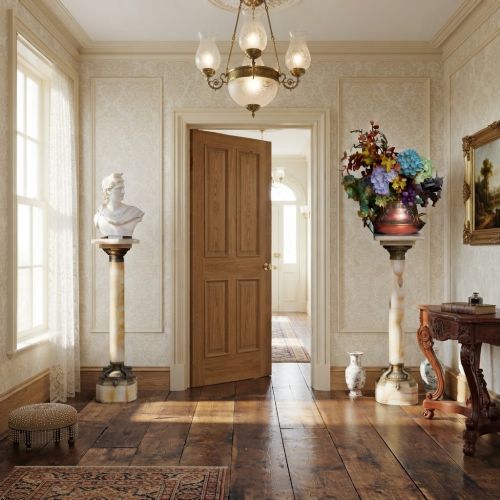
These tall stands served primarily to elevate decorative bronzes, clocks, marble busts, and large floral arrangements above floor level. By raising the object, interior designers ensured that fine details remained visible across a formal reception room.
They also acted as standalone architectural ornaments within nineteenth-century salons. Their substantial weight provided a secure, stable platform for heavy display items.
How do I identify a neoclassical style pedestal?
Neoclassical pieces rely on strict symmetry, architectural columns, and classical motifs like acanthus leaves, egg-and-dart moulding, and fluted shafts. The metal mounts draw inspiration directly from ancient Greek and Roman architecture.
These columns often feature straight vertical lines rather than the sweeping, asymmetrical curves found in pure Rococo designs.
Are marble columns difficult to maintain?
Marble and onyx columns require very little active maintenance beyond dusting with a dry, soft cloth. Avoid using harsh chemical cleaners or acidic polishes that can etch the stone surface or strip the gilding from the bronze mounts.
Because these materials are heavy and brittle, stability is the main concern. Ensure the pedestal rests on a completely level floor to prevent tipping.
How do I distinguish nineteenth century revival styles?
Revival pieces borrow heavily from earlier French reigns, particularly the Louis Quinze and Louis Seize periods. Louis XV style is marked by asymmetrical curves, naturalistic floral motifs, and flowing lines.
Louis XVI or neoclassical revival pieces emphasise straight lines, geometric parquetry, and formal architectural symmetry. Examining the casting style of the ormolu mounts usually clarifies the specific revival period.