


Pair French Jardinieres
Pair French jardinieres bring interior or exterior planting schemes together with dual symmetry and Continental character.
Pair French Jardinieres
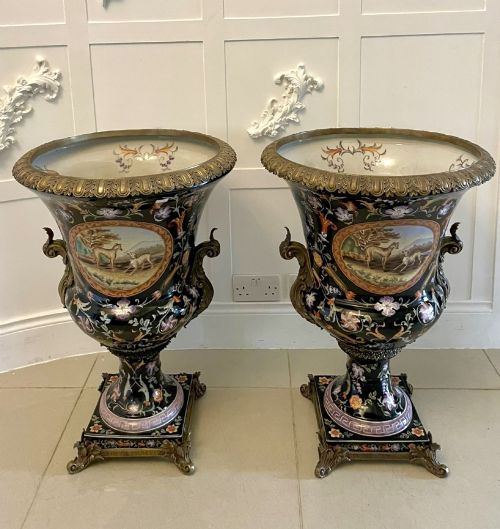
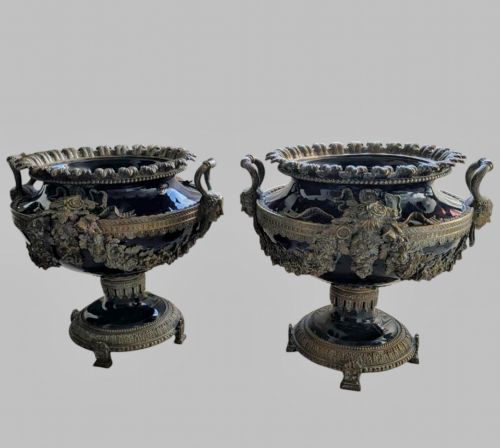
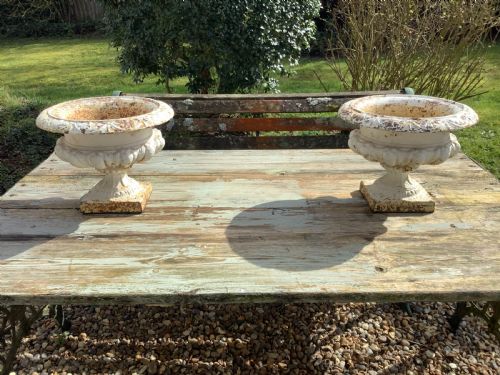
Pair french jardinieres are decorative vessels designed to hold plants, typically encountered as matching sets from the nineteenth century in styles ranging from Napoleon III to Art Deco. These items appear in forms such as garden planters, garden urns, table urns, and cache pots, occasionally accompanied by side tables or tall stands.
The selections span materials including gilt bronze, brass, cast iron, porcelain, glazed ceramic, enamel, kingwood, and paint. Buyers will find historical revivals including French Rococo, French Baroque, Louis XVI Style, Neoclassical, and Japonisme alongside Victorian and later twentieth-century examples.
How they were made
Metalwork pieces rely on casting and mounting techniques, utilising cast iron for heavy garden urns or gilt bronze and brass for interior decorative urns and mounts. Artisans cast these metals into ornate forms, sometimes featuring lion motifs or intricate relief work.
Ceramic and pottery vessels involve glazed earthenware, hand-painted porcelain, and gres pottery, occasionally incorporating Samson Imari decorative traditions. Stoneware and ceramic bodies are glazed or painted, then fitted with metal mounts or paired with wooden elements like kingwood.
Listings demonstrate a material span from cast iron and bronze to kingwood, enamel, and gres pottery.
What varies in quality
Quality rests upon the crispness of the casting in metalwork and the precision of the hand-painted detail on porcelain or ceramic surfaces. Superior examples demonstrate refined chasing on bronze and brass mounts, alongside well-balanced proportions in matching pairs.
The integrity of secondary materials, such as bronze mounts fixed to porcelain bodies or structural joinery in stands and side tables, separates standard production pieces from higher-tier artistic commissions.
Samson Imari
The Pair French Jardinieres Glossary
- Jardiniere
- An ornamental pot or stand for holding plants or flowers. These vessels form the primary focus of this buyer's guide.
- Cache pot
- A decorative flowerpot designed to hold an ordinary plain plant pot inside. This French term translates literally as hide-pot.
- Ormolu
- Gilt bronze mounted or applied to furniture and decorative objects. This technique creates a rich golden finish on nineteenth-century metalwork.
- Gres
- A French term for stoneware pottery fired at high temperatures. This material yields a dense, durable body seen in Art Deco examples.
Pair French Jardinieres: Frequently Asked Questions
What is a pair french jardinieres used for?
These matching vessels hold potted plants or floral arrangements to decorate reception rooms, entrance halls, or garden spaces. Their dual symmetry suits placement on side tables, pedestals, or directly on the floor.
Historically, they brought living greenery into formal interiors while protecting surfaces with their waterproof interiors. Today, they function both as planters and as sculptural decorative objects in their own right.
How do I identify nineteenth century pieces?
Nineteenth-century examples frequently display historical revival styles such as Louis XVI, Napoleon III, or French Baroque. Look for period-appropriate construction methods, including heavy cast iron or hand-chased gilt bronze mounts.
Materials and decorative motifs often reflect Victorian tastes or Japonisme influences popular during that era. Examining the underside and interior mounting points helps confirm the period of manufacture.
Where should I place large iron planters?
Cast iron garden planters suit protected outdoor areas, conservatories, or grand garden terraces. Their substantial weight provides stability against wind and heavy soil loads.
Ensure the placement surface can support the combined weight of the iron urn, moist earth, and planting. Positioning them in pairs frames doorways, gateways, or garden pathways effectively.
How do porcelain and metal jardinieres differ?
Porcelain and ceramic versions offer delicate hand-painted surfaces, glazed finishes, and refined decorative motifs suited for indoor domestic spaces. Metal versions, particularly cast iron or bronze, provide robust durability for heavier plantings and architectural presence.
Many refined pieces combine both mediums, featuring porcelain bodies supported by brass or gilt bronze mounts. This hybrid construction bridges the gap between delicate ceramic art and structural metalwork.